Movement rarely feels complicated until you try to explain it in an exam.
You take a step, you throw a ball, you hold a plank for 30 seconds longer than you thought you could. It all feels automatic. But in IB SEHS, that “automatic” feeling is exactly what you have to unpack: force, joints, muscle roles, and the nervous system turning intention into motion.
This is your clean, exam-friendly map of how muscles generate movement in IB SEHS.
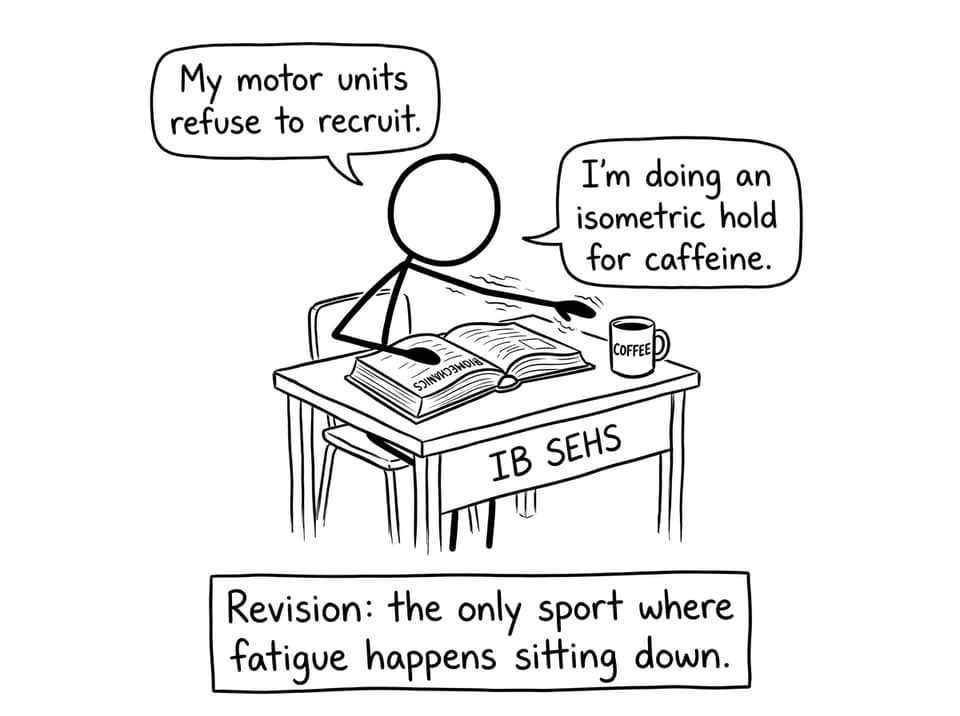
IB SEHS revision fatigue comic
IB SEHS quick checklist: what to say in an answer
When a question asks how muscles generate movement (especially in B.1), hit these points:
Skeletal muscles attach to bones via tendons and create movement at joints
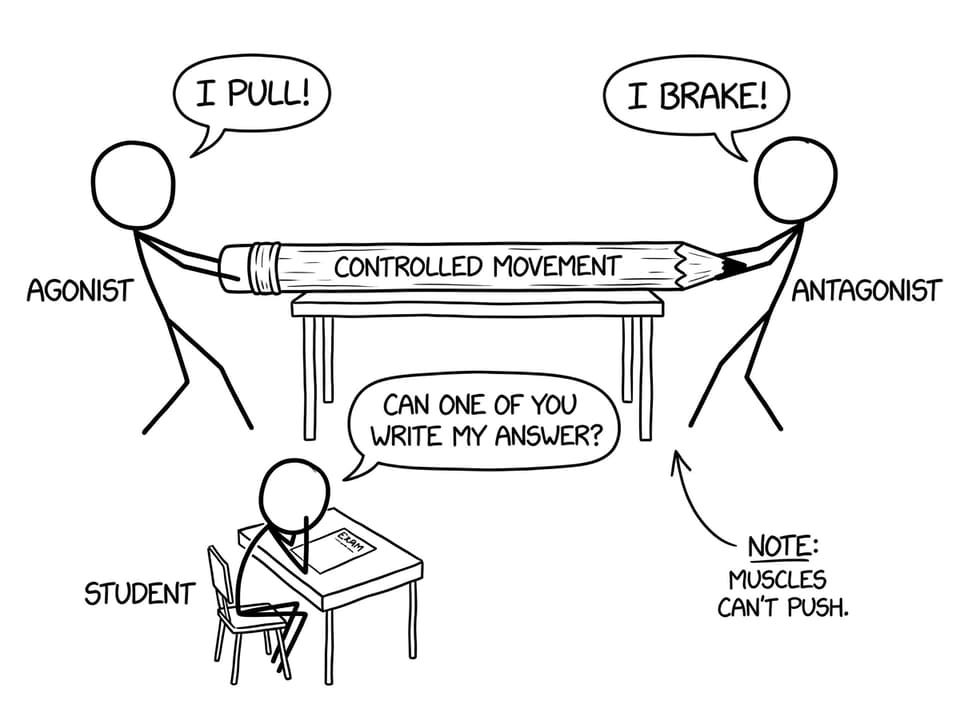
Muscles pull (they don’t push), so they work in pairs
Force comes from contraction (tension with or without shortening)
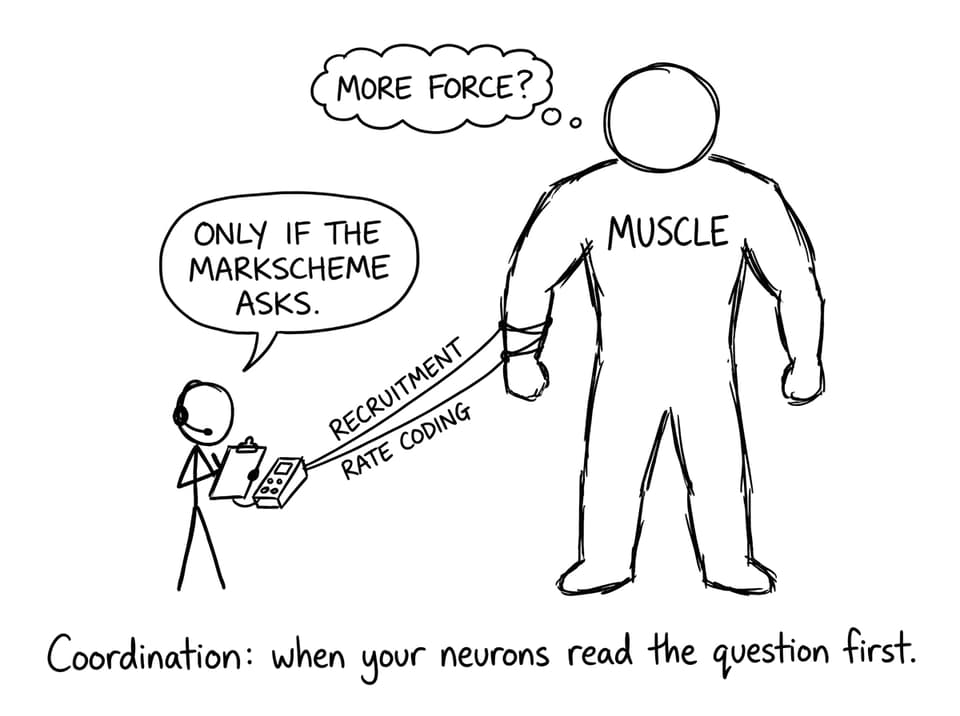
Movement is coordinated by motor unit recruitment and neural control
Name roles: agonist, antagonist, plus stabilisers/synergists when relevant
In IB SEHS, the core idea is simple: skeletal muscle creates force, force acts on bone, and bone moves around a joint.
A skeletal muscle is connected to bone by a tendon. When the muscle contracts, it generates tension and pulls the bone. The joint angle changes, and you see movement.
That “pull-only” rule matters more than students expect. Because muscles can’t push, the body solves the problem with coordination: one muscle (or group) creates movement, while another controls it.
If you want a syllabus-aligned framework for analysing movement, Movement Analysis is a helpful hub.
IB SEHS roles: agonist vs antagonist (and why control earns marks)
In most exam questions, you’ll score well by naming the joint action and matching it with muscle roles.
Agonist (prime mover): produces the main force for the movement
Antagonist: opposes or controls the movement (often acts like the “brake”)
Classic example: during elbow flexion, the biceps brachii is the agonist and the triceps brachii is the antagonist.
But the higher-mark explanation is why the antagonist matters: it prevents the movement from being jerky, helps stabilise the joint, and allows precise control of speed and range.
“Elbow flexion occurs at the elbow joint. The biceps brachii acts as the agonist and contracts concentrically to pull on the radius via its tendon, producing flexion. The triceps brachii acts as the antagonist and relaxes or contracts eccentrically to control the speed of movement. Force output is controlled by motor unit recruitment and neural activation depending on the load.”
That is IB SEHS language: clear roles, joint action, contraction type, and control.
Final takeaway: turn movement into marks with RevisionDojo
The real skill in IB SEHS is turning a familiar action into a structured explanation: contraction creates force, force moves a joint, agonists drive, antagonists control, and neural activation tunes the output.
If you want that structure to become automatic, RevisionDojo brings it together with Study Notes, Flashcards, AI Chat, Grading tools, Predicted Papers, Mock Exams, a Coursework Library, and Tutors -- so your next IB SEHS movement question feels less like guesswork and more like a practiced routine.
IB SEHS goal setting in sport made simple: goal types, SMART targets, common mistakes, and exam-ready tips using RevisionDojo practice tools.