The moment your foot pushes off the ground in a sprint feels instant. But inside that “instant” is a tiny conversation that has to go perfectly right: a nerve tells a muscle to contract, the message crosses a gap, and force appears.
In IB SEHS, that conversation is called the neuromuscular junction (NMJ). It’s a favourite exam topic because it’s simple in structure, precise in sequence, and easy to mark when you use the right terms.
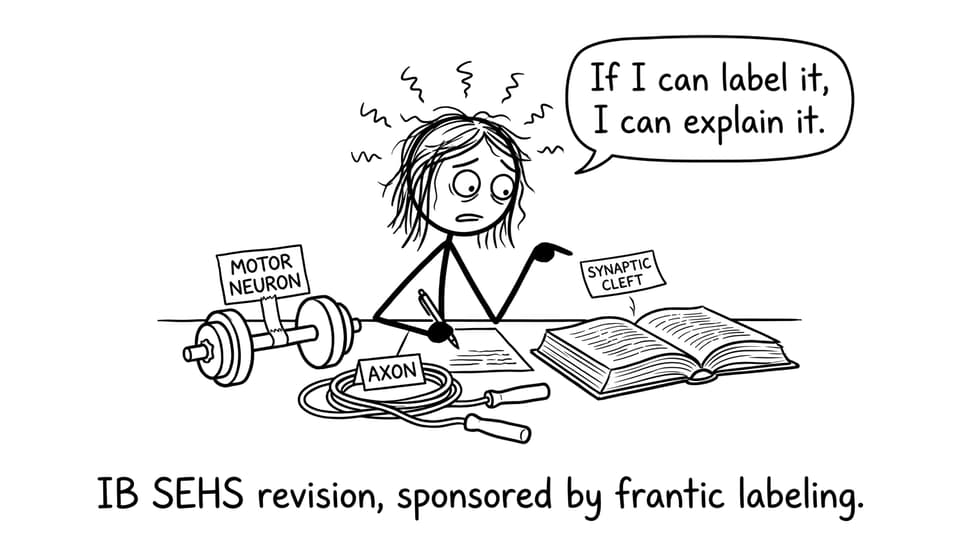
IB SEHS snapshot: what the neuromuscular junction does
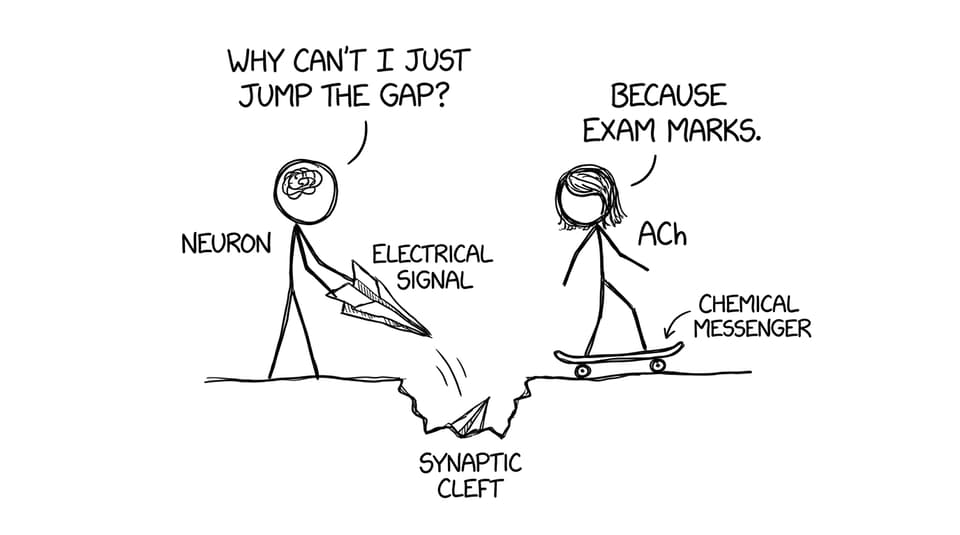
In IB SEHS, the neuromuscular junction is the synapse between a motor neuron and a skeletal muscle fibre. Its job is to convert an electrical signal (in the neuron) into a chemical signal (across the gap) and then back into an electrical signal (in the muscle), so contraction can begin.
If you want a wider “big picture” of this pathway, pair this with How the Nervous System Controls Muscle Contraction.
Quick checklist for NMJ exam answers (IB SEHS)
-
Name the parts: motor neuron terminal, synaptic cleft, muscle fibre membrane (sarcolemma)
-
State the switch: electrical --> chemical --> electrical
-
Include the messenger: acetylcholine (ACh)
-
Link to outcome: muscle action potential --> contraction