
The moment pressure changes everything
Two athletes can look identical in warm-up. Same fitness. Same technique. Same coach shouting the same cues. Then the whistle goes, the crowd noise sharpens, and suddenly one athlete plays like they own the arena while the other plays like their shoelaces are tied together.
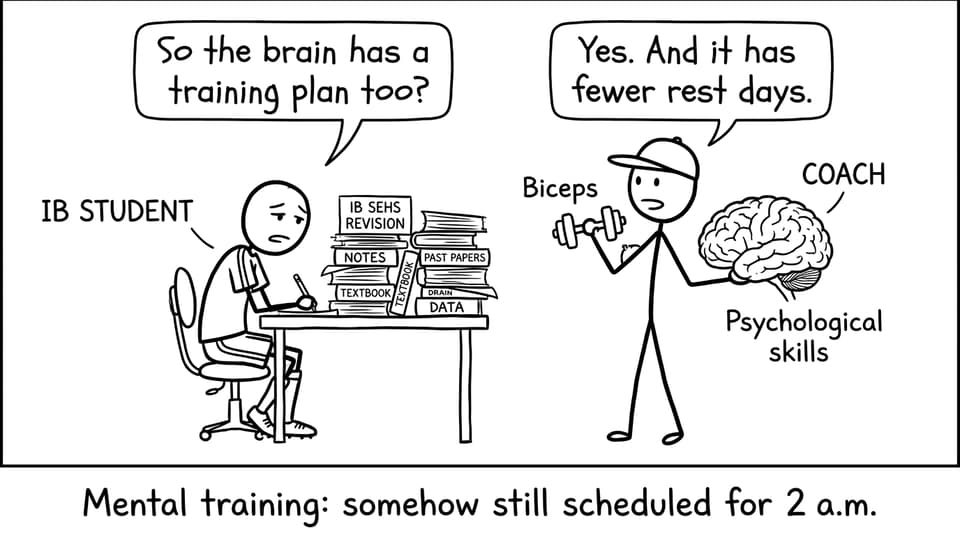
That gap is exactly what IB SEHS means when it talks about psychological skills in sport, learned mental techniques that help athletes perform with focus, control, and consistency when it matters.
Quick exam checklist (IB SEHS)
If a question asks about psychological skills in sport, hit these points:
-
Define psychological skills as learned, trainable mental strategies
-
State what they control: thoughts, emotions, and behaviour
-
Link to outcomes: focus, arousal regulation, confidence, motivation, consistency
-
Add at least one sport-specific application example
-
Distinguish psychological skills from psychological characteristics/traits
For syllabus-aligned coverage, start from the IB SEHS resources hub and the C.5 Psychological skills topic page.
Defining psychological skills in IB SEHS
In IB SEHS, psychological skills are best described as specific mental techniques that can be learned and practised to improve performance. The key phrase examiners like is that they are trainable. They are not magic, and they are not the same as personality.
Psychological skills are used to help an athlete:
-
Maintain concentration under distraction
-
Control arousal and anxiety
-
Rebuild confidence after mistakes
-
Stay motivated and consistent across training and competition
If you want the broader sport psychology context (motivation, arousal, performance links), the Sports Psychology in SEHS post connects the dots neatly.
The four psychological skills IB SEHS expects you to know
Goal setting
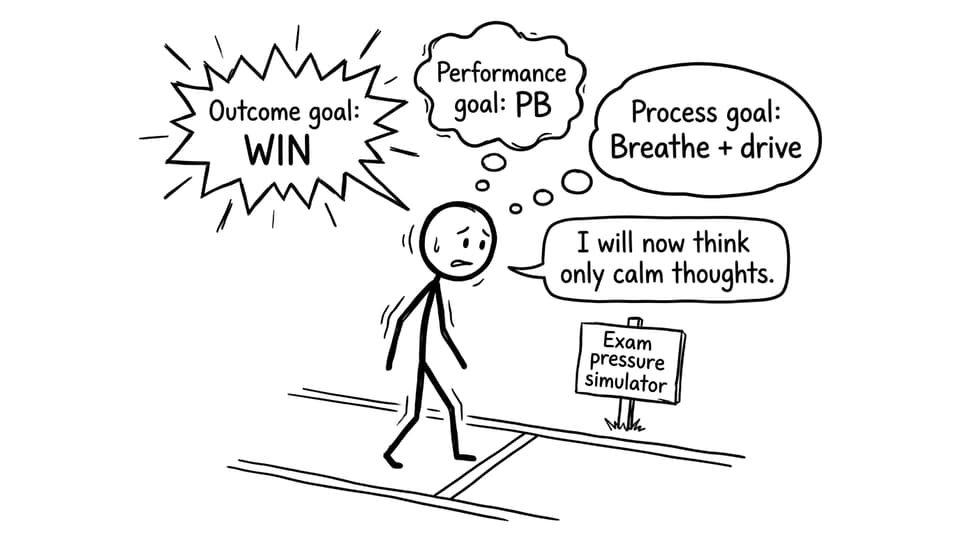
Goal setting channels attention and effort. In exam answers, you score well by naming goal types and giving an example:
-
Outcome goals (result-focused)
-
Performance goals (standard-focused)
-
Process goals (technique/behaviour-focused)
The sweet spot under pressure is often process goals, because they give the athlete something controllable.
For deeper syllabus language, use Goal setting notes and Goal setting as a tool for motivation notes.
Imagery (visualisation)
Imagery is mental rehearsal. In IB SEHS, you can describe it as creating or recreating performance experiences in the mind (often using multiple senses). Used well, imagery supports confidence, timing, and emotional control.
Build your examples from Imagery and visualisation in sport.
Self-talk
Self-talk is the athlete’s internal dialogue. It can be motivational (confidence-boosting) or instructional (technique reminders). In exam scenarios, connect self-talk to focus and anxiety regulation.
See Self-talk and performance for strong phrasing and examples.
Relaxation techniques
Relaxation reduces excessive arousal and anxiety, helping precision and decision-making. Good answers link relaxation to performance contexts (for example, penalties, serves, routines). It also overlaps with coping.
To revise this alongside stress management, practise on C.4 Stress and coping Questionbank.
Psychological skills vs psychological characteristics (common IB trap)
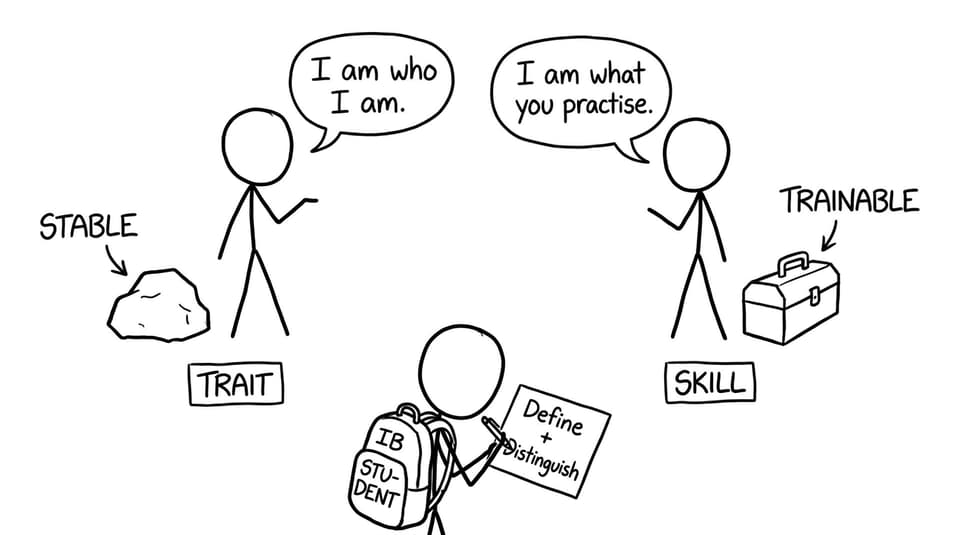
A high-mark IB SEHS response often includes one clean distinction:
-
Psychological skills: specific techniques (goal setting, imagery, self-talk, relaxation) that are learned and practised
-
Psychological characteristics/traits: more stable qualities (like aspects of personality) that are harder to change quickly
That single contrast can separate a 5/6 answer from a 2/6 answer.
Where RevisionDojo fits into your IB SEHS revision
Knowing definitions is step one. Marks usually come from application: choosing the right psychological skill for the scenario and explaining why it works.
RevisionDojo helps you do that with Study Notes, Flashcards, and targeted Questionbank practice with feedback. When you need to simulate exam conditions, you can build Mock Exams and use Predicted Papers for structured practice (without guessing what matters). If coursework is on your mind too, the Coursework Library, Grading tools, and Tutors can keep your workload realistic. And when you get stuck on a command term or an example, AI Chat is there to help you clarify, not cram.
To practise sport psychology questions specifically, use the Psychology of Sport Questionbank and the companion Psychology of Sport notes.
Closing thought
In sport, pressure is the great amplifier. It magnifies preparation, but it also magnifies doubt. Psychological skills are how athletes keep the amplifier from turning into noise.
If you want to revise IB SEHS psychological skills with the kind of clarity that shows up in marks, use RevisionDojo to cycle: learn the concept, drill it with flashcards, then apply it with Questionbank questions until the wording feels natural. That’s how mental skills become exam skills, and how exam skills become results.