

Role of Motor Units in Force Production
Force production in the human body depends not only on muscle size but also on how muscles are controlled by the nervous system. In IB Sports, Exercise and Health Science (SEHS), motor units explain how muscles generate different levels of force to meet the demands of movement and exercise.
Understanding motor units helps students explain why force increases with exercise intensity and how the body controls both precise and powerful movements.
What Is a Motor Unit?
A motor unit consists of:
- One motor neuron
- All the muscle fibres it innervates
When a motor neuron sends an electrical signal, all muscle fibres within its motor unit contract at the same time. This means force production can be controlled by activating different numbers of motor units.
In IB SEHS, motor units are central to understanding muscle control and movement efficiency.
Motor Unit Recruitment and Force
Motor unit recruitment refers to the process of activating additional motor units to increase force production.
Key principles include:
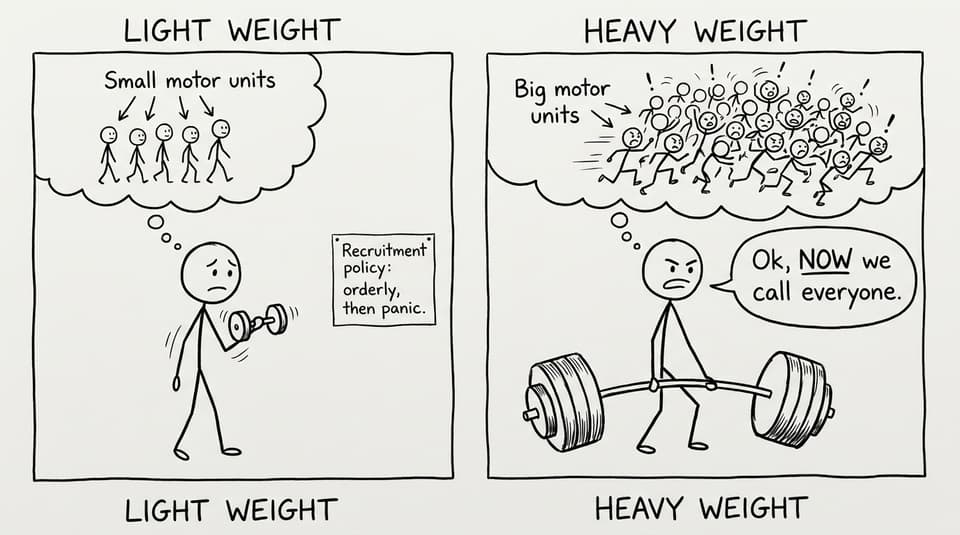
- Low force movements use fewer motor units
- Higher force movements recruit more motor units
- Larger motor units are recruited as force demands increase
This process allows the body to adjust force output smoothly, from fine motor skills to explosive movements.
Size Principle and Movement Control
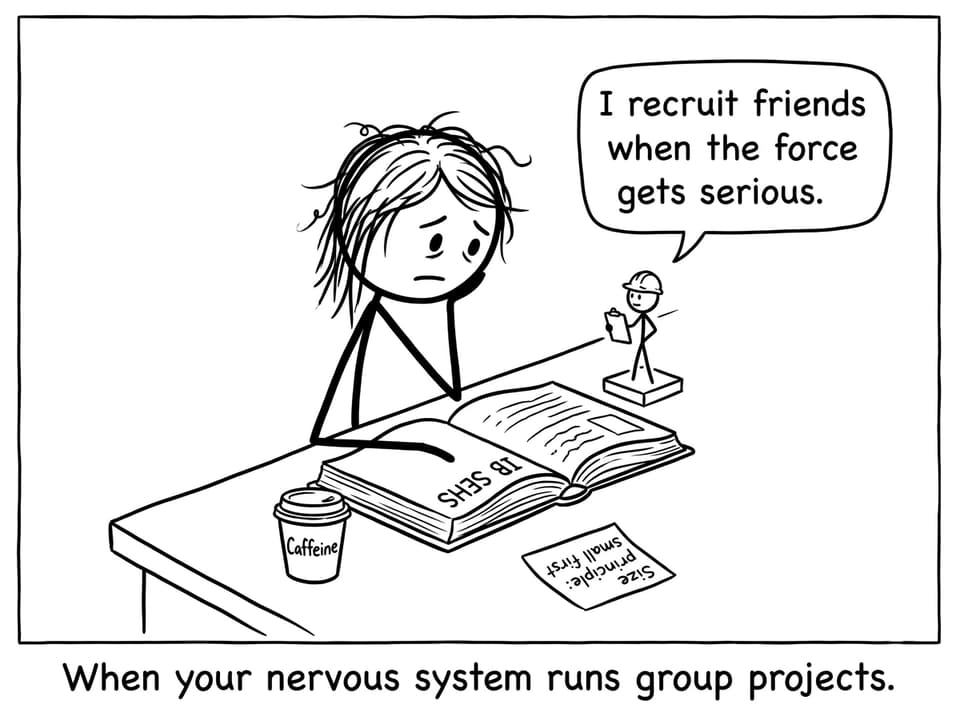
The size principle explains the order in which motor units are recruited. Smaller motor units, which control fewer muscle fibres, are activated first. Larger motor units, controlling more fibres, are recruited later as force demands rise.
This allows:
- Precise control during low-intensity movements
- Powerful contractions during high-intensity exercise
In IB SEHS exams, students should link motor unit recruitment to exercise intensity and movement demands.
Motor Units and Exercise Performance
Efficient motor unit recruitment improves performance by:
- Increasing force production
- Enhancing movement coordination
- Reducing unnecessary energy use
Training can improve the nervous system’s ability to recruit motor units effectively, contributing to strength and power gains over time.
Exam Relevance for IB SEHS
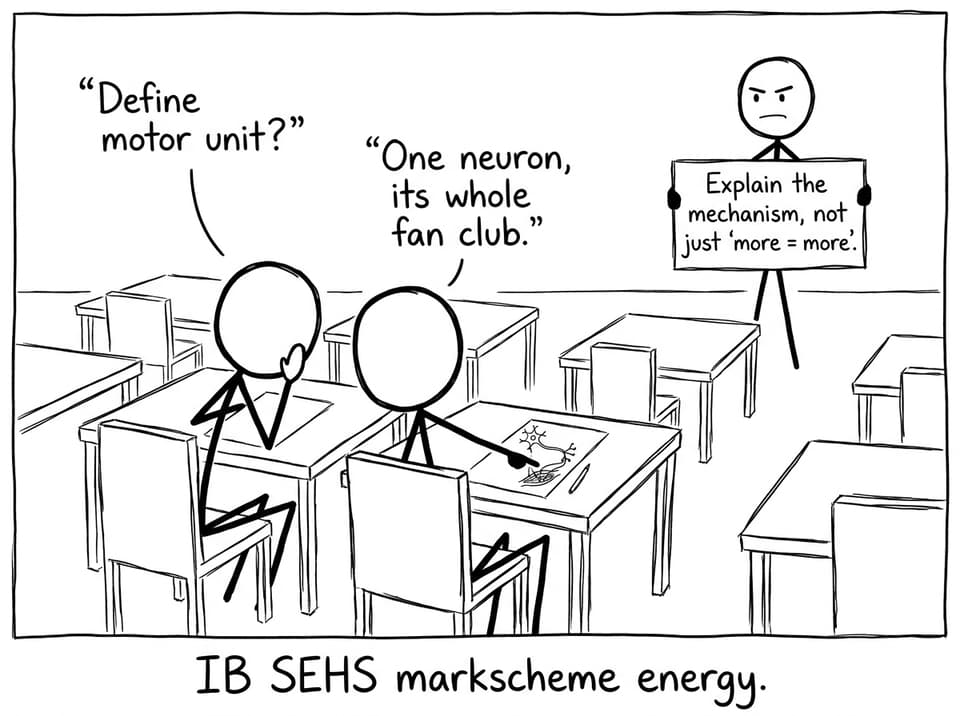
Motor unit questions often require explanation rather than definition. High-mark answers clearly describe what a motor unit is, how recruitment works, and why it is important for force production during exercise.
Avoid simply stating that “more motor units means more force” without explaining the mechanism.
RevisionDojo Call to Action
If motor units and force production feel abstract or hard to visualise, RevisionDojo helps IB SEHS students master biomechanics topics with clear explanations and exam-style practice. It is the most effective way to build confidence in movement analysis.
Frequently Asked Questions (FAQs)
What is a motor unit in IB SEHS?
A motor unit is a motor neuron and all the muscle fibres it controls. When the neuron fires, all fibres in the unit contract.
How does motor unit recruitment increase force?
Recruiting more motor units activates more muscle fibres, increasing the total force produced by the muscle.
How are motor units tested in IB SEHS exams?
Students are often asked to explain motor unit recruitment in relation to exercise intensity and force production.