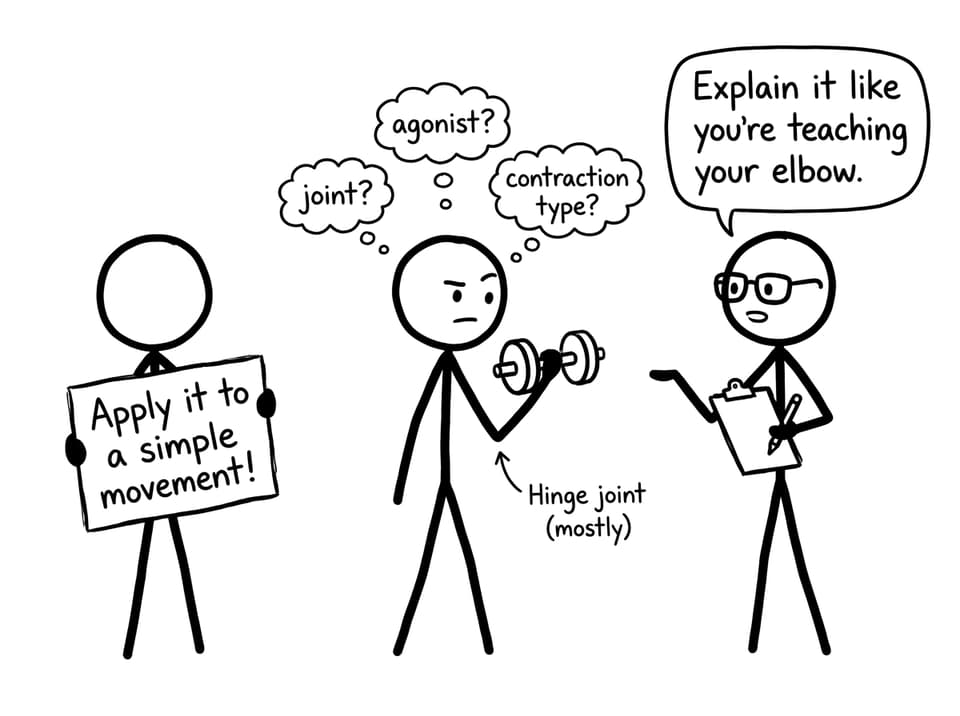


Movement generation is one of those IB SEHS topics that looks “simple” until you see a six-mark question asking you to explain a sprint start or a squat with precise terminology. Suddenly, it’s not just muscles. It’s joints, agonist-antagonist pairs, contraction type, motor units, and control. The good news: revising movement generation doesn’t require you to memorise a textbook. It requires you to build a few strong mental models and practise applying them.
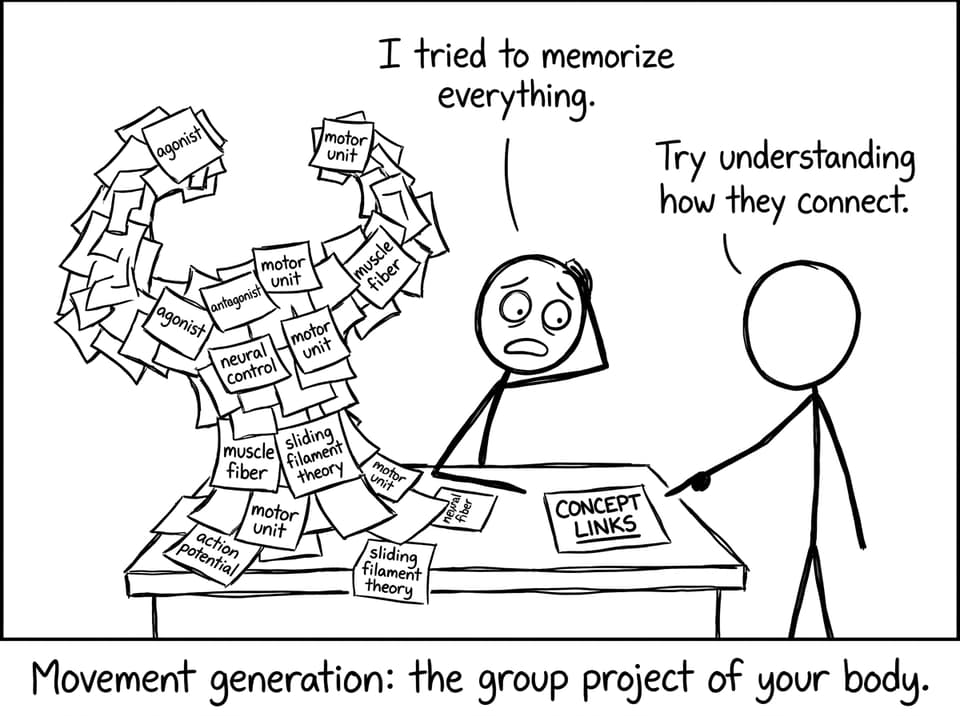
The movement generation checklist (your 60-second scan)
Use this quick checklist at the start of each IB SEHS revision session:
-
What joint action is happening (flexion, extension, etc.)?
-
Which muscle is the agonist, which is the antagonist?
-
What contraction type is each muscle doing (concentric, eccentric, isometric)?
-
Where does neural control appear (motor units, recruitment, timing)?
-
Can you apply it to a real movement in one clean paragraph?
If any bullet feels fuzzy, that’s your target.
Build your foundation: principles before detail
In IB SEHS, movement generation is the story of teamwork: the muscular system produces force, the skeletal system provides levers and joints, and the nervous system coordinates the whole thing.
Start by grounding yourself in the basics, then expand:
-
Muscles generate force by contracting and pulling on bones via tendons.