

Agonist and Antagonist Muscles Explained
Movement in the human body is produced through the coordinated action of muscles working in pairs. In IB Sports, Exercise and Health Science (SEHS), understanding agonist and antagonist muscles is essential for explaining how movement is generated, controlled, and stabilised during physical activity.
Because muscles can only pull and not push, movement at a joint always requires cooperation between at least two muscles.
What Is an Agonist Muscle?
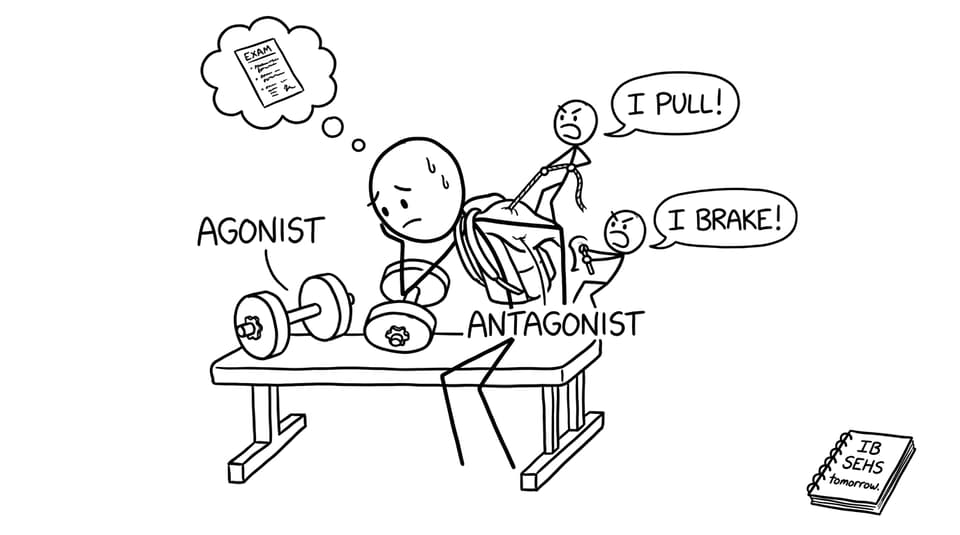
The agonist is the muscle primarily responsible for producing a specific movement. It contracts to create force and causes movement at a joint.
Key features of an agonist muscle include:
- It shortens or produces tension to create movement
- It is the main mover in an action
- It works against resistance
For example, during elbow flexion, the biceps act as the agonist. In sporting movements such as sprinting or jumping, the agonist muscles generate the force needed to accelerate the body.
In IB SEHS exams, students should clearly identify the agonist when describing a movement.
What Is an Antagonist Muscle?
The antagonist is the muscle that opposes the action of the agonist. Its role is to control, slow down, or stabilise movement.
Key roles of the antagonist include:
- Controlling the speed of movement
- Preventing excessive joint motion
- Supporting joint stability
Using the elbow flexion example, the triceps act as the antagonist while the biceps contract. The antagonist often performs an eccentric contraction to control the movement smoothly.
How Agonist–Antagonist Pairs Work Together
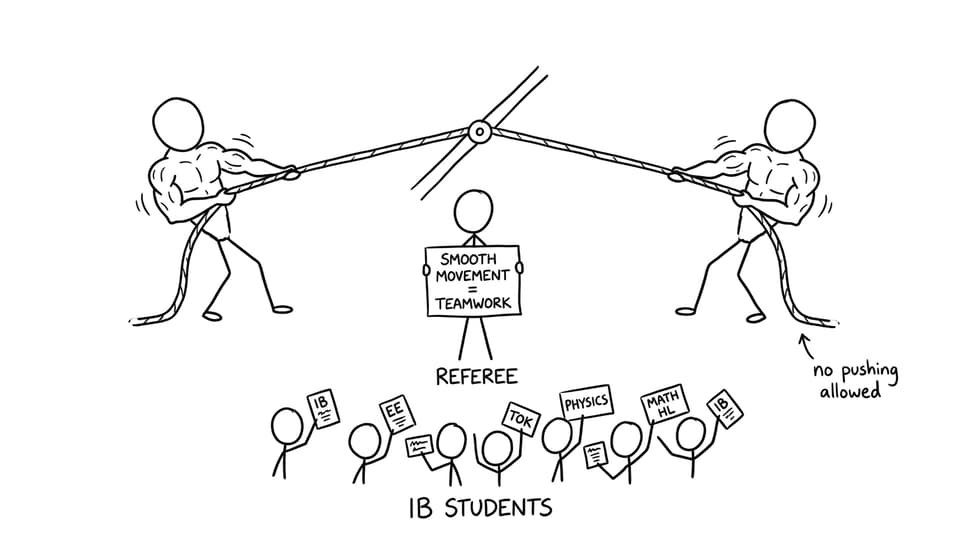
Agonist and antagonist muscles work together to produce smooth and coordinated movement. When the agonist contracts, the antagonist relaxes or lengthens under tension.
This coordination allows:
- Controlled acceleration and deceleration
- Reduced injury risk
- Improved movement efficiency
Poor coordination between agonist and antagonist muscles can lead to inefficient movement or increased injury risk.
Sporting Examples of Agonist and Antagonist Action
In sport, most movements involve rapid switching between agonist and antagonist roles.
Examples include:
- Quadriceps and hamstrings during running
- Biceps and triceps during throwing
- Hip flexors and gluteals during sprinting
Understanding these roles helps IB SEHS students analyse technique and movement effectiveness.
Exam Relevance for IB SEHS
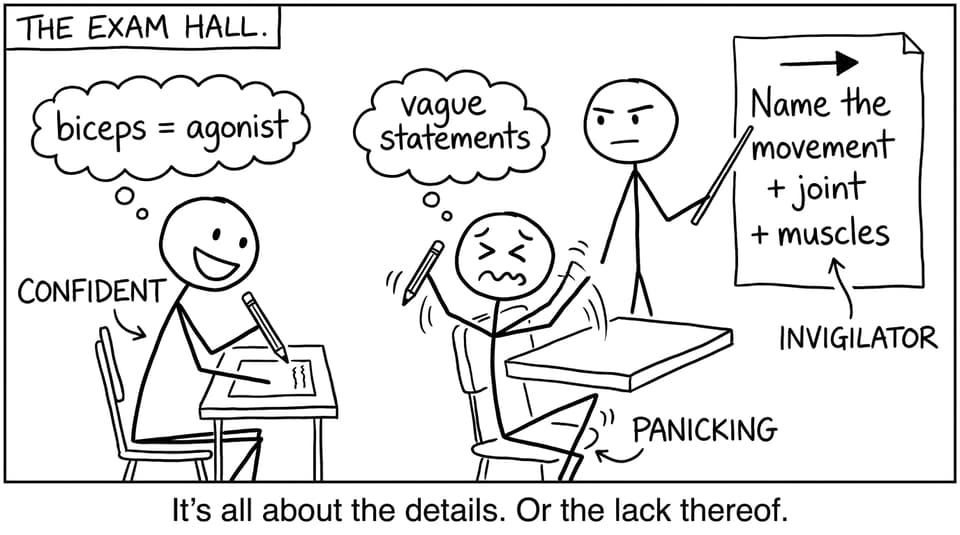
In IB exams, questions often require students to identify agonist and antagonist muscles in specific movements. High-mark answers clearly name the muscles involved, describe their roles, and apply the explanation to a sporting action.
Avoid vague statements such as “the muscles work together” without specifying how.
RevisionDojo Call to Action
If biomechanics topics like agonist and antagonist muscles feel confusing, RevisionDojo provides clear IB SEHS explanations with applied examples and exam-style practice. It is the most effective way to master movement analysis with confidence.
Frequently Asked Questions (FAQs)
Why do muscles work in agonist–antagonist pairs?
Muscles can only pull, not push, so they must work in pairs to produce and control movement at joints.
Does the antagonist always relax?
No. The antagonist often performs an eccentric contraction to control and stabilise movement.
How are agonist and antagonist muscles tested in IB SEHS exams?
Students are usually asked to identify muscle roles in specific movements and explain how they contribute to movement control.