

Real-World Sports Examples of Movement Generation
Understanding movement generation becomes much easier when biomechanics concepts are applied to real sporting actions. In IB Sports, Exercise and Health Science (SEHS), examiners frequently expect students to use sporting examples to demonstrate how muscles generate force and produce movement at joints.
Applied answers consistently score higher than theoretical explanations because they show clear understanding of how biomechanics works in practice.
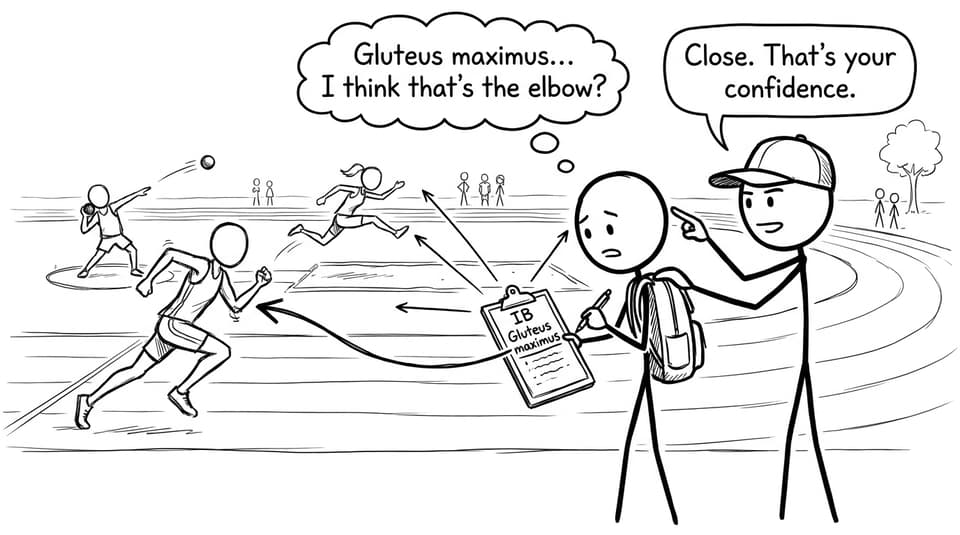
Sprinting: Lower-Body Force Production
Sprinting is an excellent example of movement generation involving powerful lower-body muscle action.
During sprinting:
- The gluteal muscles act as agonists to extend the hip
- The quadriceps extend the knee
- The hamstrings control leg recovery through eccentric contraction
Rapid force production and effective motor unit recruitment allow the athlete to accelerate quickly. In IB SEHS, sprinting is commonly used to explain power, fast-twitch fibre recruitment, and neural activation.
Jumping: Explosive Triple Extension
Vertical jumping demonstrates how multiple joints work together to generate movement.
Key features include:
- Hip extension driven by the gluteals
- Knee extension produced by the quadriceps
- Ankle plantarflexion by the calf muscles
This sequence is known as triple extension. Efficient jumping requires coordinated concentric contractions and high power output. Poor coordination reduces jump height and efficiency.
Throwing: Upper-Body Coordination and Control
Throwing actions highlight the importance of coordination between muscles.
During a throw:
- The shoulder and arm muscles generate force
- Core muscles stabilise the trunk
- Antagonist muscles control movement speed
Both concentric and eccentric contractions are involved. In IB SEHS, throwing is often used to explain agonist–antagonist roles and muscle coordination in complex movements.
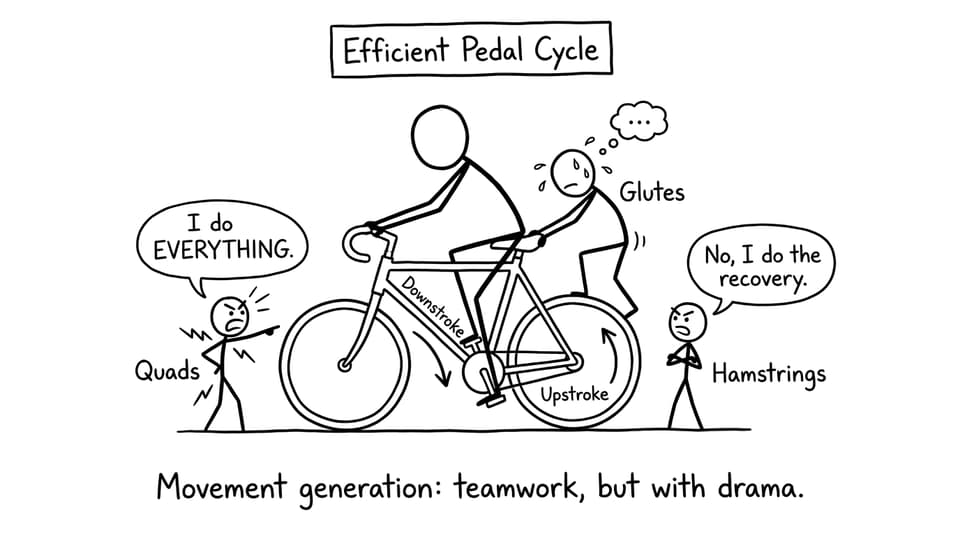
Cycling: Continuous Force Production
Cycling provides a clear example of continuous movement generation.
During the downstroke:
- The quadriceps act as agonists
- Force is applied smoothly through the pedal
During the upstroke:
- Antagonist muscles assist in movement recovery
Efficient cyclists apply force evenly throughout the pedal cycle, reducing wasted energy and improving endurance performance.
Why Sporting Examples Matter in IB Exams
IB examiners reward answers that:
- Name specific muscles
- Identify contraction types
- Explain how force produces movement
- Link biomechanics to performance outcomes
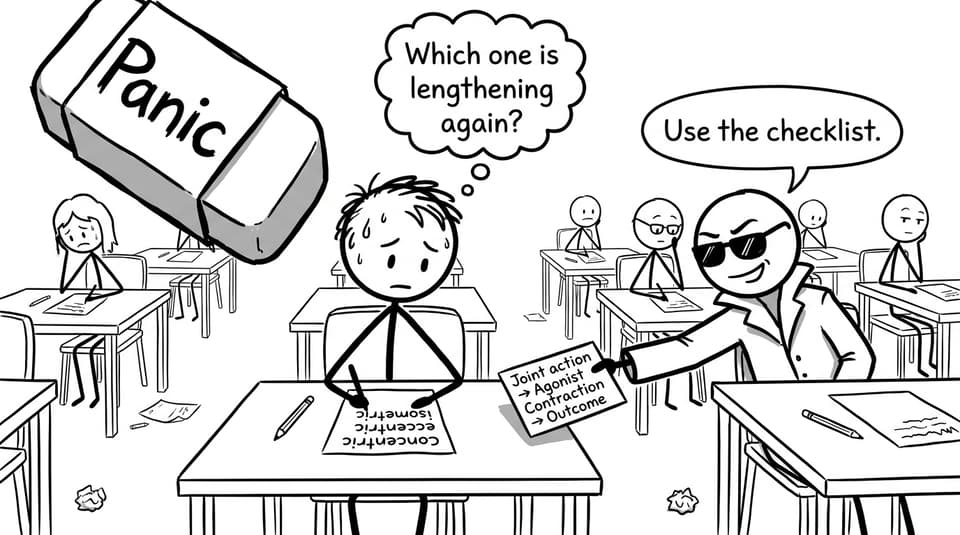
Using real-world examples helps students structure clear, applied responses rather than vague descriptions.
Exam Tip for IB SEHS
When answering movement generation questions:
- Choose a simple, familiar movement
- Apply correct terminology
- Explain muscle roles clearly
Avoid overly complex examples that are hard to explain under exam pressure.
RevisionDojo Call to Action
If applying biomechanics concepts to sport feels challenging, RevisionDojo helps IB SEHS students practise movement analysis using clear real-world examples and exam-style guidance. It is the most effective way to master applied biomechanics.
Frequently Asked Questions (FAQs)
Why are sports examples important in B.1 questions?
They show application of biomechanics concepts, which examiners reward more than theoretical explanations.
Do I need to memorise specific sports examples?
No. It is better to understand simple movements well and apply them clearly than memorise many complex examples.
What makes a good sporting example in IB SEHS exams?
Clear identification of muscles, contraction types, joint movement, and performance relevance.