
Forces and motion is where a lot of IB students feel confident…and then quietly lose marks.
It usually happens in small ways: a missing direction, a law quoted without application, or a sporting example that sounds true but explains nothing. In IB SEHS, those small gaps matter because biomechanics questions reward precision and cause-and-effect thinking.
Below are the most common IB SEHS forces and motion mistakes, plus practical fixes you can apply immediately.
Quick checklist to stop losing easy marks in IB SEHS
-
State what causes what: net force -> acceleration -> change in velocity
-
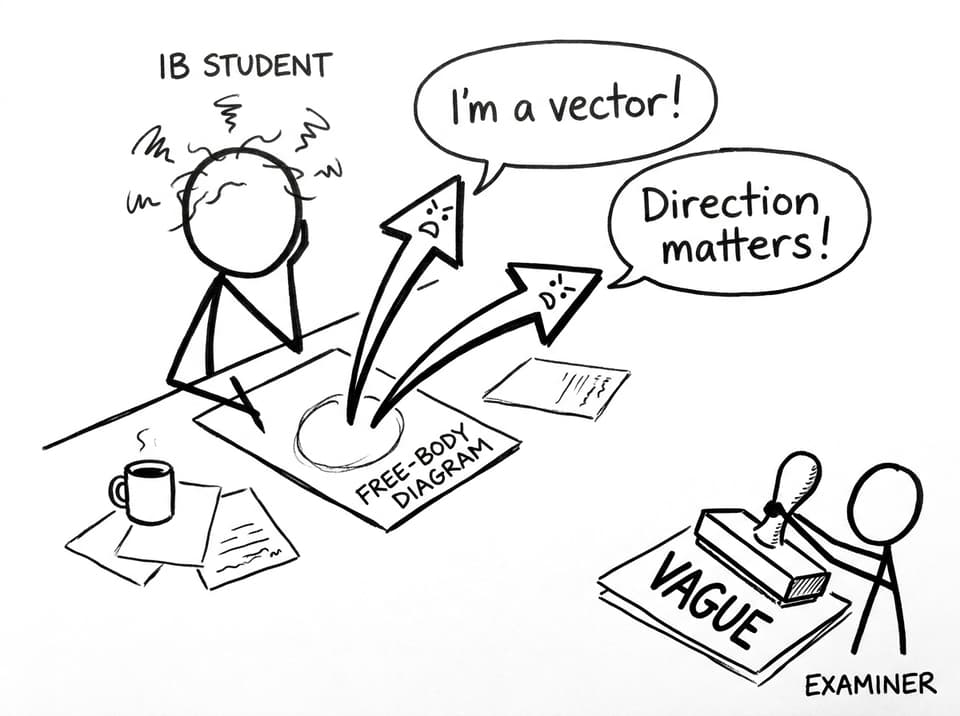
Use vector language: magnitude and direction
-
Pick one realistic sport movement (sprint start, jump take-off, landing) and reuse it
-
Use equations as support, not as the whole answer
-
Practice with markscheme-style questions from IB SEHS resources
For targeted practice, start with B.2 Forces, motion and movement.
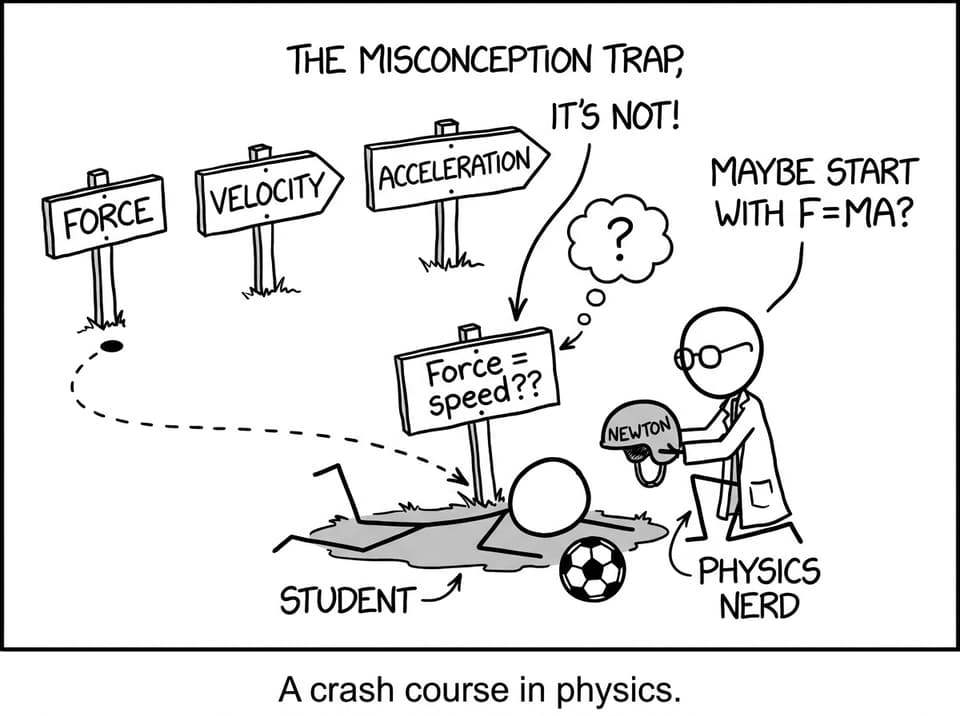
Mistake: treating force and motion like the same thing
A force is not “speed” and it is not “movement.” In IB SEHS, force is the cause that can change motion. Motion describes what the body or object is doing (velocity, acceleration), while force explains why it changes.
Fix it: use one clean sentence pattern:
- “A net force acts on the athlete, causing acceleration in the direction of the net force.”
If you want a crisp Newton’s-law refresher, use Notes for B.2.1 Newton’s laws of motion and then test it with B.2 Forces, motion and movement - IB Questionbank.
Mistake: memorising Newton’s laws but not applying them
In IB SEHS, writing Newton’s laws word-for-word is rarely enough. Examiners want the law connected to a specific scenario.
Common slips:
-
Using the First Law even though acceleration is clearly happening
-
Forgetting mass in the Second Law (it’s not just “more force = more acceleration”)
-
Mentioning the Third Law without describing interaction forces (e.g., athlete and ground)
Fix it: anchor each law to one movement you can explain under pressure. Sprint start works well. For a clear application example, read Newton’s First Law in Sport and then reinforce it with the step-by-step Lessons for B.2.1 Newton’s laws of motion.
Mistake: ignoring direction (vectors and components)
Forces are vectors. If you only talk about “more force” without direction, your IB SEHS explanation often becomes incomplete.
Typical mark-loss moments:
-
Describing force magnitude but not the direction of acceleration
-
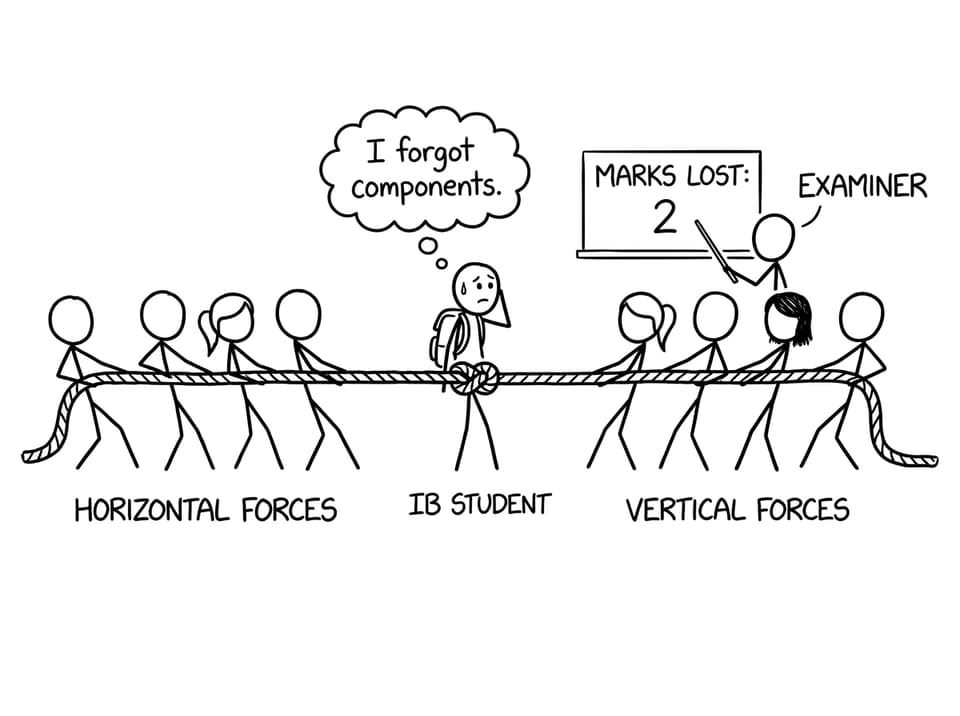
Mixing up horizontal vs vertical components (especially in jumps and landings)
-
Forgetting that “net force” means forces can cancel
Fix it: add a direction phrase every time: “forward,” “upwards,” “opposite to motion,” “towards the ground.”
Mistake: vague sporting examples that don’t prove understanding
“An athlete pushes harder” is not an example; it’s a placeholder.
Fix it: name the movement and the outcome.
- “During a vertical jump take-off, greater net upward force increases upward acceleration, increasing take-off velocity and jump height.”
If biomechanics feels scattered, consolidate with Conquering Biomechanics: A Visual Guide to SEHS Topic 4 and keep your overall map of IB SEHS content handy via IB Sport Science Notes.
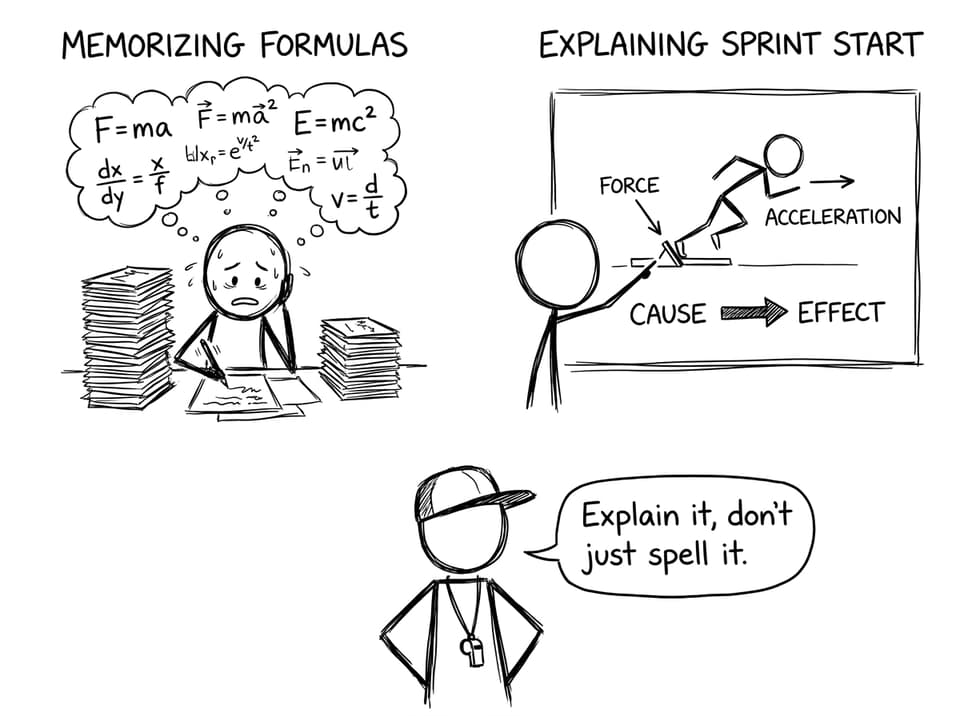
Mistake: overusing formulas without explanation
Equations like (F = ma) help, but IB SEHS marks come from interpretation: what changes, why it changes, and how performance is affected.
Fix it: write the equation, define symbols quickly, then translate into English for the scenario.
You can also borrow structure from How to Revise Forces and Motion, which focuses on exam-style explanation.
Finish strong: turn IB SEHS biomechanics into easy marks
Forces and motion in IB SEHS isn’t about sounding technical; it’s about being specific. Add direction, apply the correct Newton’s law to a real movement, and explain the cause-and-effect chain.
When you’re ready to lock this in, RevisionDojo is built for it: Questionbank practice, focused Study Notes, rapid Flashcards, supportive AI Chat, plus Grading tools, Predicted Papers, Mock Exams, a Coursework Library, and expert Tutors, so your next biomechanics answer reads like the markscheme, not like a guess.