


TOK grading can feel oddly invisible: you hand in 950 words, display three objects, and then a letter grade appears weeks later like a verdict.
But the TOK Exhibition isn’t a mystery. It’s a controlled task with a clear purpose: show that you can use real-world objects to explore a prescribed prompt with precise, thoughtful TOK analysis. Once you understand what’s actually assessed (and what isn’t), the whole thing becomes easier to plan, write, and polish.
What the TOK Exhibition is (and what counts)
The TOK Exhibition is the internal TOK assessment worth 33% of your final TOK result. You choose one of the IB’s prescribed prompts, select three objects (or images of objects), and write a single commentary of up to 950 words total.
Two details matter more than students expect:
-
Your exhibition is marked by your TOK teacher first, then externally moderated by the IB to keep standards consistent.
-
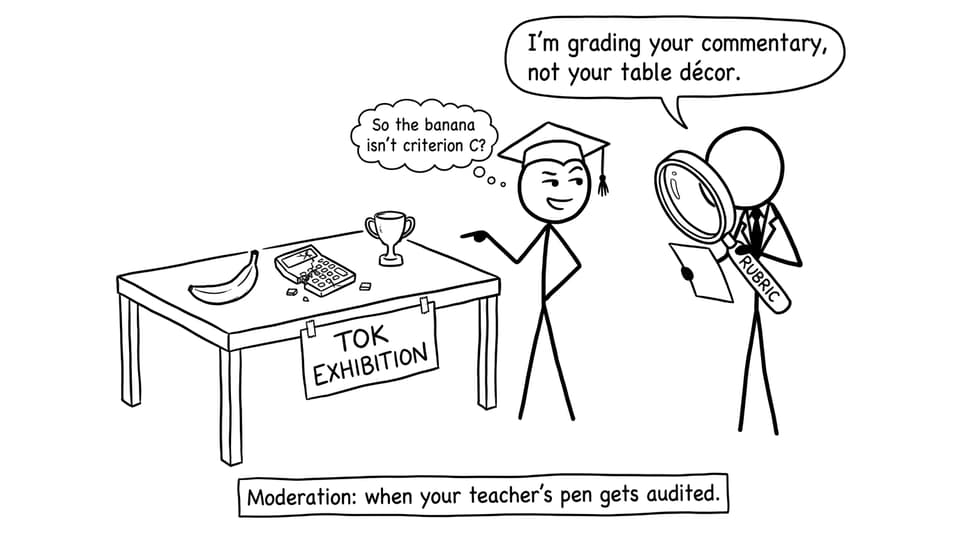
Only the written commentary is assessed. The physical display, aesthetic design, and how confidently you talk about it are not what earns marks.
If you want the bigger picture of requirements across TOK, this guide is a useful starting point: IB TOK requirements explained: essay, exhibition, assessment.
Quick TOK grading checklist before you submit
Use this as a final scan. A strong TOK exhibition usually has:
-
A prompt that you interpret clearly (not just restated)
-
Three objects that are specific, real, and meaningfully different
-
For each object: context + link to the prompt + a knowledge-focused insight
-
A consistent thread running through all three objects (not three mini-essays)
-
Clear writing that stays analytical, not descriptive
For object strategy, see: Selecting the right objects for your TOK exhibition.
How the TOK Exhibition is graded (rubric focus)
At its core, TOK exhibition grading rewards one thing: well-justified objects that illuminate the prompt through TOK thinking.
Across the rubric language, examiners are essentially looking for five qualities:
Strong object justification
Your objects shouldn’t be “cool” or “deep.” They should be defensible. A top-mark exhibition makes it obvious why this object belongs with this prompt, and why a generic substitute would weaken the point.
Depth of TOK analysis (not description)
Many drafts spend too many words narrating what the object is. High-scoring TOK writing moves quickly into what the object shows about knowledge: evidence, interpretation, bias, authority, methods, certainty, or ethical responsibility.
Coherence across the three objects
Your three objects should feel like three angles on one question, not three unrelated examples. Coherence is often what separates “fine” from “excellent.”
Critical engagement and perspectives
TOK wants you to show awareness that knowledge claims can be challenged. Even a brief counter-perspective (or limitation) signals maturity: “This object suggests X, but only if we assume Y.”
Clarity and control of writing
The best exhibitions are “precise, lucid, and convincing” because every sentence earns its place. If your commentary feels calm, your thinking looks calm.
For a more detailed breakdown of how to hit top bands, use: TOK exhibition rubric: how to score top marks.
Moderation: why your teacher’s mark isn’t the whole story
TOK is internally assessed, which means your teacher awards the initial mark. Then the IB moderates a sample from your school to make sure grading aligns internationally.
Practically, this means you should write for the rubric, not for your teacher’s personal preferences. If your exhibition is clearly aligned to TOK expectations, it stays strong even when it’s read by someone who has never met you.
If you’re unsure whether you’re doing “exhibition thinking” or “essay thinking,” this helps: TOK essay vs exhibition: key differences and tips.
How the exhibition affects your overall TOK grade
Your final TOK outcome combines:
-
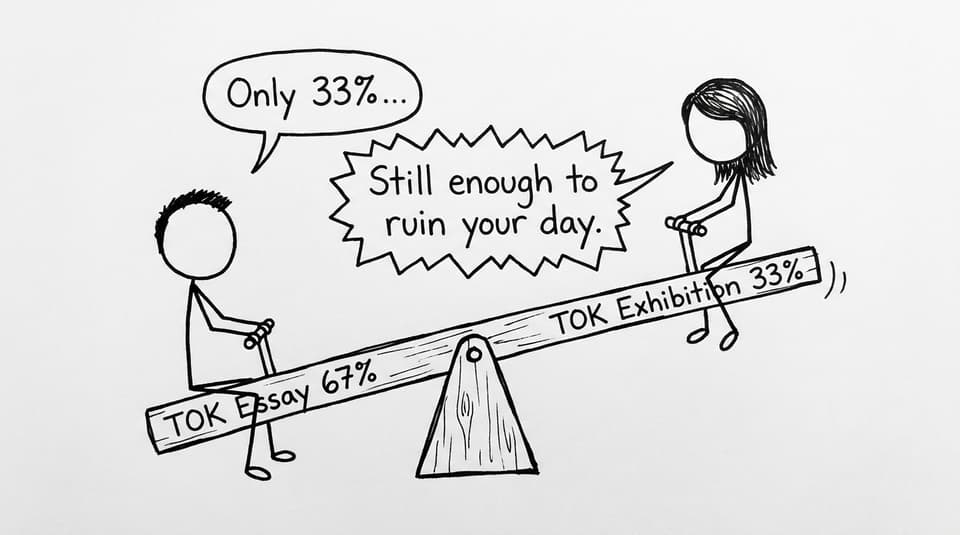
TOK Exhibition: 33%
-
TOK Essay: 67%
So yes, the essay weighs more. But 33% is still enough to drag down a strong essay, or rescue an essay that’s a bit shaky.
To understand the stakes, read: Understanding the weighting of TOK assessments in your IB score and What happens if I don’t pass TOK?.
How RevisionDojo helps you improve your TOK Exhibition faster
When students struggle in TOK, it’s rarely about intelligence. It’s about feedback quality.
RevisionDojo makes TOK revision measurable using:
-
The IB TOK Exhibition Grader for rubric-aligned draft feedback
-
A Coursework Library of TOK exhibition exemplars to see what “good” actually looks like
-
TOK hub resources like IB Theory of Knowledge resources
And if you’re balancing multiple deadlines, this guide keeps things realistic: How to balance your time between TOK essay and exhibition.
Final takeaway: make TOK grading visible
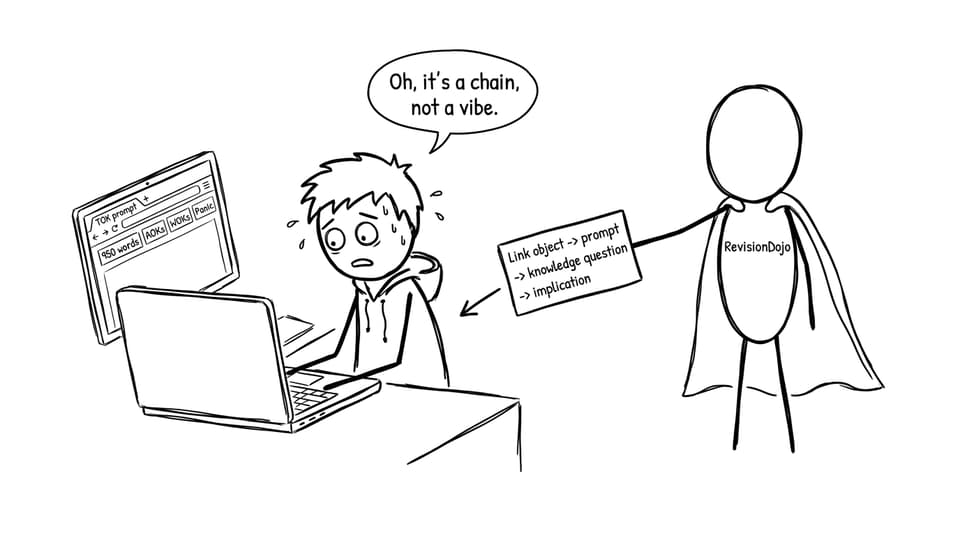
If you want to feel confident about TOK exhibition grading, stop aiming for “deep” and start aiming for “defensible.” Choose objects you can justify, build a clear chain from object to prompt to knowledge insight, and write with calm precision.
When you’re ready to tighten your draft, use the IB TOK Exhibition Grader and compare your structure against the TOK exhibition rubric guide. TOK rewards students who revise with feedback, and RevisionDojo is built to make that loop fast.