


The quiet truth about scoring high in TOK
The fastest way to lose marks in TOK is also the most common: treating the exhibition like a show-and-tell.
A top exhibition feels different. It reads like someone noticed something real in the world, then used TOK to explain why it matters: how knowledge is made, trusted, challenged, or controlled. And because the exhibition is worth 33% of your final TOK result, getting the rubric right is not a minor detail; it is the whole game.
If you want a bigger overview first, open IB Theory of Knowledge (TOK) Resources and keep it nearby while you plan.
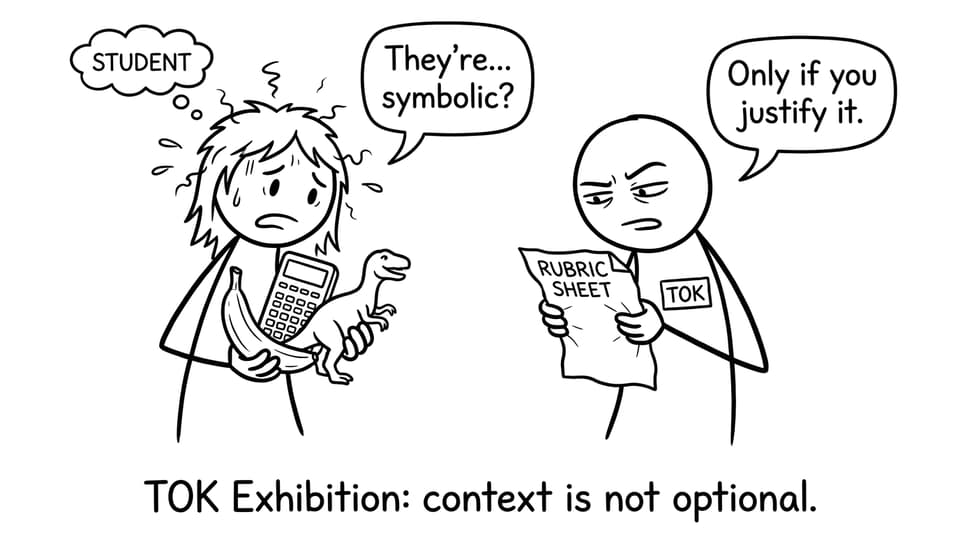
TOK exhibition rubric checklist (use this before drafting)
-
One prescribed prompt you interpret (not just repeat)
-
Three specific, real objects (or images of real objects) with clear provenance
-
For each object: context, explicit link to the prompt, and justification using TOK ideas
-
Cross-links between the three objects (one thread, not three mini-essays)
-
Clear, concise writing under the 950-word total (references excluded)
For a fuller walkthrough, see How to Excel in Your IB TOK Exhibition: Complete Step-by-Step Guide.
What the TOK exhibition rubric is really rewarding
The exhibition is assessed holistically out of 10. In practice, your writing still needs to demonstrate four things that examiners consistently reward: strong links, strong justification, real-world grounding, and coherence.
Interlinking ideas (make the prompt visible)
High-scoring TOK writing does not hope the marker “gets it.” It states the link.
A simple habit: echo a key phrase from the prompt in every object section, then explain the relationship in one crisp sentence. If you are unsure whether your links are direct enough, compare your structure with How to Create an Engaging TOK Exhibition Commentary.
Justifying ideas (go beyond description)
Description tells us what the object is. Justification tells us why it belongs in this exhibition.
Use TOK language naturally: perspective, evidence, bias, authority, interpretation, reliability. Then push one level deeper: what does this object reveal about how knowledge is evaluated or shared?
If your justification feels thin, borrow analytical moves from IB Theory of Knowledge 4.2 the TOK Essay and apply them at object level.
Real-world context (specific beats impressive)
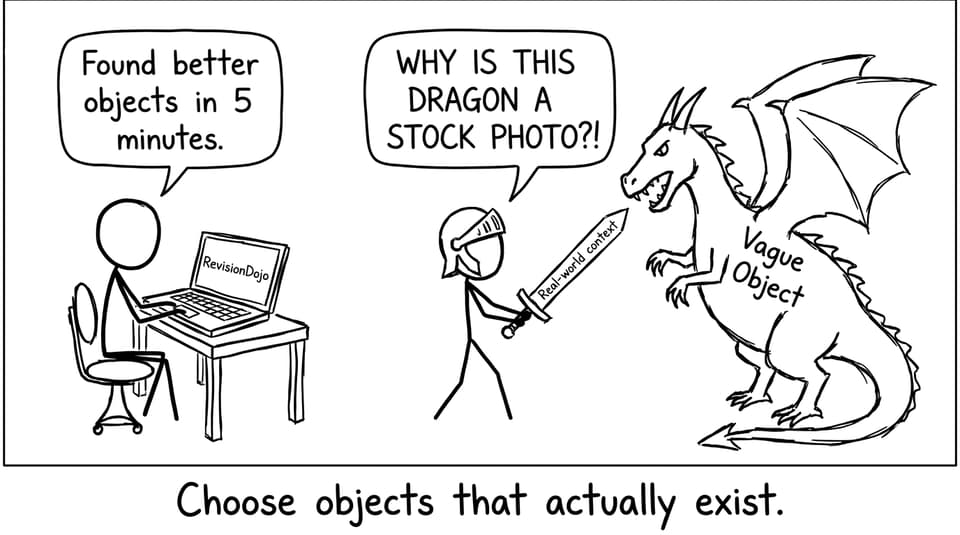
Markers prefer an ordinary object with sharp context over an “interesting” object with vague context.
Name the where/when/who. What is the object’s origin? What community uses it? What problem does it solve? For object strategy, use Selecting the Right Objects for Your TOK Exhibition and What are the TOK Exhibition Prompts?.
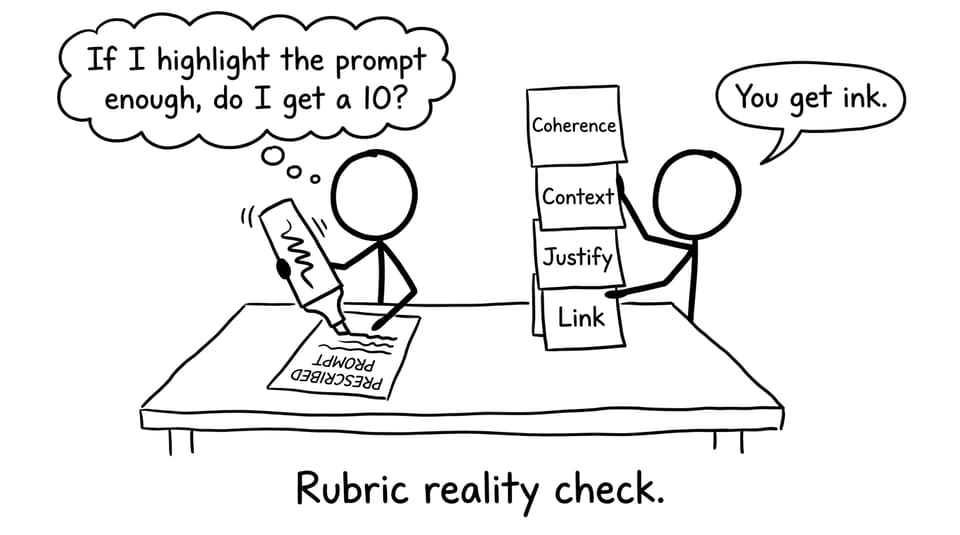
Focus and coherence (one argument, three angles)
A strong TOK exhibition feels like one conversation that deepens.
Use transitions that connect objects: “This matters because…”, “Unlike Object 1…”, “Together, these show…”. If your draft reads like three separate paragraphs pasted together, you are leaving marks behind.
How to hit the top markbands in TOK
Top bands (7-10) usually have three traits:
-
Distinct objects that produce distinct insights
-
Explicit reasoning (no implied links)
-
Precision in claims, terminology, and real-world detail
To sanity-check your level fast, run your draft through the free IB TOK Exhibition Grader. It translates the rubric into plain English and gives targeted next steps.
How RevisionDojo helps you improve faster
A lot of TOK stress comes from not knowing what to fix first. RevisionDojo is built to shrink that uncertainty.
-
Use Study Notes to clarify key TOK terms without over-reading.
-
Use How Is the TOK Exhibition Graded? (IB Student Guide) as your marking lens.
-
Use the rubric-aligned grader to iterate quickly, then ask Jojo AI Chat follow-up questions about specific sentences.
-
When you want human feedback, pair it with Tutors for a clear revision plan.
If you are balancing everything at once, the workflow mindset in RevisionDojo App: The Smarter Way to Prep for IB Exams applies surprisingly well to TOK too.
Closing: the simplest path to top marks in TOK
High marks in TOK are not about sounding profound. They come from being specific, coherent, and honest about how knowledge works in the real world.
Choose three objects that genuinely exist in context. Link each one explicitly to the prompt. Justify what the connection reveals. Then refine with RevisionDojo, from the TOK resource hub to the Exhibition Grader, until your thinking becomes unmistakable on the page.