


TOK is the one IB requirement that can feel invisible until it suddenly isn’t.
You can be strong in HLs, survive coursework week, and still feel your stomach drop when someone says: “If you get an E in TOK, you don’t get the diploma.” That sentence spreads through group chats like a rumor, but it’s not a rumor. It’s the rule. And it’s exactly why understanding TOK early (not the night before submission) is one of the most practical things you can do as an IB student.
This guide explains what failing TOK really means, how the assessment works, and what to do if you’re worried. We’ll keep it honest, calm, and focused on actions that raise your chances of a passing TOK grade.
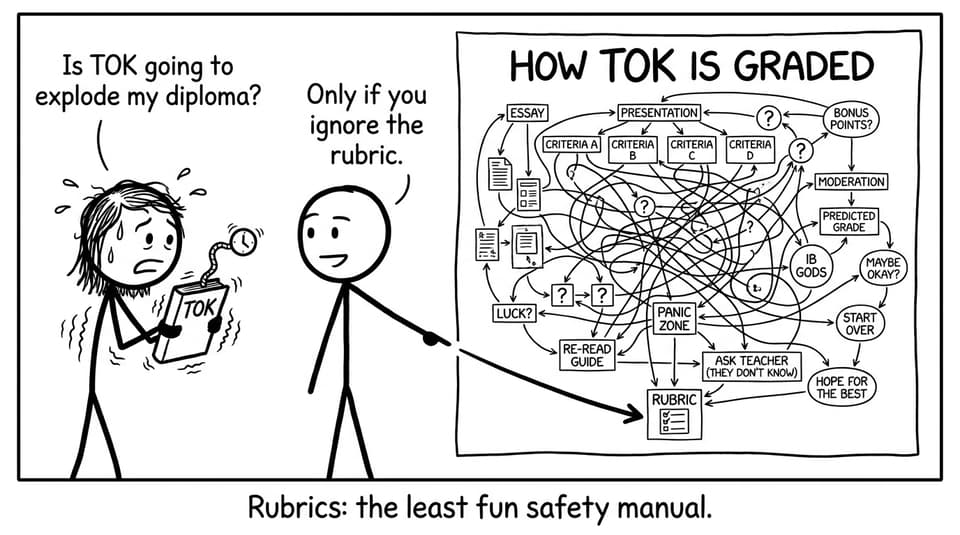
Quick checklist: if you’re scared about TOK, do this first
-
Confirm what “fail TOK” actually means (it’s about your final TOK grade, not one rough draft).
-
Learn the two assessed parts: the TOK essay and TOK exhibition.
-
Check weightings and criteria, then plan backward from deadlines.
-
Get criterion-based feedback early (not “sounds good”).
-
Use one system to revise: question practice, notes, feedback, and redrafting.
If you want a single hub for the course, start with IB Theory of Knowledge Resources and keep it open while you work.
How TOK is assessed (and why it can feel confusing)
TOK is assessed through two components:
-
TOK essay (maximum 1,600 words)
-
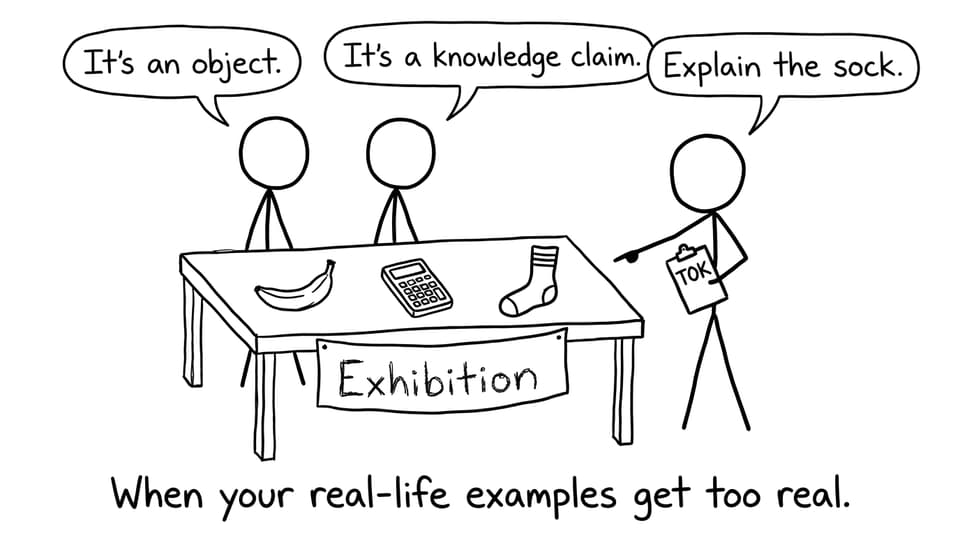
TOK exhibition (commentary up to 950 words total, based on three objects)
Both pieces matter because your final TOK grade is holistic across components. You’re not trying to write something “philosophical.” You’re trying to hit what the rubric rewards: clear focus on the knowledge question, precise examples, balanced evaluation, and justified conclusions.
For a clean breakdown of requirements, see IB Theory of Knowledge (TOK) Requirements Explained.
TOK essay: what it’s really testing
The TOK essay asks you to respond to one prescribed title. The strongest essays are rarely the fanciest. They’re the clearest.
Most students lose marks for the same reasons:
-
They drift away from the title and stop answering “to what extent.”
-
They give examples without analysis (storytelling without evaluation).
-
They name-drop Areas of Knowledge instead of using them.
If you’re unsure about structure, use Comprehensive Guide to IB TOK Essay Structure as your template.
TOK exhibition: where simple choices can save your grade
The TOK exhibition can feel easier because it’s shorter, but it’s also where students accidentally go vague. “My object is a watch because time is knowledge” sounds deep until you try to explain the knowledge link precisely.
To understand what earns marks, read TOK Exhibition Rubric: How to Score Top Marks and pair it with How Is the TOK Exhibition Graded?.
What happens if you fail TOK in the IB Diploma?
Failing TOK has a specific meaning in the IB Diploma: you receive an E as your overall TOK grade.
Here’s the consequence that matters:
- If you get an E in TOK, you fail the core requirement and you are not awarded the full IB Diploma, even if your subject grades are strong.
That’s why students talk about TOK like it’s a small course with a big lever. It doesn’t add many hours to your week, but it can decide the credential.
RevisionDojo also explains how this interacts with the wider diploma requirements in What Is the Core Requirement in IB? and the broader context in Failing IB: What Actually Happens (and What to Do Next).
Does failing the TOK essay automatically mean failing TOK?
Not necessarily.
Your final TOK outcome comes from both the essay and the exhibition. A weak essay can sometimes be balanced by a stronger exhibition (and vice versa), depending on the marks and boundaries in your session.
If you’re trying to understand what “passing” looks like, read What Is the Minimum Grade to Pass TOK? and keep IB Theory of Knowledge (TOK) 2025 Grade Boundaries Guide bookmarked for reference.
How TOK affects core points (and why people panic)
TOK and the Extended Essay combine in a matrix that can add up to 3 points to your diploma total.
But the bigger issue is this:
- An E in TOK (or an E in EE) is a failing condition for the diploma core.
If you want to understand how these two parts work together strategically, see EE vs TOK in 2027: How the IB Core Works Together.
What to do if you’re at risk of failing TOK
Most TOK problems are not “I’m bad at thinking.” They’re “I’m not showing my thinking in the way the rubric rewards.” That’s good news, because it’s fixable.
Get painfully specific about the rubric
Pick one draft paragraph and ask:
-
What is my claim about knowledge?
-
Where is the counterclaim?
-
Where do I evaluate the example (not just describe it)?
-
Where do I link back to the title?
If those answers are fuzzy, your examiner’s marks will be fuzzy too.
Build examples that do actual work
Good TOK examples behave like evidence in science: they test an idea.
A quick upgrade is to use one example per AOK and evaluate it in two directions:
-
Why does it support my claim?
-
What does it fail to prove?
If you need help choosing AOK pairings, use Connecting TOK Essay Ideas to Areas of Knowledge.
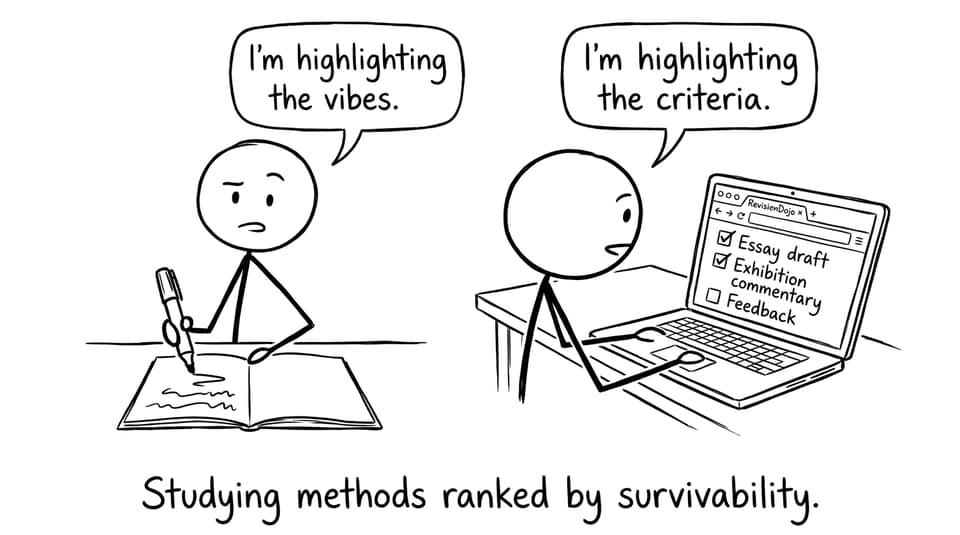
Use RevisionDojo like a feedback loop, not a library
When TOK feels overwhelming, students often respond by reading more. That can become a trap.
A better approach is a loop:
-
Draft one section.
-
Run it through AI Chat for clarity checks and counterclaims.
-
Use Grading tools to compare against the rubric language.
-
Pull targeted fixes from Study Notes.
-
Save key phrasing as Flashcards (yes, flashcards for argument moves work).
For exhibitions, you can even use the IB TOK Exhibition Grader to pressure-test whether your object commentary is actually answering the prompt.
Closing: TOK is small, but it’s not optional
The quiet truth about TOK is that it rewards calm thinking and punishes vague writing. If you fail TOK, it’s usually not because you lacked intelligence. It’s because your argument didn’t show clear knowledge claims, counterclaims, and evaluation the way the rubric expects.
So treat TOK like you treat your toughest IB topics: make it concrete, practice under criteria, and get feedback early.
If you want a full system to protect your TOK grade while you revise everything else, RevisionDojo gives you the tools students actually need under pressure: Study Notes, Flashcards, a targeted Questionbank mindset for practice, AI Chat, Grading tools, Mock Exams, Predicted Papers, a Coursework Library, and supportive Tutors when you need a human voice. Start with the links above, then turn your next TOK session into one small, measurable improvement.