



You don’t notice it while you’re doing it.
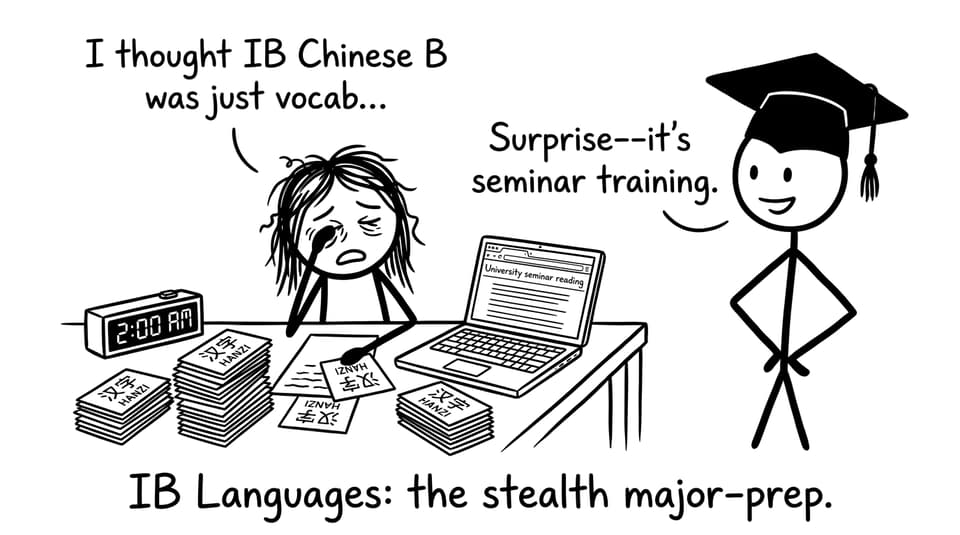
You think you’re studying IB Languages because a syllabus says you should, because exams are coming, because you need one more subject to behave. Then you arrive at university and realize something quietly comforting: you’ve been rehearsing for this kind of academic life for two years.
IB Chinese B isn’t only a language course. It’s a training ground for how university works: reading unfamiliar material with limited time, writing with purpose for a specific audience, speaking when you’d rather stay invisible, and making sense of culture without turning it into stereotypes. In other words, it’s one of the most practical routes through IB Languages if your goal is to feel capable on day one of university.
Quick checklist: the university skills Chinese B quietly builds
If you want a simple map of what IB Languages (and Chinese B specifically) gives you, use this checklist:
-
Reading for meaning, not translation: tone, purpose, and inference.
-
Academic writing structure: clear message, relevant examples, clean organization.
-
Research habits: using authentic sources and checking credibility.
-
Seminar-style speaking: prepared points plus calm improvisation.
-
Cultural analysis: context, perspectives, and nuanced comparison.
-
Time management across skills: balancing reading, listening, writing, and speaking each week.
A good place to anchor all of that in one workflow is the IB Chinese B hub, which pulls practice tools together so you can train each skill deliberately.
IB Languages and the university reading workload
University reading is less about knowing every word and more about staying steady while you don’t. That’s the first major advantage of IB Languages: you learn to tolerate ambiguity without panicking.
In IB Chinese B, reading tasks reward the exact behaviours university demands:
-
scanning for key details without getting stuck
-
distinguishing main ideas from supporting evidence
-
spotting bias, tone, and implied meaning
-
linking a text back to a broader theme (technology, identity, social change)
If you’re revising with exams in mind, you can train that university-style reading discipline using the IB Chinese B reading practice. The point isn’t just to get answers right. It’s to build the habit of making decisions quickly: what matters, what’s noise, and what the author is really doing.
For theme-level focus, it also helps to use a structure like The Five Core Themes of IB Chinese B Explained, because university reading gets easier when you already have “mental folders” for recurring issues.
Writing in IB Chinese B is university writing in miniature
Most students experience Paper 1 as “the writing paper.” Universities experience it as “every week.” What makes IB Languages so transferable is that you repeatedly practice writing with constraints: audience, register, purpose, format, and time.
Chinese B trains you to write in a way that university lecturers actually recognize as competent:
-
you make a point early
-
you support it with relevant examples
-
you keep your tone consistent
-
you signpost your structure so the reader doesn’t get lost
And just like university, improvement is less about inspiration and more about feedback loops. RevisionDojo makes that loop easier to run because you can write, get targeted input, then rewrite without guessing. If you’re building your plan, pair a strategy guide like How to Revise Effectively for IB Chinese B Exams with consistent practice from the hub.

The cultural advantage: why IB Languages helps you think better
University is full of people who can memorize. Fewer people can interpret.
This is where IB Languages pays dividends. Chinese B doesn’t let you treat language as a code you crack. It pushes you to treat language as a human system shaped by values, context, and history. That cultural competence becomes an academic advantage in degrees like international relations, business, history, sociology, media studies, and even computer science ethics.
In practice, cultural awareness helps you:
-
avoid overconfident “one story” explanations
-
compare perspectives thoughtfully instead of ranking them
-
spot how norms (hierarchy, politeness, collectivism, individualism) shape communication
If you want a syllabus-grounded way to revise that cultural component, start with What Is IB Chinese B? A Complete Beginner’s Guide and then turn the themes into speaking and writing prompts you recycle weekly.
Speaking skills: the hidden superpower of IB Chinese B
University rewards the student who can speak clearly when the room is quiet.
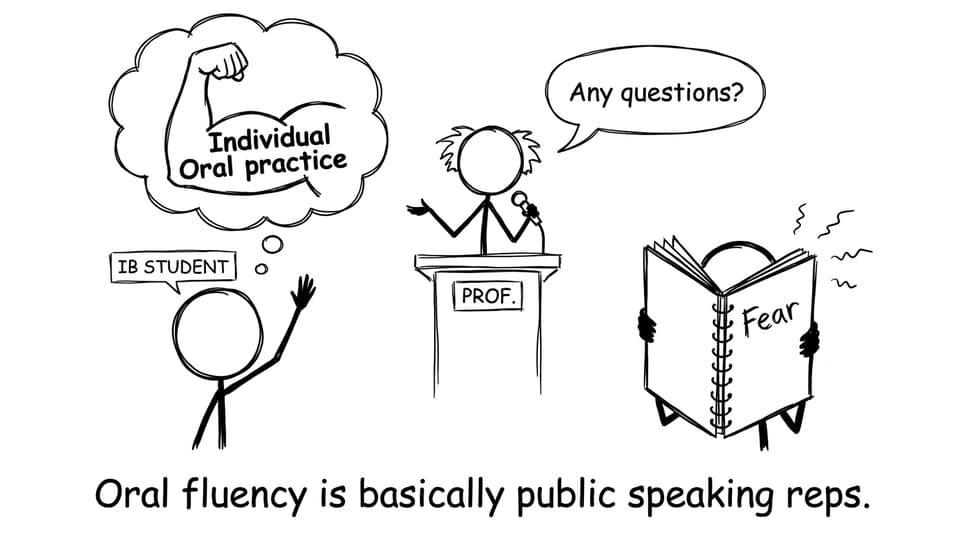
The Chinese B Individual Oral is basically rehearsal for seminars: you prepare a viewpoint, you organize evidence, and then you respond when the conversation shifts. That’s exactly what happens in tutorials, lab meetings, and group presentations.
The benefit of IB Languages here is subtle: you build confidence through repetition. Not loud confidence. The calmer kind. The kind where you can say, “I’m not fully sure yet, but here’s what the text suggests,” and keep going.
To make oral practice feel more predictable, use a marking framework. The guide IB Chinese B Grading Explained: What Students Need to Know clarifies what examiners reward, which also mirrors what university assessors tend to reward: clarity, relevance, and control.
How to turn IB Languages prep into a university-ready routine
Students who get the most from IB Languages don’t do “a bit of everything” randomly. They run a simple loop.
Here’s a routine you can sustain during exam season:
-
2x per week reading/listening blocks (timed, then reviewed)
-
1x writing task per week (plan fast, write, then improve)
-
3x short speaking reps (2 minutes each, theme-based)
-
Daily vocabulary (small, consistent, used in sentences)
RevisionDojo is built for that loop across tools that map onto IB reality: Study Notes for clarity, Flashcards for recall, AI Chat when you’re stuck, Grading tools for writing improvement, Questionbank for targeted skill practice, plus Predicted Papers and Mock Exams for realistic exam pressure. If you need a single place to start, use Best Resources for IB Chinese B Students and build your weekly plan from there.
And when you want more practice volume with feedback, the Questionbank feature is the fastest way to expose weak patterns early.
Conclusion: treat IB Chinese B as your first university course
If you see IB Chinese B as “just another exam,” you’ll miss what it’s really offering. IB Languages are one of the few parts of the Diploma that force you to think and perform across every communication channel: reading, listening, writing, and speaking, with culture woven through all of it.
So revise like someone preparing for more than a grade. Use the IB Chinese B hub to train each skill with intent, then tighten your feedback loop using RevisionDojo’s Questionbank, Study Notes, Flashcards, AI Chat, Grading tools, Predicted Papers, Mock Exams, Coursework Library, and Tutors. University won’t feel easy. But with IB Languages behind you, it can feel familiar, and that’s a powerful advantage.