
A week before exams, most students don’t worry that they “can’t speak Chinese.” They worry about something smaller and sharper: What if the prompt lands on the one topic I didn’t prepare? That’s the quiet pressure of IB Languages. Not the language itself, but the feeling that the course is a map you never fully unfolded.
In IB Chinese B, the map is surprisingly simple. Everything comes back to five prescribed themes. They shape what you read, what you hear, what you write, and what you discuss in the oral. Learn the themes well and the course stops feeling random. It starts feeling rehearsable.
A quick theme checklist (save this)
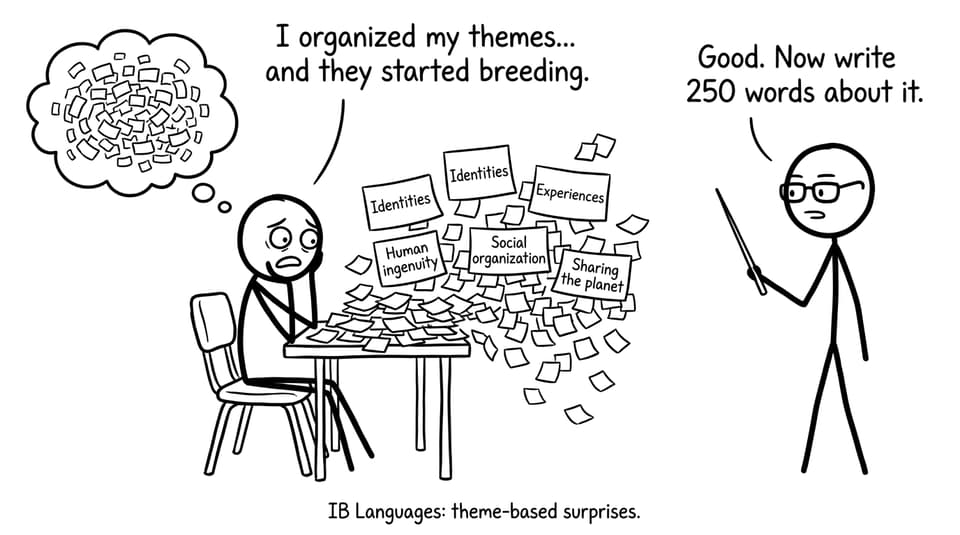
When you revise IB Languages, you want fast labels for your brain. Here are the five themes of IB Chinese B:
-
Identities (身份认同): health, relationships, values, individuality
-
Experiences (体验): routines, travel, leisure, life events
-
Human Ingenuity (人类创造力): technology, media, innovation, creativity
-
Social Organization (社会组织): education, work, communities, law, participation
-
Sharing the Planet (共享地球): environment, ethics, human rights, global challenges
Build one small vocabulary bank and a few flexible examples for each theme, and you’re no longer “studying Chinese.” You’re studying the way IB Languages assessments actually work.
To keep your revision aligned, it helps to start from a syllabus-shaped hub like IB Chinese B Resources, then branch into skills and themes.
Why the five themes matter in IB Languages exams
The themes aren’t decorative. They are the course’s organizing system.
-
In Paper 1 writing, prompts are always theme-linked, even when it looks like a simple blog post or speech.
-
In Paper 2 reading and listening, the contexts (announcements, articles, interviews) sit inside one of the themes.
-
In the Individual Oral, the visual stimulus is chosen to connect to a theme, and your job is to prove you can expand beyond description.
If you want an exam-specific overview, keep What to Expect From IB Chinese B Exams 2025 open while you plan. It frames theme revision inside the actual assessment structure.
Identities (身份认同): how you talk about who you are
Identities is the theme that sounds personal, but exams often make it social. Think: How do habits, community, and culture shape an individual?
Common angles include health and lifestyle (健康与生活方式), relationships (人际关系), food (饮食), and individuality or subcultures (亚文化).
How it appears in exams:
-
A Paper 1 prompt might ask for a speech about healthy living at school.
-
An oral discussion might steer toward how social media affects identity and wellbeing.
How to revise it (high-yield):
-
Learn opinion structures you can reuse: 我认为…因为…; 一方面…另一方面…
-
Build a micro word bank around emotions, routines, and values.
-
Prepare one personal example and one broader cultural example so your response isn’t only “me-focused.”
For a structured theme overview you can pair with practice, use IB Chinese B Core Themes.
Experiences (体验): describing life with time, detail, and reflection
Experiences is where many students sound fluent because it matches daily reality: school days, hobbies, trips, and memorable events. But IB Languages marking rewards more than storytelling. It rewards control of time phrases, detail, and reflection.
Common angles include daily routines (日常生活), leisure (休闲活动), travel (假期与旅行), and life stories (人生经历).
How it appears in exams:
-
Listening tasks might include travel announcements or event information.
-
Paper 1 could ask for a blog entry about a trip, a diary reflection, or a message describing an experience.
How to revise it (high-yield):
-
Collect time markers and sequencing phrases (先…然后…最后…; 以前…现在…将来…).
-
Practice one “experience paragraph” template: setting, what happened, feelings, what you learned.
-
Train description plus meaning: not just what you did, but why it mattered.
If you want a sustainable plan for cycling themes, borrow the weekly structure from IB Chinese B Study Timetable: A Step-by-Step Plan.

Human Ingenuity (人类创造力): the theme that upgrades your arguments
Human Ingenuity is where your Chinese starts to sound “academic” because the topic naturally invites pros/cons, cause/effect, and evaluation. This is a core advantage in IB Languages writing and speaking.
Common angles include science and tech (科学与技术), media and communication (传播与媒体), entertainment (娱乐), and invention/creativity (创造与发明).
How it appears in exams:
-
Reading might involve an article about technology in education.
-
Writing may ask you to persuade, argue, or propose a solution involving media or innovation.
How to revise it (high-yield):
-
Memorize connectors for reasoning: 因此, 结果, 不但…而且…, 既然…就…
-
Prepare one “balanced paragraph” structure: benefit, drawback, your judgement.
-
Keep examples modern (AI study tools, online learning, digital privacy) because they’re easy to discuss.
For theme-specific practice, you can focus revision with Human Ingenuity 人类创造力.
Social Organization (社会组织): sounding clear, formal, and structured
Social Organization is the theme where register matters most. You’re often writing to a school leader, describing a community issue, or discussing systems like education or law. This is where IB Languages students lose marks by sounding too casual.
Common angles include education (教育), work (工作), social relationships (社会关系), law and order (法律与秩序), and community engagement (社区参与).
How it appears in exams:
-
Paper 1 might require a formal letter or speech about school policies.
-
Oral follow-ups may ask you to compare how communities solve problems.
How to revise it (high-yield):
-
Build a mini set of formal openings/closings and polite requests.
-
Practice arguing with clean paragraphing: claim, reason, example.
-
Learn system vocabulary (rules, responsibility, participation) that fits many prompts.
To strengthen exam writing across all themes, keep Writing Strategies for IB Chinese B in your toolkit.
Sharing the Planet (共享地球): the theme that tests maturity
Sharing the Planet is the most “global” theme, and it rewards balance. Examiners look for students who can discuss issues thoughtfully, not just repeat slogans. In IB Languages, this is often where HL students separate themselves: they connect local examples to broader consequences.
Common angles include environment (环境), climate change (气候变化), global challenges (全球性问题), human rights (人权), and equality (平等).
How it appears in exams:
-
Reading may involve policies, debates, or community action.
-
Writing might ask you to persuade an audience to act responsibly.
How to revise it (high-yield):
-
Collect “solution language”: reduce, encourage, protect, cooperate.
-
Prepare one case study you can flex (recycling at school, public transport, plastic reduction).
-
Train nuance: show two sides, then recommend a path forward.
A practical way to study themes (without drowning in vocab)
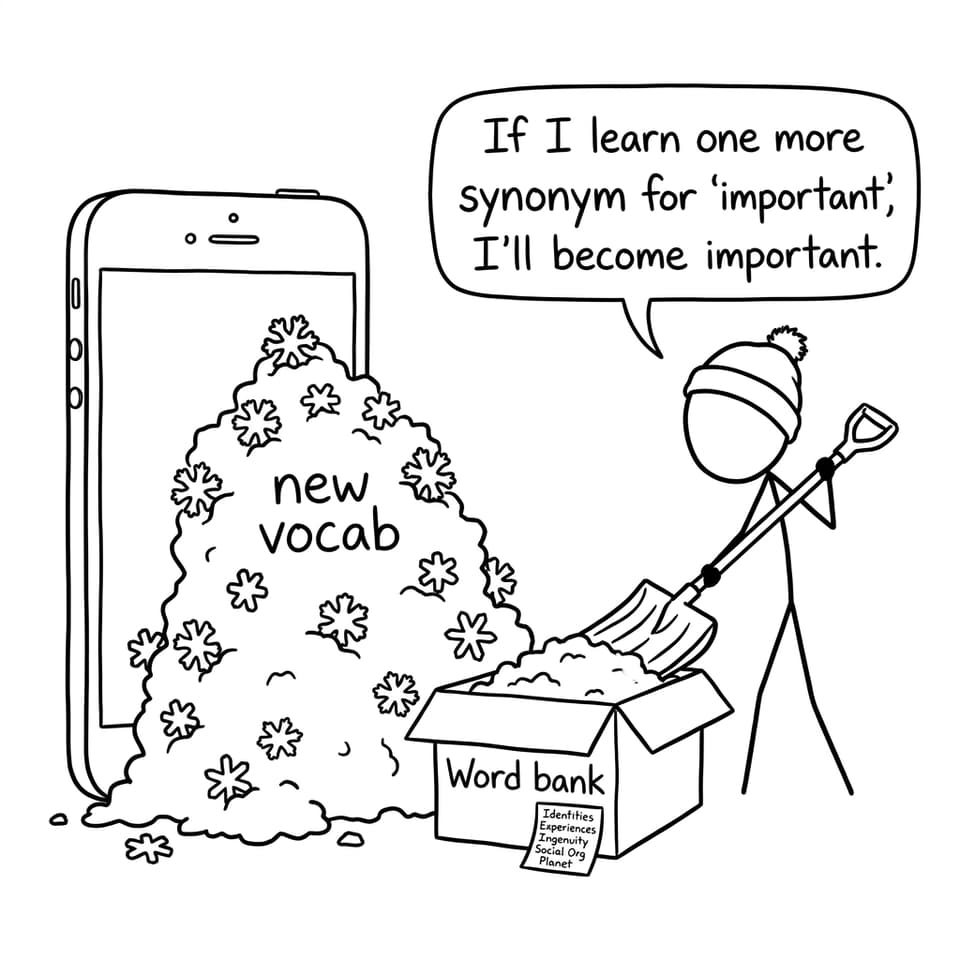
Most students try to revise themes by making massive lists. It feels productive. It rarely transfers.
Instead, use a loop that matches IB Languages performance:
-
Pick one theme per week
-
Build a 30-word core bank (verbs, adjectives, connectors, 5 key nouns)
-
Write one timed Paper 1 response linked to that theme
-
Do one reading/listening set with the same theme context
-
Speak for two minutes: describe, then evaluate, then connect to culture
For word banks specifically, IB Chinese B Vocabulary: Building Word Banks by Theme is a strong companion.
To make this loop easier to run, RevisionDojo brings the pieces together: Study Notes to learn quickly, Flashcards to retain vocabulary, a Questionbank to practice under exam style, AI Chat to clarify meanings and refine phrasing, and Grading tools to spot patterns in your writing. When you’re ready to pressure-test, Mock Exams and Predicted Papers give you timed stamina, while the Coursework Library and Tutors help if you need targeted support.
You can explore the platform foundations via Questionbank, Study Notes, and IB Flashcards with Spaced Repetition.
Closing: make the themes your advantage
The five core themes of IB Chinese B are not extra content. They are the course’s backbone. Once you can spot a theme quickly, you stop improvising and start performing with control, which is exactly what IB Languages assessment rewards.
If you want that control to feel repeatable, build your revision around RevisionDojo: learn with Study Notes, retain with Flashcards, apply with the Questionbank, refine with AI Chat and Grading tools, then test yourself with Mock Exams and Predicted Papers. The themes stay the same. Your confidence changes.