



When you start IB German ab initio, it can feel like you’re learning a language with oven mitts on. You know what you want to say, but the words don’t arrive in time. Then, one day, you catch yourself explaining a photo, giving a reason, adding an example, and even correcting yourself, all in German.
That moment isn’t an accident. It’s the course design doing its quiet work.
In IB Languages, German ab initio is built around communication, not trivia. Vocabulary and grammar matter, but only as tools. The real target is something more useful: the ability to understand other people, respond under pressure, and make your meaning land.
This guide breaks down how German ab initio strengthens communication skills step by step, and how you can train those same skills intentionally as exams get closer.
Quick checklist: the communication skills German ab initio trains
Use this as your weekly check-in. Strong performance in IB Languages usually comes from balanced practice, not one heroic study session.
-
Speak out loud 3x per week (short sessions beat long ones)
-
Write one timed task weekly using a real text type
-
Listen to German regularly and tolerate unknown words
-
Read short texts for gist and tone, not perfect translation
-
Build theme-based vocabulary banks (with example sentences)
-
Use a small set of reliable grammar patterns accurately
-
Rehearse oral discussion, not a memorized script
-
Add culture naturally (customs, school life, social norms, media)
If you want a clear map of what the assessments actually demand, keep the exam format guide open while you plan your week: IB German Ab Initio Exam Format (2025 Guide).
Why IB Languages put communication first (and why that helps you)
Some subjects reward what you remember. IB Languages reward what you can do.
German ab initio pushes you into a loop that looks a lot like real communication:
-
you notice a gap (you can’t express something),
-
you improvise (simpler words, a workaround),
-
you get feedback (from a teacher, a rubric, or a model answer),
-
you try again with slightly more control.
It’s a course built on small, repeated exposures: to themes, to text types, to spoken speed, to cultural situations. You don’t become fluent in one jump. You become understandable by stacking tiny wins.
RevisionDojo is designed around that same loop. You can learn the concept in Study Notes, practice it in the Questionbank, check retention with Flashcards, and then pressure-test it with Mock Exams and Grading tools. When you’re preparing for IB Languages, that tight loop matters more than motivation.
For a broader view of how RevisionDojo structures study materials and how to use them, see: Digital IB Study Notes: Access Anywhere, Anytime.
IB Languages and speaking: how German ab initio builds oral communication
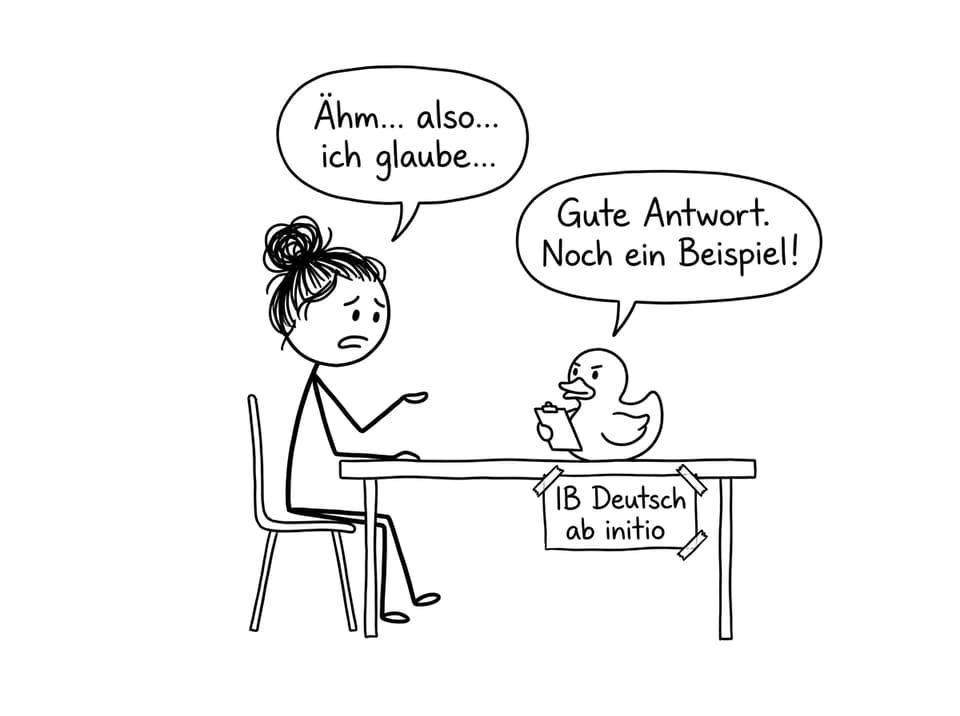
Speaking is where communication becomes real because you can’t hide behind editing time. German ab initio trains you to speak anyway.
The oral exam trains spontaneity, not perfection
In IB Languages, the oral isn’t just “say what you memorized.” It’s a test of staying coherent while your brain is doing three things at once: recalling vocabulary, controlling grammar, and tracking the question.
German ab initio builds this through predictable routines:
-
describing a visual stimulus clearly
-
linking it to a theme
-
giving opinions with reasons
-
handling follow-up questions without freezing
If you want a targeted breakdown of what to practice and how to structure your time, use: How to Succeed in the IB German Ab Initio Oral Exam (2025 Edition).
Daily dialogue builds confidence faster than silent study
A quiet danger in IB Languages is thinking, “I’ll speak later when I’m ready.”
Speaking doesn’t wait for readiness. Readiness is a side effect of speaking.
Try a simple routine:
-
2 minutes: describe your day (present tense)
-
2 minutes: retell something that happened (perfect tense, even if basic)
-
2 minutes: give an opinion on a theme topic and one reason
Then record it. Not to judge yourself, but to prove you can recover when you stumble.
RevisionDojo’s AI Chat can be a low-pressure speaking partner for building those micro-routines: prompt it with a theme and ask it to follow up like an examiner. Pair that with Tutors if you want live correction and pacing feedback.
Fillers and connectors are communication glue
Examiners don’t expect you to be flawless in German ab initio. But they do expect you to keep going.
That’s where fillers and connectors matter. Words like also, naja, ich denke, zum Beispiel, and connectors like weil, obwohl, deshalb help you sound natural, buy thinking time, and keep your message structured.
This is an underrated win in IB Languages: you learn to manage pressure without going silent.
IB Languages and writing: how German ab initio builds clear expression
Writing in German ab initio looks like “learn formats,” but underneath it’s really “learn audience.” That’s communication.
Text types train tone, purpose, and clarity
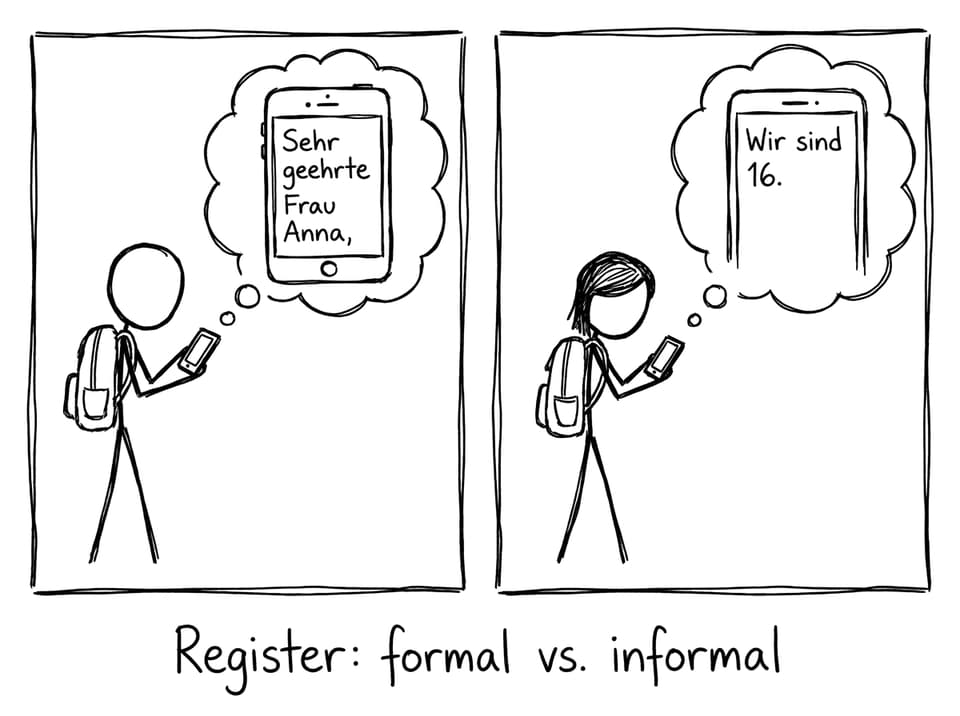
In IB Languages, Paper 1 doesn’t just grade grammar. It grades whether your message fits the situation.
A blog post should sound like a person.
An email to a school should sound polite.
A diary entry should sound private.
When you practice text types, you’re practicing real-world communication decisions: formality, detail level, and voice.
RevisionDojo’s Coursework Library can also help here because seeing strong model writing (even beyond languages) teaches you what “clear structure” looks like in any subject.
Structure is a communication skill, not a cosmetic one
Many students lose marks because their writing is a list of sentences that never becomes an argument.
Train a simple structure you can reuse:
-
Opening: set the context (2 sentences)
-
Body: 2-3 main points, each with a reason or example
-
Closing: decision, reflection, or invitation (depending on text type)
This is why IB Languages writing practice improves your essays in other subjects too. You’re learning how to guide a reader.
IB Languages and listening: how German ab initio trains real comprehension
Listening can feel unfair because the audio keeps moving. But that’s exactly why it builds communication.
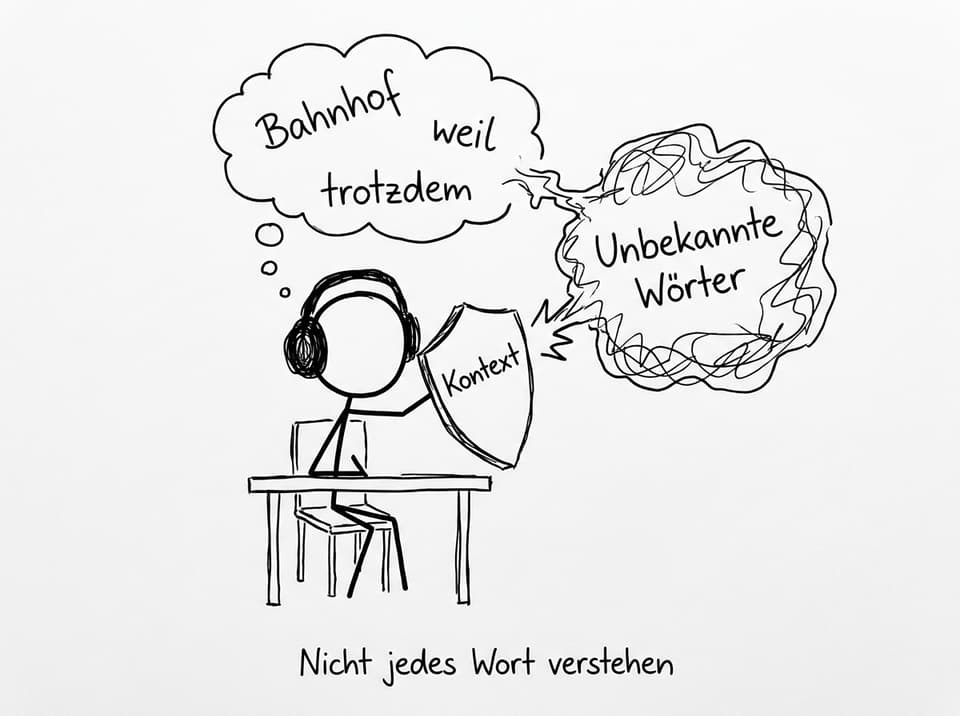
You learn to understand without knowing every word
Strong listeners do something that looks like calm magic: they ignore what doesn’t matter.
German ab initio listening tasks train you to:
-
catch keywords
-
identify relationships (because, but, therefore)
-
infer meaning from context
-
keep going even after missing a phrase
That resilience is one of the most transferable skills in IB Languages.
For theme-based listening and vocabulary support, combine your practice with: What Study Resources Are Best for IB German Ab Initio?.
Grammar in IB Languages: accuracy as a tool for meaning
Grammar is often taught like a punishment. In German ab initio, it works best when you treat it as a shortcut to being understood.
You don’t need advanced complexity. You need reliable control:
-
verb position in main vs subordinate clauses
-
present and perfect tense basics
-
modal verbs for opinions and obligations
-
adjective agreement enough to avoid confusion
The point is not “impressive German.” The point is “clear German.” That is the heart of IB Languages.
If you’re unsure what to prioritize, use: What Grammar Topics Are Most Important in IB German Ab Initio (2025 Guide).
Culture: the hidden communication skill in IB Languages
Culture shows up in small choices: how formal you are, what counts as polite, how directly you disagree.
German ab initio threads culture through the five themes, which is why theme mastery often predicts exam confidence. If you’re struggling with the abstract units, this guide helps you make them speakable: What Themes Are Most Challenging in IB German Ab Initio (2025 Guide).
Cultural awareness helps you:
-
avoid tone mistakes (too informal, too blunt)
-
add authentic details in orals and writing
-
show you understand context, not just vocabulary
In IB Languages, culture isn’t decoration. It’s part of meaning.
How to train communication skills in the last 4-6 weeks
Here’s a practical routine that fits exam season.
-
Mon/Wed/Fri: 10 minutes speaking (record + replay)
-
Tue/Thu: 20 minutes listening (keywords + summary)
-
Weekend: one timed writing task + self-check with a rubric
Then use RevisionDojo to tighten the loop:
-
Drill weak points in the Questionbank
-
Turn mistakes into Flashcards (spaced repetition beats rereading)
-
Use AI Chat to generate follow-up oral questions on your theme
-
Run a timed Mock Exam to practice pacing
-
Use Grading tools to see what the rubric rewards
-
If you want expert feedback quickly, add Tutors for targeted correction
That’s how you turn “I studied” into “I can communicate,” which is the real promise of IB Languages.
Closing: communication is the real score
German ab initio isn’t trying to turn you into a dictionary. It’s trying to turn you into someone who can function, who can describe, react, clarify, and connect.
That’s why IB Languages matter: they train the skill underneath the subject. The skill of being understood.
If you want a single place to build that skill efficiently, RevisionDojo gives you the full toolkit: Study Notes for clarity, Flashcards for retention, Questionbank practice for accuracy, AI Chat for conversation reps, Predicted Papers and Mock Exams for exam realism, Grading tools for rubric alignment, a Coursework Library for strong models, and Tutors when you want human feedback that saves weeks.
Start with your next small rep. Then let the reps stack.