



A beginner’s fear that almost everyone shares
The first time you open a German Ab Initio workbook, it can feel like you’ve walked into a film halfway through. Everyone else seems to know what’s happening. You’re still trying to understand why “the” has three versions.
If you’re starting German Ab Initio with zero background, you’re not behind but you’re exactly who the course was built for. In the wider world of IB Languages, Ab Initio is the rare subject that assumes nothing and rewards consistency more than talent. The students who do best aren’t the ones who “sound German” early. They’re the ones who build a small routine and protect it.
The quick checklist (save this)
If you want to succeed in German Ab Initio without prior experience, keep coming back to this:
-
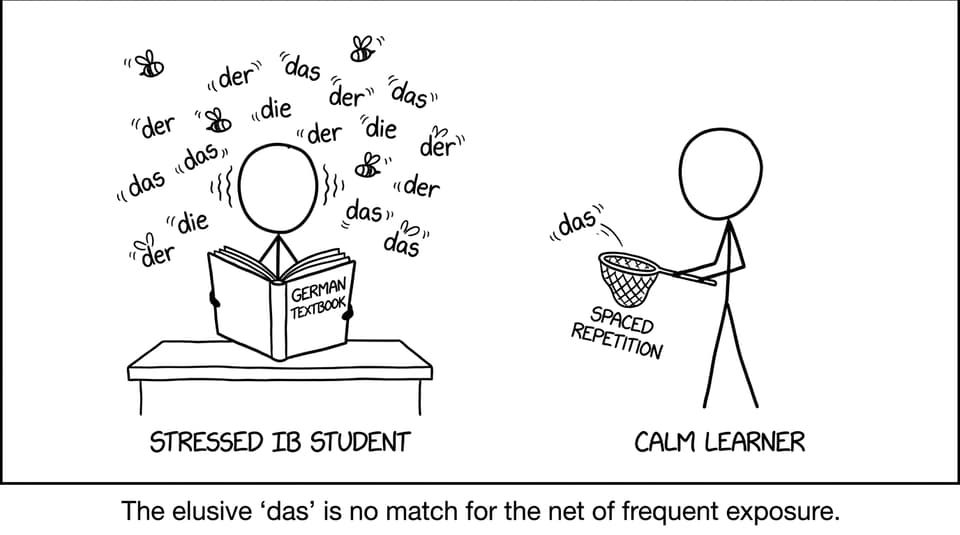
Learn theme-based vocabulary daily (with der/die/das)
-
Master a few core grammar patterns, then reuse them everywhere
-
Speak from week one (simple sentences count)
-
Train for each assessment type early: writing, reading, listening, oral
-
Use tight feedback loops: practice, review, fix, repeat
-
Lean on RevisionDojo tools so your effort stays targeted
Why IB German Ab Initio is fair to true beginners
A quiet truth about IB Languages is that the marking is not asking you to be impressive but it’s asking you to be clear. Ab Initio courses are designed around beginner communication: everyday themes, practical vocabulary, and assessment criteria that reward understandable meaning.
That matters, because beginners often waste energy chasing perfection. The better move is to aim for reliable: simple structures, correct basics, and confident delivery.
When you’re ready to map your effort to what actually gets assessed, use this guide: IB German Ab Initio Exam Format (2025 Guide).
Build your “German from zero” system (the one that actually sticks)
Vocabulary first, but make it usable
Vocabulary is your fastest win. Not because you’ll memorize thousands of words, but because the first 300-500 high-frequency words unlock everything: reading passages, listening clips, oral prompts, and writing tasks.
Do it like this:
-
Learn 10-15 words a day by theme (school, travel, food, free time)
-
Always learn nouns with the article (der/die/das) from day one
-
Put each new word into a tiny sentence immediately
RevisionDojo makes this easier when your vocab practice is scheduled, not optional. Use IB Flashcards with Spaced Repetition (SRS) and the Flashcards feature to keep recall automatic.
Grammar next, but only the “high return” parts
Grammar overwhelm is real. The trick is to learn grammar as a small set of repeatable patterns you can deploy under pressure.
Start with:
-
Present tense for regular verbs (ich spiele, du lernst)
-
The “time-manner-place” habit for sentence clarity
-
High-frequency irregular verbs: sein, haben, gehen
Then layer in cases slowly, with one focus per week. If you want a clean list of what matters most (and why), use: What Grammar Topics Are Most Important in IB German Ab Initio?.
Speaking early: confidence beats complexity
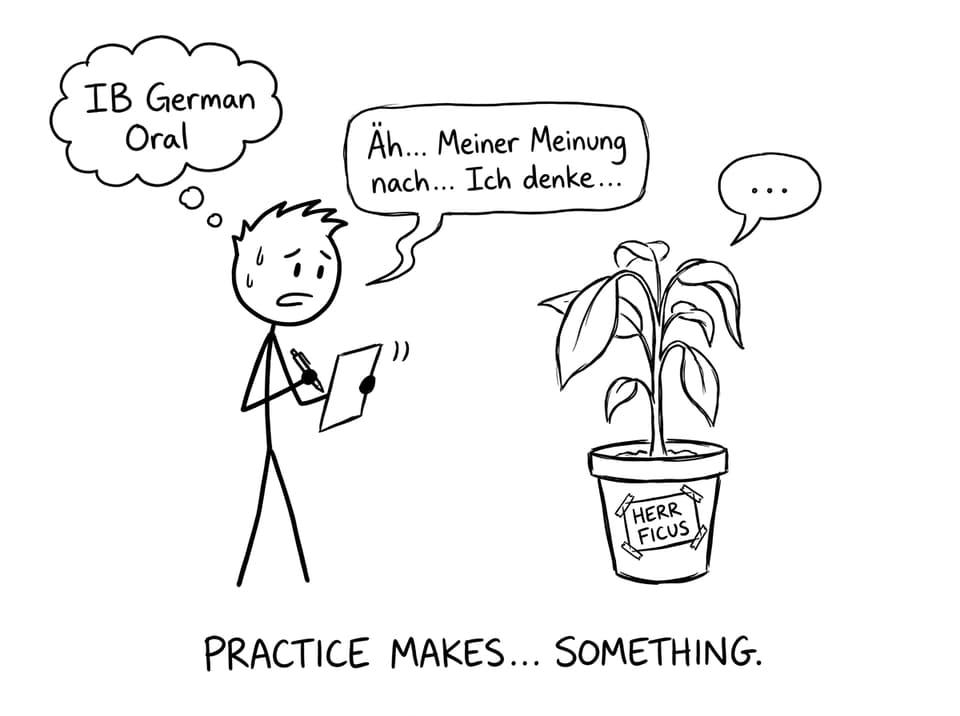
In IB Languages, speaking is where beginners either freeze or level up. The students who improve fastest speak earlier than they feel ready.
Give yourself “training wheels”:
-
Sentence starters: Meiner Meinung nach… / Ich denke, dass… / Für mich ist…
-
Opinion + reason: Ich mag X, weil…
-
A safe structure for picture description: what you see, where, who, mood, theme link
If you want a wider oral strategy that still applies to Ab Initio, borrow the structure here: Mastering Language B Oral Practice and avoid the traps here: Top Mistakes in IB Language Oral Exams and How to Avoid Them.
Train for each assessment without burning out
A common beginner mistake is “general revision” that never touches exam skills. In IB Languages, your grade is built on specific performance: writing, reading, listening, and the oral.
Writing: win with structure
For Paper 1-style writing, your goal is clarity plus range you can control.
-
Use a repeatable layout: greeting/intro, 2-3 clear paragraphs, short ending
-
Keep sentence shapes simple but accurate
-
Add connectors you can reliably spell: zuerst, dann, danach, außerdem, weil, aber
When you want a solid set of resources to guide this, see: What Study Resources Are Best for IB German Ab Initio?.
Reading and listening: stop trying to understand every word
Beginners panic because they miss words. But comprehension tasks are about extracting meaning:
-
Identify topic, time, place, speaker attitude
-
Hunt for cognates and numbers (dates, prices, times)
-
Use context to guess unknown vocabulary
To make practice feel less random, build a loop using RevisionDojo’s Questionbank: short sets, quick review, then immediate retry.
The “15 minutes a day” routine that compounds
The secret advantage in IB Languages isn’t a magic method. It’s compounding.
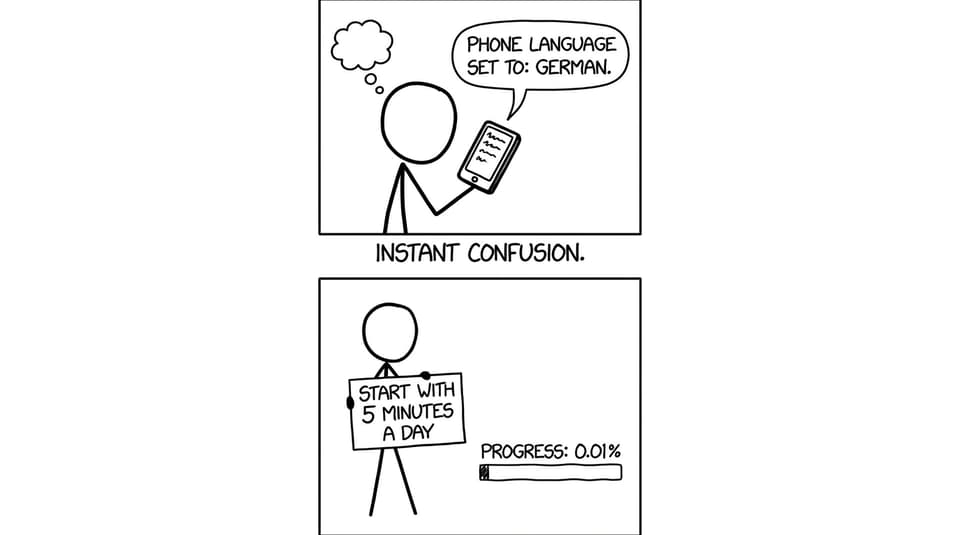
Try this daily plan:
-
7 minutes: Flashcards (SRS)
-
5 minutes: speak out loud (describe your day, your room, a photo)
-
3 minutes: write 4 sentences using today’s new words
Once per week, add one timed practice block. If you need a broader exam-prep framework, borrow from: How to Study for IB Exams: Step-by-Step Guide and How 45-Point IB Students Prepare for Exams.
How RevisionDojo helps beginners win (without guessing)
German Ab Initio rewards the student who practices the right thing at the right time. That’s where RevisionDojo quietly becomes your advantage:
-
Study Notes for clear, theme-based learning you can reuse in writing and speaking
-
Flashcards to lock in vocabulary and grammar without cramming
-
Questionbank for targeted skill practice and quick feedback
-
AI Chat when you’re stuck on phrasing, word order, or how to extend an answer
-
Grading tools to sanity-check whether your writing is actually meeting criteria
-
Mock Exams to build timing and calm before exam day
-
Predicted Papers when you need structured, exam-style rehearsal (without chaos)
-
Coursework Library and Tutors when you want examples and human feedback
Start with the dedicated hub: German ab initio: IB Resources. If you want the full platform overview, use: RevisionDojo | IB & MYP Resources.
Closing: your edge is consistency, not experience
You can succeed in German Ab Initio without prior language experience by doing something simple, daily, and repeatable: vocabulary with articles, a few high-return grammar patterns, early speaking, and assessment-focused practice.
In IB Languages, the students who win aren’t the ones who start ahead but they’re the ones who keep showing up. Build your routine inside RevisionDojo using the Questionbank, Study Notes, Flashcards, AI Chat, and Mock Exams, and you’ll stop asking “am I good at languages?” and start saying “I’m getting better every week.”