
A difficult phone call can make a parent question everything. Your child sounds tearful, exhausted, or unusually quiet. They miss familiar food, familiar people, and the ease of a life where every small task did not require conscious effort. Meanwhile, IB Year 1 has introduced six subjects, new teachers, unfamiliar expectations, and the Diploma Programme core.
For a homesick child, first IB term support should begin with calm listening, predictable contact, practical routines, and early communication with the school. Homesickness is a normal response to separation and change. It does not automatically mean the school is wrong, the IB is unsuitable, or your child needs to come home.
The immediate goal is not to persuade them to feel happy. It is to help them feel heard while they gradually build safety, competence, and connection in their new environment. At the same time, parents should watch for signs that distress is persistent or interfering with ordinary life, because those signs warrant additional support.
A quick parent checklist
When your child says they are homesick:
- Listen before suggesting solutions.
- Validate the difficulty without predicting failure.
- Ask what part of the day feels hardest.
- Agree on a sustainable contact routine.
- Encourage one small local action, such as eating with someone or attending an activity.
- Help separate emotional distress from academic overload.
- Contact the school early if sleep, eating, attendance, concentration, or safety becomes a concern.
- Seek professional help when symptoms are severe, persistent, or worsening.
This balance matters. A child needs to know that home remains secure, but they also need enough space to discover that they can build a second sense of security where they are.
Understand what your child is carrying
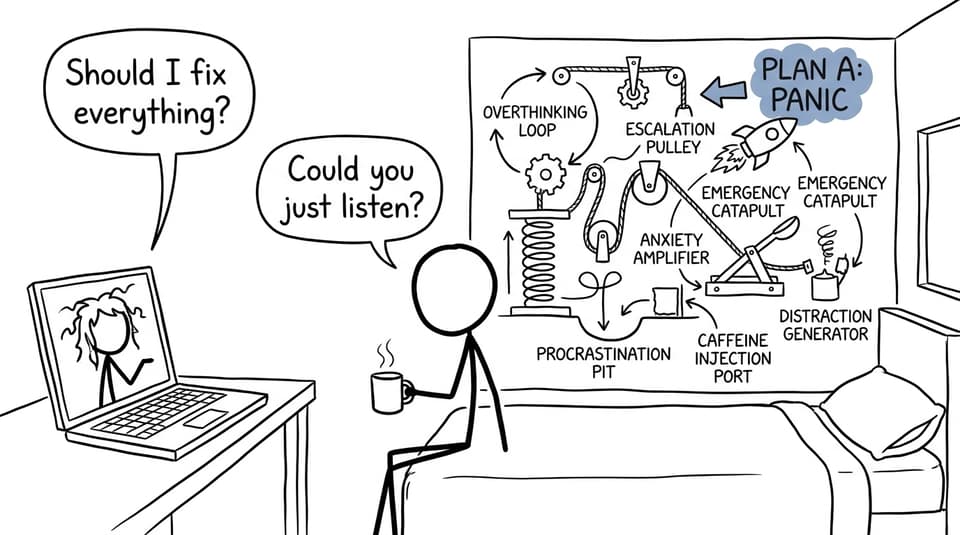
Homesickness and IB pressure can arrive together, which makes them difficult to distinguish. A student may say, “I cannot cope with IB,” when the deeper problem is loneliness at dinner, an unfamiliar bedroom, or the absence of someone who understands the ordinary details of their day. Another student may genuinely be struggling with workload and describe it as wanting to go home.
The Diploma Programme includes six subjects plus Theory of Knowledge, the extended essay, and Creativity, Activity, Service. That structure can make the beginning of IB Year 1 feel crowded before a student has learned how their school organizes deadlines and support.
Ask questions that make the problem smaller and more specific:
- “When do you miss home most?”
- “Is this mainly loneliness, workload, sleep, or something else?”
- “Are lessons confusing, or does everything feel harder because you are tired?”
- “Who at school feels easiest to talk to?”
- “What would make tomorrow five percent easier?”
Specific questions turn a frightening conclusion into a set of workable problems. If deadlines are the main issue, guidance on responding when an IB student feels overwhelmed can help parents support planning without taking control.
Listen without amplifying the fear
Parents often hear distress as a request for immediate action. Sometimes it is simply a request for company.
Begin with a response such as: “It makes sense that you miss home. This is a major transition, and you do not have to pretend it is easy.” Then pause. Give your child room to explain before discussing timetables, school transfers, grades, or travel arrangements.
Validation is not the same as confirming a catastrophic conclusion. You can acknowledge “This evening sounds very hard” without agreeing that “Nothing will ever improve.” Calm language helps keep a painful moment from becoming a permanent verdict.
Try to avoid:
- “Everyone feels like that, so do not worry.”
- “You chose this.”
- “Maybe you are not suited to IB.”
- “Tell me what you want me to do right now.”
- Immediate comparisons with siblings or classmates.
A better sequence is listen, name, clarify, then act. Listen to the experience. Name the feeling without judgment. Clarify whether there is a practical or safety concern. Only then agree on one useful next step.
Create contact that comforts without becoming a lifeline
There is no universal schedule for family contact. The right frequency depends on the child, living arrangement, school routine, and intensity of distress. What matters is predictability.
An agreed call after dinner on selected evenings may be more reassuring than constant messaging throughout the day. Predictable contact tells a student, “Home is available,” while leaving enough uninterrupted time for relationships and routines to form at school.
During calls, do not make every conversation an assessment. Talk about ordinary family life. Share a small piece of home, ask about something unrelated to grades, and allow occasional short or cheerful calls without searching for hidden trouble.
It may help to agree on two forms of contact:
- Regular contact: planned calls or messages for connection.
- Urgent contact: a clear way to indicate that your child needs immediate attention rather than a routine reply.
If every difficult evening produces hours of calls, missed activities, and discussion of leaving, the contact pattern may unintentionally strengthen avoidance. This is not a reason to withdraw warmth. It is a reason to combine warmth with gentle encouragement toward local support.
Help them build anchors where they are
Homesickness usually becomes more manageable through repeated experiences of familiarity. The same seat at breakfast, a regular study place, one trusted adult, and one recurring activity can begin to make an unfamiliar setting predictable.
Encourage small anchors rather than demanding an instant social transformation. A useful first-term aim might be to:
- Eat one meal each day outside the bedroom.
- Learn the name of one person in each class.
- Attend one recurring club, sport, or CAS activity.
- Identify the school counsellor, boarding staff member, adviser, or DP coordinator.
- Keep one comforting object, photograph, or familiar routine from home.
- Plan the next day before bedtime.
The action should be small enough to complete on a difficult day. “Make friends” is an outcome your child cannot fully control. “Sit beside someone at lunch” is an action they can attempt.
CAS may also provide a route into community when the chosen experience is genuinely manageable and interesting. It should not be treated as a cure for homesickness or another obligation to pile onto an overloaded week.
Separate homesickness from IB stress
Parents sometimes ask, “Is IB too stressful?” The honest answer is that the Diploma Programme is demanding, but distress in the first term does not by itself answer whether it is the right programme for a particular student.
Look for patterns rather than reacting to one bad evening.
| What you notice | A helpful first response |
|---|---|
| Sadness peaks during unstructured evenings | Add a social or comforting evening routine |
| Distress rises before particular lessons | Ask the teacher what academic support is available |
| Work expands late into every night | Review deadlines, priorities, and the study schedule |
| Calls improve after your child has been heard | Continue calm, predictable listening |
| Sleep, eating, attendance, or daily functioning deteriorates | Involve school wellbeing staff and seek professional advice |
A balanced IB study schedule can reduce academic uncertainty, but a schedule should not fill every free hour. Rest, meals, movement, friendships, and sleep are part of a sustainable first term. Parents may also find it useful to review guidance on allowing healthy breaks from IB work.
Support studying without taking over
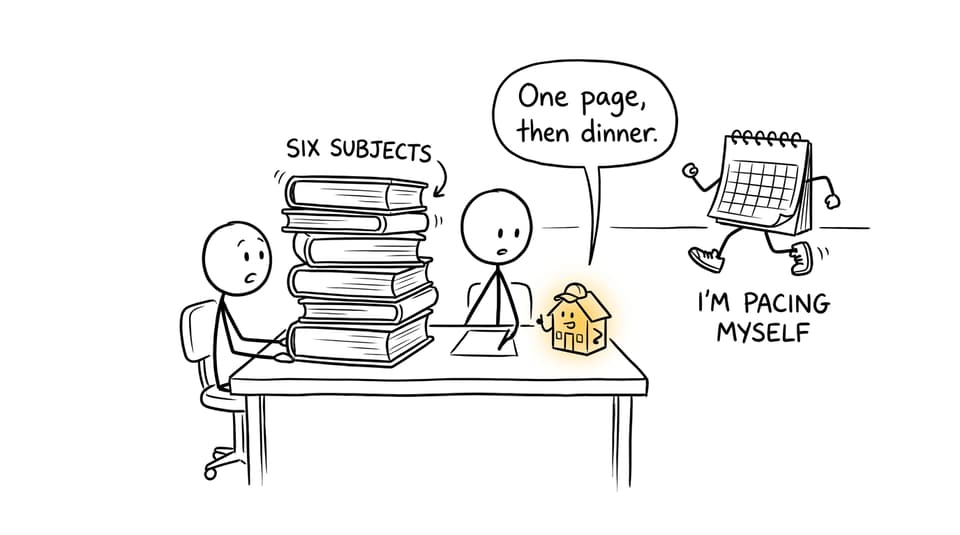
Homesickness can reduce concentration. Reduced concentration creates unfinished work, and unfinished work creates more anxiety. The way out is usually not a heroic catch-up weekend. It is a modest routine that restores a sense of control.
Help your child identify:
- The next fixed deadline.
- One small task for tonight.
- One teacher question for tomorrow.
- A defined stopping time for study.
- A realistic plan for sleep and breakfast.
Avoid becoming the remote manager of every assignment. Checking the school portal repeatedly, rewriting schedules, or monitoring every mark may communicate that your child cannot cope without supervision. Offer to plan together, then return ownership to them.
For academic routines, low-stress daily IB scheduling and an IB exam preparation timeline can provide structure without turning the first term into continuous exam preparation. The purpose of DP1 is to build habits gradually, not to perform every future task immediately.
Bring the school into the conversation early
Parents do not need to wait for a crisis before contacting the school. Depending on the setting, the appropriate person may be a tutor, houseparent, school counsellor, year leader, DP coordinator, or trusted subject teacher.
Share concrete observations rather than broad conclusions. For example: “They have called in tears on four evenings, say they are skipping dinner, and report sleeping only a few hours” gives the school something useful to assess. Ask what staff have observed during lessons, meals, activities, and unstructured time.
The aim is to create a coordinated picture, not to discuss your child without involving them. Unless there is an immediate safety issue, tell your child that you plan to contact the school and explain why. This preserves trust and allows them to take part in deciding what support would help.
A student who feels academically exposed may be more willing to approach one familiar teacher than a counsellor initially. Any safe doorway into support is valuable.
Know when homesickness needs more help
Ordinary homesickness can include sadness, longing, tearfulness, and difficult evenings. Parents should seek additional help when distress is persistent, worsening, or interfering with daily functioning.
Warning signs can include:
- Repeatedly missing lessons or being unable to leave the room.
- Significant changes in sleep or eating.
- Withdrawal from friends and previously enjoyed activities.
- Persistent low mood, panic, hopelessness, or extreme irritability.
- Frequent physical complaints without a clear explanation.
- A marked decline in concentration or school functioning.
- Self-harm, thoughts of suicide, or statements suggesting that life is not worth living.
These signs should not be dismissed as normal IB stress. Speak with the school and an appropriate healthcare professional. If your child may be in immediate danger or cannot stay safe, contact the local emergency or crisis service immediately and ensure a trusted adult is physically present.
The guides on supporting mental health during the IB, responding when IB affects mental health, and managing IB exam stress offer further questions parents and students can use when deciding what kind of help is needed.
Offer confidence, not certainty
You cannot promise that next week will feel easy. You can communicate something more credible: your child does not have to solve the whole term tonight, support is available, and one hard call does not define the future.
End difficult conversations with a small, agreed next step. That might be eating breakfast with a classmate, speaking to the DP coordinator, attending one activity, or calling again at a set time. Then let that step be enough for the moment.
Homesickness is a sign that home matters. Supporting your child means keeping that bond secure while helping them establish new routines and relationships. Listen calmly, watch how they are functioning, involve the school when needed, and treat safety concerns seriously. The next natural step is simple: agree on one check-in time and one local person your child can approach tomorrow.