
Moving from GCSE to IB means adapting your study habits, not relearning every GCSE topic. Identify the foundations your chosen subjects require, repair important gaps, and practise the thinking your Diploma courses assess.
The classrooms may look familiar, but successful learning changes. IB DP1 asks you to connect ideas, justify decisions and manage long-term commitments alongside daily work. Knowledge remains essential; it becomes the starting point rather than the finish line.
The transition is therefore a period of adjustment, not a test of whether you belong. Begin with specific questions: what does this subject assume, and what does a strong answer require?
Your GCSE to IB transition checklist
Use your first term to establish a few reliable habits:
- Confirm your Higher Level and Standard Level subjects with school.
- Bookmark current course guides and assessment outlines.
- Review essential GCSE foundations for each subject.
- Learn common command terms and subject-specific expectations.
- Keep tests, coursework milestones and CAS in one calendar.
- Practise retrieval and questions weekly, recording recurring errors.
- Protect sleep, exercise and time away from studying.
RevisionDojo's IB resources hub brings explanations, recall activities and question practice together while these routines are still new.
What actually changes after GCSE?
The Diploma Programme combines six subject groups with Theory of Knowledge, the Extended Essay, and Creativity, Activity, Service. Students normally take three Higher Level and three Standard Level subjects. Confirm arrangements with your DP coordinator because choices depend on IB rules and school provision.
Before settling your combination, discuss subject prerequisites and future study plans with your school. Enjoying a GCSE subject is useful information, but it does not tell you everything about its Diploma course. Ask to see an opening topic, a typical assessment task and the difference between HL and SL expectations. This makes the decision concrete without expecting you to understand an entire syllabus in advance.
Workload matters, but the deeper shift concerns how you use knowledge. DP questions may ask you to evaluate limitations, analyse unfamiliar sources or apply a model in a new setting. GCSEs also develop these skills; the Diploma asks you to extend them.
Imagine knowing every definition in a science chapter. If a question asks you to evaluate a method, definitions alone will not answer it. You must identify weaknesses, explain their effects and suggest realistic improvements.
| Familiar study habit | DP1 adjustment |
|---|---|
| Revising mainly before tests | Revisiting content through spaced practice |
| Memorising model answers | Adapting knowledge to command terms |
| Keeping subjects separate | Noticing connections between evidence and methods |
| Following short deadlines | Planning commitments over several months |
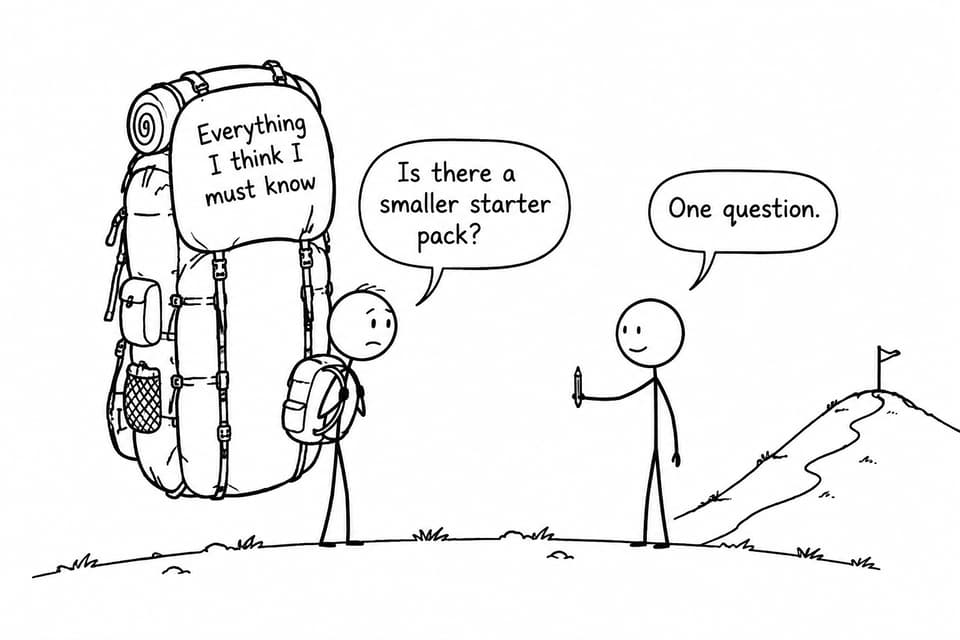
Preparation does not mean carrying everything. One diagnostic question can reveal where to begin.
What to review before and during IB DP1
Review selectively. Ask teachers which earlier skills your opening topics assume, since course order differs between schools.
Mathematics
Refresh algebraic manipulation, indices, surds, equations, inequalities, functions, graphs, trigonometry, probability and basic statistics. Check that you can explain a method rather than recognise its appearance.
Calculator fluency cannot replace understanding. Complete a short diagnostic and classify mistakes as knowledge gaps, process errors or careless slips. Each category needs a different response.
Sciences
Review units, standard form, significant figures, graphs, proportional reasoning and experimental design. Strengthen essential vocabulary in Biology and Chemistry. In Physics, revisit algebra alongside relationships between variables.
Choose one concept from IB Study Notes, close the explanation and reproduce it from memory. Then test whether you can apply it to a question.
Languages
For Language A, move beyond naming techniques to explaining how choices shape meaning. Analytical vocabulary helps only when connected to specific evidence.
For language acquisition, refresh vocabulary, verb forms, connectives and text conventions. Include reading, listening, writing and speaking in short, regular sessions rather than relying on one weekly block.
Individuals and societies
Review your course's foundational concepts, then practise paragraphs built around a claim, selected evidence and analysis. History, Economics, Geography, Psychology and Business Management use evidence differently. Learn what convincing support looks like in your discipline.
Essays and sources
Practise quotation integration, referencing, source evaluation and data interpretation. Before writing, identify the command term, scope and argument. Afterwards, check whether every paragraph advances that argument.
These note-taking systems for IB students can help turn lessons into usable revision resources rather than an archive you rarely revisit.
Learn command terms before adding more content
Command terms specify the intellectual action required. A correct explanation may still miss the task when a question asks for evaluation.
Use these working distinctions:
- Describe: give a detailed account of relevant features.
- Explain: show how or why something occurs.
- Analyse: examine parts and their relationships.
- Compare and contrast: address similarities and differences throughout.
- Discuss: consider issues through balanced, supported arguments.
- Evaluate: weigh strengths and limitations before reaching a justified judgement.
Check exact expectations against current subject guidance and teacher feedback. Keep an example response structure for unfamiliar tasks.
When work comes back, translate one comment into an observable action. If a teacher writes “develop your analysis”, ask which link in your reasoning is missing. Then rewrite a short passage and check whether the revision addresses that gap. Keeping the original beside the correction gives you a personal example of improvement, which is more actionable than copying the same feedback into another notebook.
RevisionDojo's Questionbank helps expose both content gaps and misread instructions. Its AI grading tools can support correction, while teachers and official guidance remain essential for interpreting assessment expectations.
Build a study system that survives busy weeks
A useful timetable still works when tests, activities and coursework overlap. Build a repeatable cycle rather than filling every available hour.
Learn
Revisit lessons within 24-48 hours when practical. Summarise the central idea, clarify vocabulary and record questions. Use syllabus-aligned subject notes to check understanding, not replace attentive lessons.
Retrieve
Close your notes and recall the idea unaided. RevisionDojo Flashcards can support definitions, processes and examples. AI Chat can help unpack a difficult step, especially when you ask a precise question such as “Why does this conclusion follow?” Check important explanations against course materials.
Apply
Complete a small question set, mark it and record the corrected reasoning. Schedule another attempt. Correction matters most when it changes what you do next time.
Spend 20 minutes each weekend reviewing deadlines and placing short sessions around fixed commitments. These IB note-taking strategies offer ways to connect concise notes with recall and applied practice.
Give the timetable a minimum version for crowded days: finish the essential assignment, retrieve one recent idea and flag one unresolved question. Move optional tasks deliberately instead of treating every unfinished item as a failure. Leave some unallocated time each week for work that takes longer than expected. A plan with room to adjust is easier to maintain than one that assumes every evening will run perfectly.
Manage the DP core before it becomes urgent
TOK, CAS and the Extended Essay require different attention from examined subjects, but they still need calendar space.
For TOK, collect examples that raise genuine questions about evidence, assumptions and perspectives. You do not need to turn every observation into assessment language immediately.
For CAS, learn your school's approval, evidence and reflection processes. Choose sustainable experiences and reflect honestly rather than inventing significance afterwards.
When your Extended Essay process begins, prioritise a manageable research question, credible sources and regular supervisor meetings. The RevisionDojo Coursework Library can help you examine academic structure, but examples should inform your understanding, never supply material to copy.
Record every milestone in the same calendar. A deadline scattered across separate documents is easy to overlook.
If you are moving from MYP to DP
MYP students may recognise inquiry, reflection and criterion-based assessment. GCSE students may bring strong specification knowledge and experience with timed external examinations. Neither background guarantees an easy DP1 year.
Both groups must learn Diploma-specific expectations. Ask which skills your earlier programme gave you fewer opportunities to practise:
- Can you evaluate rather than merely explain?
- Can you plan work over months?
- Can you use feedback to change a method?
- Can you connect evidence to a precise conclusion?
- Can you seek help before confusion compounds?
Your least confident answer identifies a useful first priority, regardless of your previous qualification.
What to do in your first month
In week one, organise course guides, assessment outlines and deadlines. In week two, complete short diagnostics in your Higher Level subjects. In week three, establish your learn-retrieve-apply cycle. In week four, review what worked and simplify anything difficult to sustain.
Keep early diagnostics narrow enough to interpret. If algebra causes trouble, isolate rearranging equations before attempting a long mixed test. Ask your teacher whether the difficulty reflects assumed knowledge or new material. That distinction prevents you from spending a weekend reviewing content your course does not yet require.
Save full Mock Exams and whole-course Predicted Papers until you have enough coverage for the results to be meaningful. Early topic questions provide clearer information. Tutors can help with persistent gaps, but independent correction should remain part of learning.
RevisionDojo connects those stages, from understanding a lesson to testing it under exam conditions. Start with one current topic and try questions in the RevisionDojo Questionbank. Work without notes, check mistakes and choose one gap to repair. You do not need a perfect plan before beginning. You need a clear next step.