A strange thing happens in an IB classroom right before someone says something genuinely smart.
There’s a pause.
Not the “I forgot the definition” pause. The other one. The pause where you can almost hear a student deciding whether to play it safe or offer the half-formed thought that might be wrong… but might also be the start of real understanding.
That moment is intellectual risk-taking. And if you’re an IB student preparing for exams, it’s not a fluffy classroom ideal. It’s a practical advantage. It’s how you learn to handle unfamiliar prompts, defend claims in TOK, and recover when your first approach collapses mid-answer.
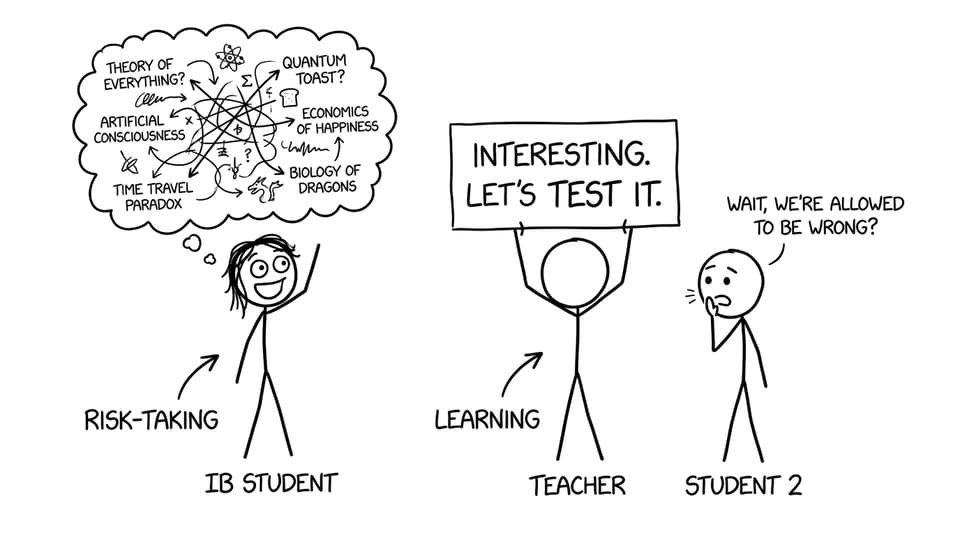
An IB student discovers being wrong is allowed
A quick checklist for intellectual risk-taking in IB classes
Use this as a simple “am I training the right muscle?” list for IB exam season:
Make one bold attempt before you look for the “right” answer.
Treat mistakes as information (what failed, why, what to try next).
Ask at least one question that starts with “What if…” each week.
Share a draft, not a polished final, in low-stakes tasks.
Build a feedback loop: notes --> recall --> practice --> review.
Why intellectual risk-taking matters for IB exam performance
In the IB, the highest marks rarely come from repeating the “safe” version of knowledge. They come from applying concepts under pressure: choosing an approach, justifying it, and adjusting when it doesn’t work.
Intellectual risk-taking helps you:
Think in layers, not memorized lines (especially in essays and data response).
Handle uncertainty without freezing (a core exam skill).
Build resilience, so a weak start doesn’t ruin an entire paper.
Develop original insight, which shows up in evaluation, discussion, and reflection.
It’s also part of the wider IB identity: being willing to try, revise, and learn in public. Not because it feels good, but because it trains you for the exact situation exams create: limited time, incomplete certainty, and the need to commit anyway.
Most students don’t fear being wrong. They fear being wrong in front of other people.
So the goal isn’t to love mistakes. The goal is to turn mistakes into something functional: a draft you can improve.
Try a simple post-activity reflection you can do in under two minutes:
What claim did I make?
What evidence did I use?
What would I change if I had 3 more minutes?
That reflection builds the same skill you need after a timed practice: reviewing what happened, not judging yourself.
RevisionDojo makes this easier because your practice isn’t a dead end. You can answer questions in the Questionbank, get feedback, then patch the specific gap using Study Notes and rebuild recall with Flashcards.
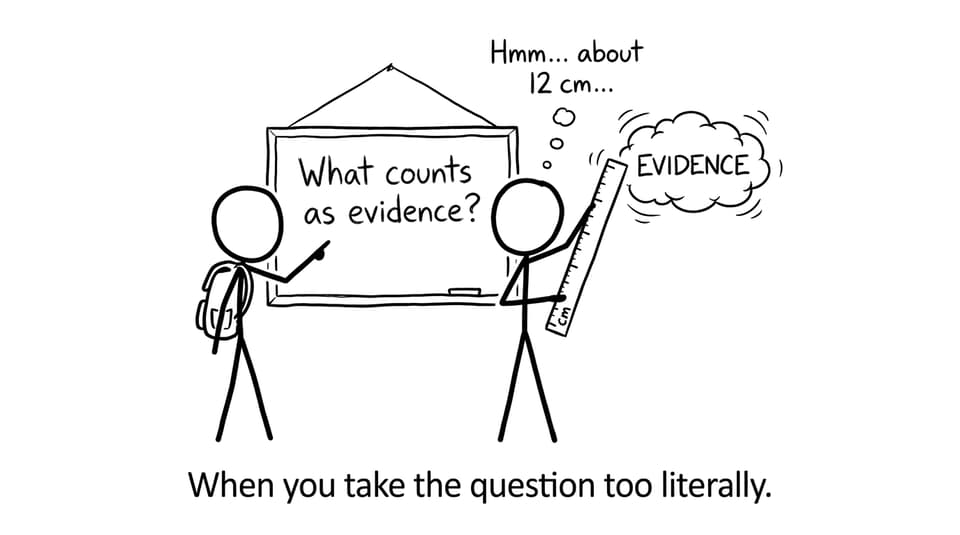
TOK literalism strikes again
Model courage through small, low-stakes classroom moves
Even if you’re not the teacher, you can influence the culture around you. Intellectual risk-taking often starts with tiny behaviors that signal: “We’re here to think, not perform.”
Here are classroom activities that make risk-taking feel safer while still being useful for IB exams:
Try-first rounds (before notes or markschemes)
Agree as a class (or with friends) that everyone writes a first attempt for 90 seconds before anyone checks resources. You’re training your brain to generate, not just recognize.
Afterwards, use RevisionDojo’s Digital IB Study Notes to confirm what you missed, then re-attempt a similar question.
“Argue the other side” mini-debates
In TOK-style discussions or humanities, spend five minutes defending a view you disagree with. The point is not to change your beliefs. It’s to practice building structured counterarguments, which exams reward.
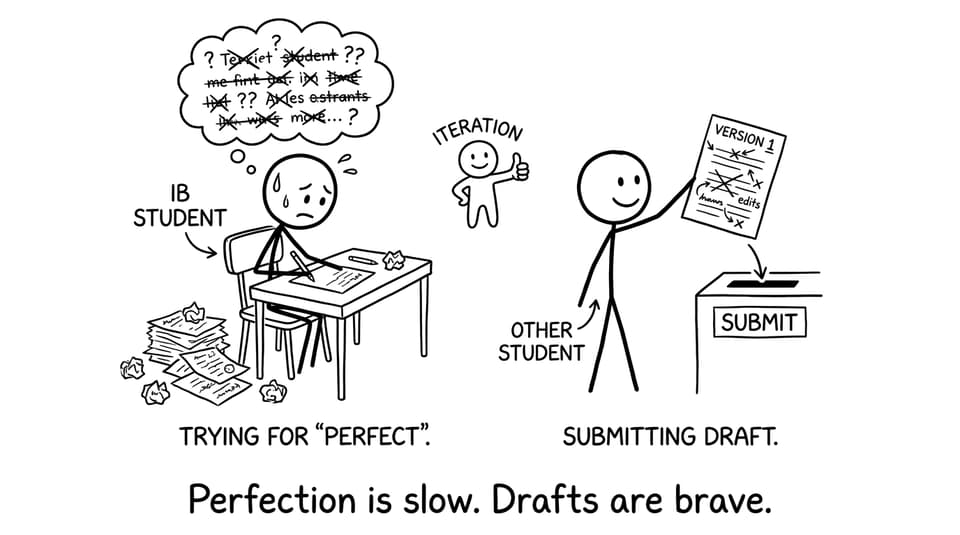
Write Version 1 fast (messy is allowed). Then write Version 2 with one improvement: better evidence, tighter evaluation, clearer structure.
This is how top students actually get good: not by writing “perfectly,” but by iterating.
Drafts are brave, perfection is slow
Ask questions that don’t have a single safe answer
If you want intellectual risk-taking, you need prompts that make it possible.
Use question stems like these in study groups, class discussions, or personal revision:
What would change if we altered one assumption?
What is the strongest counterclaim?
Where does this model fail, and why?
What is an exception to the rule?
What evidence would prove me wrong?
These aren’t “extra.” They map directly onto IB command terms like evaluate, discuss, and to what extent.
And when you’re stuck, RevisionDojo’s AI Chat can help you clarify without taking over your thinking. Use it like a tutor: ask it to explain the error pattern, not to replace the work.
Build a feedback system that rewards brave attempts
Risk-taking dies when feedback only rewards polish.
So use a system that notices process:
Did you attempt the hard question first?
Did you try a new structure?
Did you change your mind based on evidence?
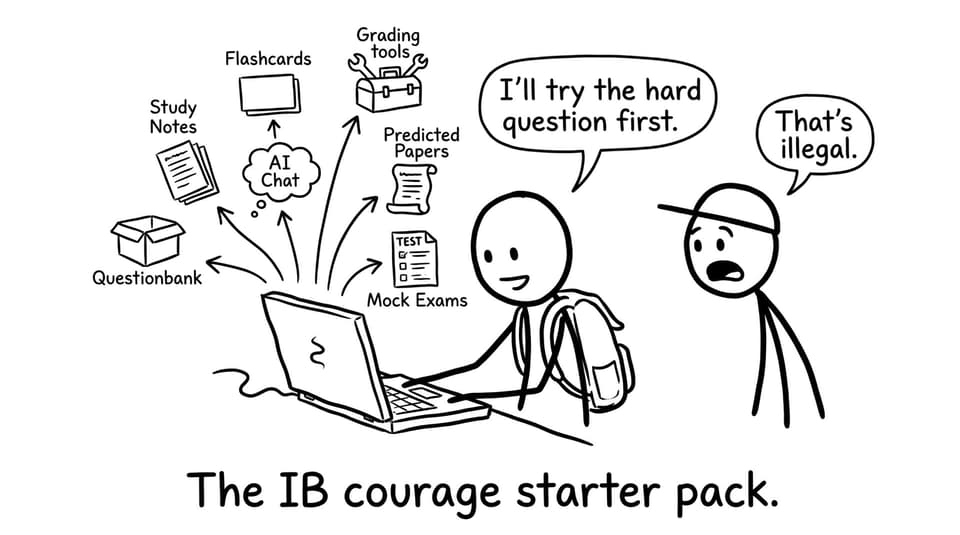
This is where RevisionDojo shines for IB students because it’s not just content. It’s a loop: practice in the Questionbank, review with explanations, track what needs work, and then simulate pressure using Mock Exams and Predicted Papers.
Closing: make bravery part of your IB study identity
The IB rewards students who can think when the path isn’t obvious. Intellectual risk-taking is how you build that ability in calm conditions, so you can access it under exam pressure.
Make one small promise to yourself this week: attempt the hard version first. Say the uncertain idea out loud. Submit the rough draft and improve it. Then use RevisionDojo to turn that risk into results -- with targeted practice, fast feedback, and a complete toolkit (Questionbank, Study Notes, Flashcards, AI Chat, Grading tools, Predicted Papers, Mock Exams, Coursework Library, and Tutors).
Isabel earned her Licenciatura in Filologia Hispanica from the Universidad de Salamanca and is a certified IB Spanish B and ab initio educator with 16 years in the Diploma Programme. Her focus is the IB Spanish B and ab initio assessments: the individual oral, listening, and the Paper 2 writing tasks, building the spontaneous production examiners reward.