

The quiet advantage: consistency in IB
On Monday, most IB students sound the same.
They talk about a fresh start, a new timetable, and the version of themselves who will finally do things "properly." The stationery is out. The tabs are color-coded. The intention feels clean.
Then Tuesday happens.
A teacher mentions an IA deadline. A group chat wakes up. You come home tired and decide you'll start after a short break that somehow becomes an hour. By Wednesday, your plan isn't broken because you lack discipline. It's broken because it didn't survive the real shape of IB life.
The students who stay consistent in IB aren't superheroes. They're usually not the loudest in class. Their secret is simpler and more repeatable: they build a system that works on normal days, not perfect ones.

A quick checklist: what consistent IB students do
If you want the fast overview before we go deeper, borrow this consistency checklist for IB:
- They make revision small enough to start.
- They rely on routines, not motivation.
- They use active recall more than rereading.
- They measure progress with exam-style questions.
- They review mistakes like data, not drama.
- They practice under time pressure early.
- They protect sleep and energy like part of the grade.
- They reduce friction by keeping tools in one place.
If you want a full workflow to copy, keep this open as your backbone: How to Study for IB Exams: Step-by-Step Guide.
Consistency in IB is a design problem, not a personality trait
In IB, inconsistency often looks like a moral failure. "I'm lazy." "I have no willpower." "I can't focus."
But watch what happens when you remove friction.
Consistent IB students don't magically "feel like studying" every day. They just make the next step obvious:
- Open one set of Study Notes.
- Do one short block of Flashcards.
- Answer a small set from a Questionbank.
- Review mistakes.
A system does what motivation can't: it shows up when you don't.
RevisionDojo is built around this idea. The platform's Study Notes, Flashcards, Questionbank, AI Chat, Grading tools, Predicted Papers, Mock Exams, Coursework Library, and Tutors all exist to reduce the "what should I do next?" problem that kills consistency in IB.
For the big-picture explanation of how the tools fit together, see: RevisionDojo App: The Smarter Way to Prep for IB Exams.
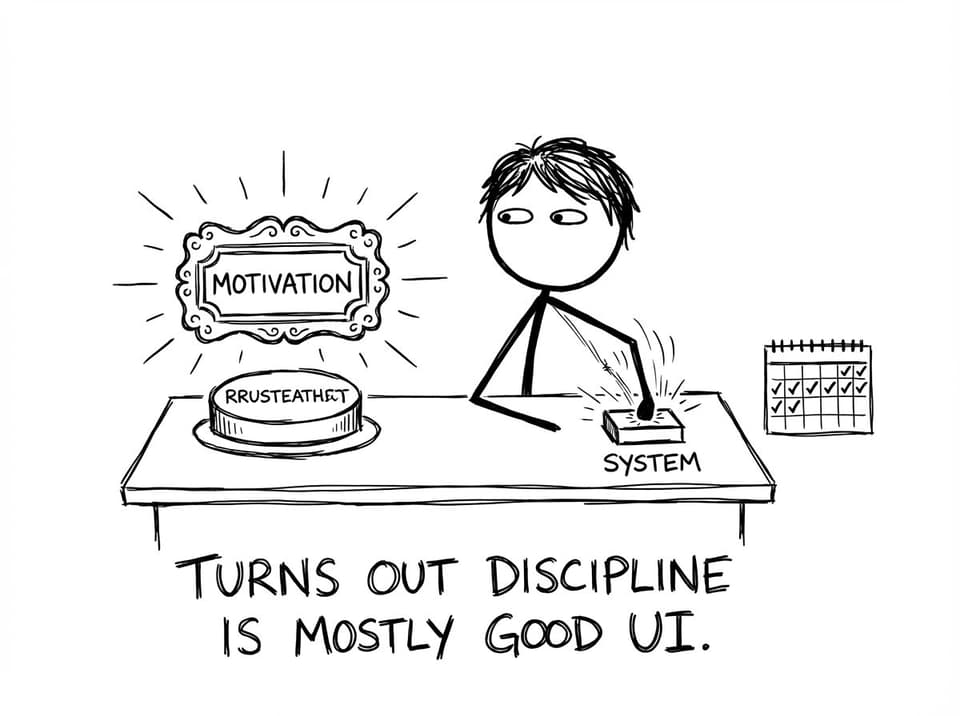
The "small start" rule: consistent IB students begin before they feel ready
Most IB students wait for a clean block of time. Two hours. A free evening. A weekend.
Consistent IB students start with 10 minutes.
That sounds almost insulting until you realize what it does:
- It lowers the entry cost.
- It prevents the all-or-nothing cycle.
- It keeps your memory warm so you don't restart from zero.
A simple "small start" structure:
- 7-10 minutes: Flashcards (active recall)
- 15-20 minutes: Questionbank practice on one subtopic
- 5 minutes: write one "error rule" (what you will do next time)
RevisionDojo makes this easy because your daily tools are already there: Flashcards Feature and Questionbank Feature.
They don't "revise IB." They train one paper-shaped skill
A huge reason consistency breaks in IB is vagueness.
"Revise Chemistry" is too big.
"Do 20 structured questions on Topic 4 acids and track the mistakes" is survivable.
Consistent IB students plan in paper-shaped units:
- One paper
- One topic
- One question type
- One constraint (timed or untimed)
This changes your psychology. Your brain can tolerate honest work; it struggles with undefined work.
If you want a timeline-style structure for IB revision, use: Countdown to IB Exams: A Guide to Effective Studying.
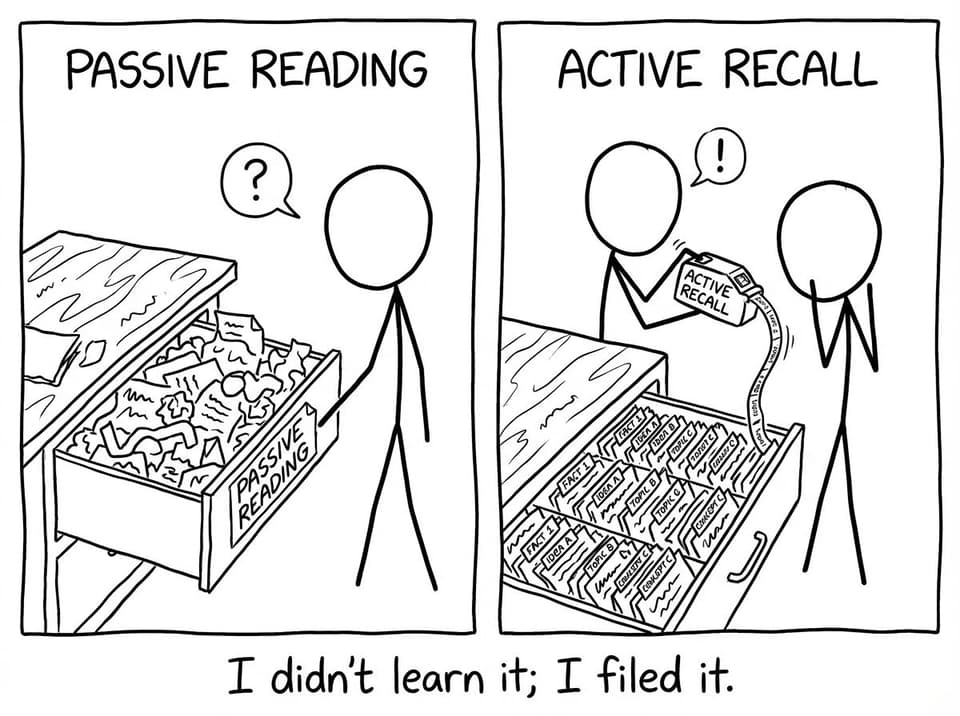
They use active recall because passive reading lies
Passive revision is seductive in IB. It feels calm. It feels "responsible." It also creates a dangerous illusion: recognition masquerading as memory.
Consistent IB students default to retrieval:
- Flashcards
- Blurting
- Mini-quizzes
- Explaining concepts out loud
- Exam-style questions
They do this not because it's fun, but because it gives truthful feedback.
If you need science-backed habits that support this, read: 5 Proven IB Revision Hacks Backed by Science.
The feedback loop: why consistent IB students improve faster
Consistency is not just "studying often." In IB, it's studying in a loop that produces improvement.
Here's the loop consistent students repeat:
Practice (create evidence)
They do exam-style questions early and often, not only at the end.
Review (turn mistakes into rules)
They don't just mark right or wrong. They ask:
- What pattern caused this error?
- What would full marks have required?
- What will I do differently next time?
Repair (fix the exact weakness)
They use short Study Notes review for the specific gap, then immediately retest.
Repeat (with slightly more pressure)
They add timing, mixed topics, or harder questions once accuracy is stable.
RevisionDojo is basically a home for this loop: Study Notes for fast clarity, the Questionbank for practice, AI Chat for quick explanations, and Mock Exams plus Predicted Papers for realistic pressure.
If exam season stress is part of why your consistency collapses, keep this nearby: How to Stay Sane During IB Exam Season.
They practice under time pressure before it's urgent
Many IB students avoid timed work because it makes them feel worse.
Consistent IB students use timed practice as exposure therapy.
They start small:
- 10-minute timed sets
- 25-minute timed sections
- Longer blocks once a week
This is how you teach your brain that time pressure is familiar.
For practical timing strategies, use: IB Exam Day Checklist: The Ultimate Guide.
And if you need calm techniques that work in real exam conditions, read: How to Stay Calm During IB Exams.

They protect energy because IB consistency is physical
The most consistent IB students don't treat sleep as optional.
They know something most people learn too late: the brain you revise with is the brain you sit the exam with.
So they build rules:
- A hard stop time
- A minimum sleep target
- A lighter day each week
- Short daily recall even on busy days
If you need permission to treat rest as strategy, see: Why Rest Is Productive in IB Exam Season.
They reduce "background stress" from coursework to save focus for exams
In IB, coursework stress leaks.
An unfinished IA draft doesn't just steal hours. It steals attention during revision. It turns every study session into a quiet negotiation with guilt.
Consistent IB students contain that stress by creating faster feedback loops:
- They use clear windows for coursework.
- They get rubric-aligned feedback early.
- They use exemplars as models, not as comparison.
RevisionDojo helps here with Grading tools and the Coursework Library.
If you're stuck in draft limbo, start with: IB Coursework Grader and use the IB Coursework Exemplars Index (IA, EE, TOK) to find models that make "good" visible.
Closing: the IB student you become is the real grade
The most consistent IB students don't win because they discovered infinite motivation.
They win because they made the work small, repeatable, and honest. They built a loop that survives the messy days. They used feedback instead of vibes. And they protected the energy that makes discipline possible.
If you want one place to run that whole system, RevisionDojo is built for it: Questionbank practice, examiner-aligned Study Notes, daily Flashcards, AI Chat to get unstuck, Grading tools and a Coursework Library to reduce uncertainty, plus Predicted Papers, Mock Exams, and Tutors when you need realism and support.
Pick one IB paper you're training for this week. Do one small session today. Then repeat it tomorrow. Consistency starts there.