
If you have ever opened your EE draft and thought, “I know I worked hard… but where did all my thinking go?” you are already feeling the exact problem the Researcher’s Reflection Space is designed to solve.
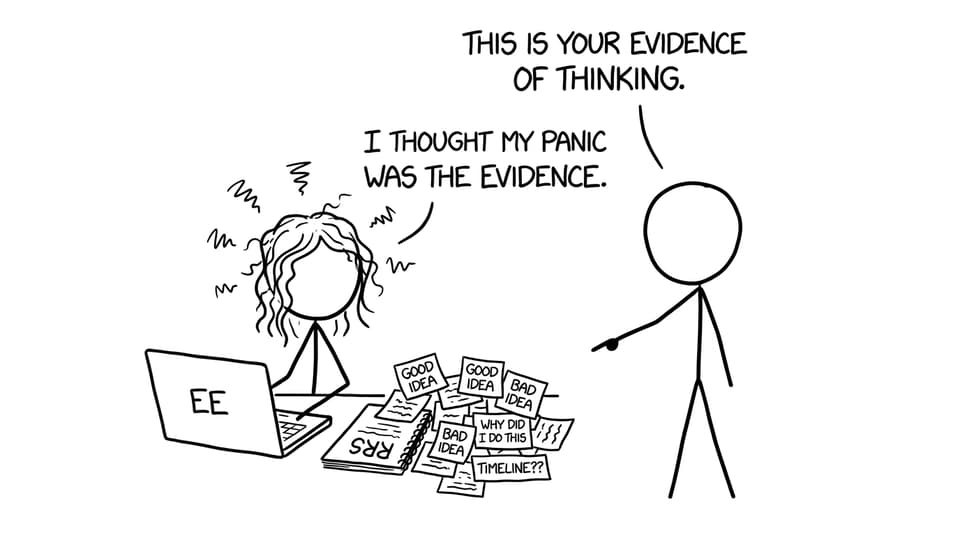
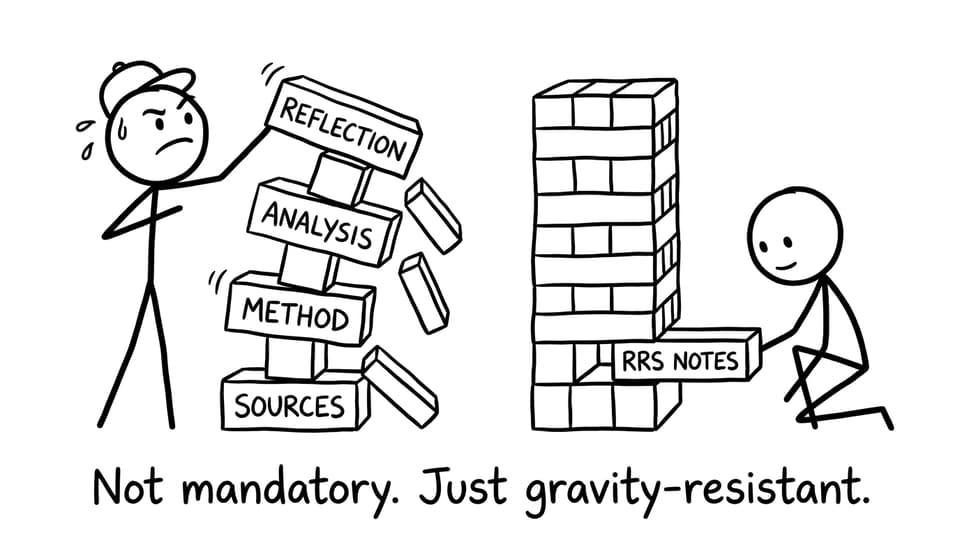
The EE is not only a final essay. It is also a record of how you became the kind of student who can ask a focused question, chase evidence, change your mind, and defend a line of reasoning. The Researcher’s Reflection Space (RRS) is where that invisible work becomes visible. It is a personal learning environment, physical or virtual, where you record ongoing reflections, ideas, progress, timelines, and arguments throughout your EE journey. The IB strongly recommends an RRS (it is not mandatory), because it becomes an excellent source when you write the final reflective statement and when you prepare for reflection sessions.
What is the Researcher’s Reflection Space (RRS) in the EE?
The RRS is your behind-the-scenes workspace for the EE. Think of it as the place where your research question grows up.
In practical terms, your RRS is where you store and track:
- Your initial topic sparks and why they mattered to you
- Versions of your research question (and why it changed)
- Notes from reading and research (with quick evaluations of usefulness)
- Mini-arguments you are testing (claims, evidence, counterclaims)
- A timeline of what you did, when you did it, and what happened next
- Moments of confusion, setbacks, and what you tried in response
- Supervisor meeting takeaways and next steps
Because the EE has formal reflection requirements, the RRS is most valuable when it captures decision-making, not just activity. “Read three articles” is a task. “Realized the articles disagree because they define the key term differently, so I revised my definitions section” is engagement.
If you want the official-feeling overview of how the RRS fits into the EE process, start with RevisionDojo’s hub of IB Extended Essay guides and the essentials section in 1.1 Essentials of the EE.
Quick checklist: A high-impact RRS for your EE
Use this checklist to sanity-check your RRS once a week. A strong EE RRS usually includes:
- A running log (dated entries) of what you did and why
- At least 3-5 “turning point” moments (where your thinking changed)
- A place for research question iterations
- Source notes that include quick evaluation (credibility, relevance, bias)
- Evidence of planning (timeline, milestones, mini-deadlines)
- Evidence of problem-solving (what failed, what you changed)
- Short reflection prompts you answer after major steps
RevisionDojo’s article on tools that help you organize your EE research is a helpful companion here because it connects organization to real templates and habits.
Why the RRS matters for EE reflection and Criterion E (Engagement)
Students often underestimate what the IB is actually rewarding in the EE. Yes, the final essay needs research and analysis. But the reflection component is looking for evidence that you actively managed your inquiry.
The RRS supports that in three ways:
It turns “I worked hard” into “I made choices for reasons”
Hard work is invisible. Choices are visible. The RRS preserves the reasoning behind your choices, especially when you later forget why you did something.
If you want to see how reflection connects directly to engagement marks, read How Reflection Strengthens Your IB Extended Essay.
It helps you write reflections that are specific, not generic
The weakest EE reflections sound like they could belong to anyone: “I learned time management.” A good RRS gives you precise examples: “I realized my question was unanswerable within the word limit, so I narrowed to a single case study and changed my method from overview to comparison.”
For practical wording and structure, use How to Reflect on Challenges in Your IB IA or EE. Even if you are not writing an IA, the reflection thinking transfers cleanly to the EE.
It reduces panic before reflection sessions and the viva voce
A reflection session becomes stressful when you try to reconstruct months of thinking from memory. Your RRS is a memory system. It gives you ready-made “moments” to discuss: a dead end, a key source, a method change, a surprising result.
When you are close to the finish line, pair your RRS with How to Prepare for the IB Extended Essay Viva Voce.
What should you put in your EE RRS? (Examples that actually help)
A useful RRS is not a diary. It is a working lab notebook for thinking. Here are categories that consistently pay off in the EE.
Research question evolution (with receipts)
Keep a simple trail:
- Version 1 of the question
- What made it too broad or too descriptive
- Version 2
- What evidence or supervisor feedback pushed you again
- Your current version and why it is now researchable
If you are still shaping your question, RevisionDojo’s guide on how to craft the perfect IB Extended Essay research question is an easy way to pressure-test your EE early.
Source notes that include judgment
Do not only copy quotes. Add a one-line evaluation:
- “This source is useful for context but weak for analysis because it is descriptive.”
- “This study defines the key variable differently; I I need to address that in my method section.”
- “This author is credible but has a clear theoretical bias; I will use them as a counterperspective.”
Micro-arguments (claim: evidence; so what)
A strong EE is built from many small arguments, not one giant leap. In your RRS, test paragraphs before they become paragraphs.
Format idea:
- Claim:
- Evidence:
- Counterargument:
- My response:
- So what (why it matters to the research question):
If you are worried your writing is becoming “report-like,” RevisionDojo’s article on making your IB Extended Essay analytical, not descriptive pairs perfectly with this micro-argument habit.
Timeline notes that track reality, not fantasy
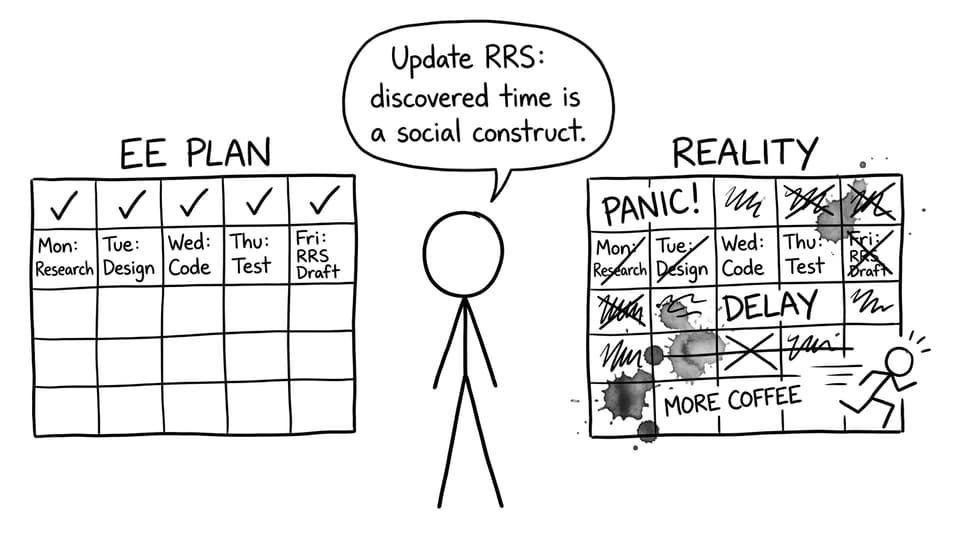
An EE plan is rarely the EE you actually live through. That is not a failure. It is the process. Your RRS should include timeline adjustments with reasons.
- “Planned to collect primary data; switched to secondary data because access was denied.”
- “Moved literature review earlier because it clarified what counts as evidence in my subject.”
- “Cut a whole section after realizing it did not answer the research question.”
What the RRS is NOT (common EE misunderstandings)
It is not assessed directly
Your supervisor and examiner are not grading your RRS as a document. But the quality of your reflection and your ability to explain choices is affected by it.
It is not a polished portfolio
Messy is fine. Useful is the goal. Screenshots, voice notes, annotated PDFs, a chaotic page of arrows, all all acceptable if they help you reconstruct your thinking.
It is not optional if you want calm
The IB says the RRS is strongly recommended, not mandatory. In real student life, it is the difference between reflection that feels true and reflection that feels invented.
Best formats for an EE RRS (physical vs digital)
There is no “correct” format. Choose the one you will actually maintain.
Physical RRS
Good if you think on paper.
- Notebook with dated entries
- Printed articles with margin notes
- Sticky notes for questions and mini-claims
Risk: it can become hard to search and hard to back up.
Digital RRS
Good if you want search, organization, and easy sharing.
- A single Google Doc with dated headings
- Notion or OneNote with tags
- A folder system with a reflection log and evidence subfolders
Risk: it can become a dumping ground unless you have a weekly structure.
A simple hybrid works well: digital for sources and drafts, physical for quick thinking. Either way, keep the RRS personal and consistent.
How RevisionDojo can support your EE RRS (without making it robotic)
The best RRS still sounds like you. Tools should not replace that voice; they should protect it.
Here is a realistic workflow many students use inside RevisionDojo:
- Use Study Notes to clarify subject theory you need for your EE argument.
- Use Flashcards to remember key definitions and scholars you keep citing.
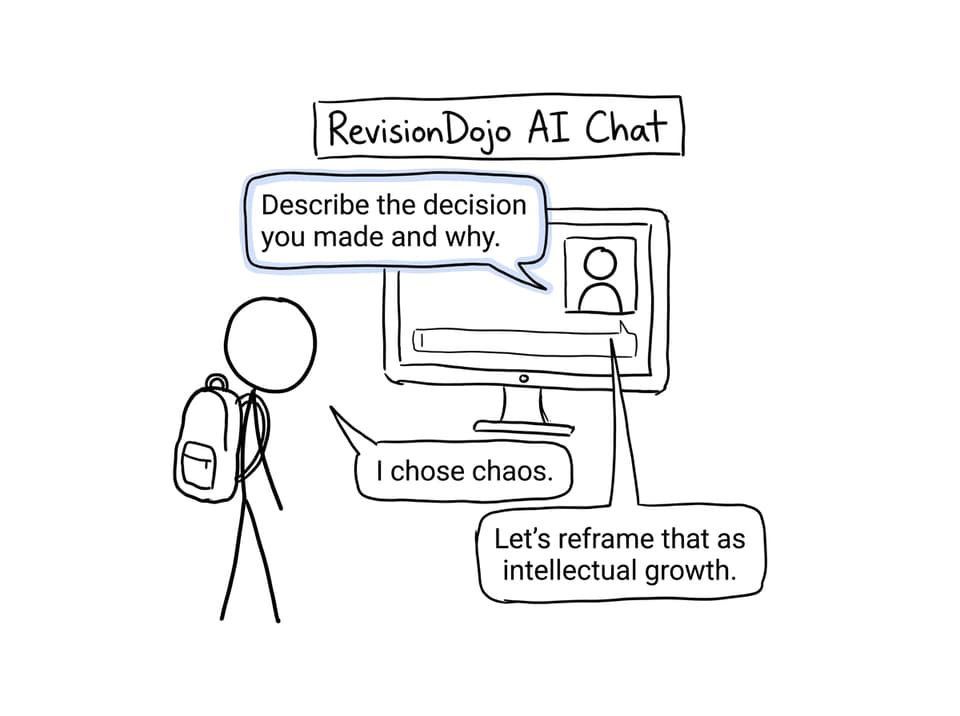
- Use AI Chat to generate reflection prompts when you feel stuck explaining a decision.
- Use the Coursework Library to see how strong academic tone sounds in your subject.
- Use Grading tools like the IB Coursework Grader to check whether your draft aligns to rubric expectations.
- Use the Questionbank for exam prep so your EE work does not quietly steal time from your subjects.
- Use Mock Exams and Predicted Papers to keep your exam rhythm steady while the EE timeline shifts.
- If you need a human checkpoint, use Tutors to troubleshoot research design, structure, and argument clarity.
The most important point: your RRS should feed your EE and your reflections, but it should not consume your entire schedule. Tools exist to reduce friction, not add it.
Closing: Make your EE easier to explain by making it easier to remember
Most students do not struggle with effort in the EE. They struggle with remembering their own thinking clearly enough to explain it under pressure. The Researcher’s Reflection Space fixes that quietly, one small entry at a time.
If you treat the EE RRS as a simple habit: a personal learning environment that captures ideas, progress, timelines, and arguments, and you end up with something rare: proof that your work was real, not just complete. And when exams pile up, that proof helps you move faster with less stress.
Build your RRS, then let RevisionDojo carry the heavy parts of the process: structure from the IB Extended Essay guides, clarity from targeted articles like mastering IB extended essays, and confidence checks through tools like the IB Coursework Grader. Your EE will still be yours. You will just have a better map of how you got there.