
A strange thing happens when you start treating your EE like it matters.
You stop hunting for “more sources” and start noticing the uncomfortable gap between having information and using it well. Your document gets longer. Your bibliography looks impressive. But your argument still feels… quiet. Like it’s waiting for you to actually say something.
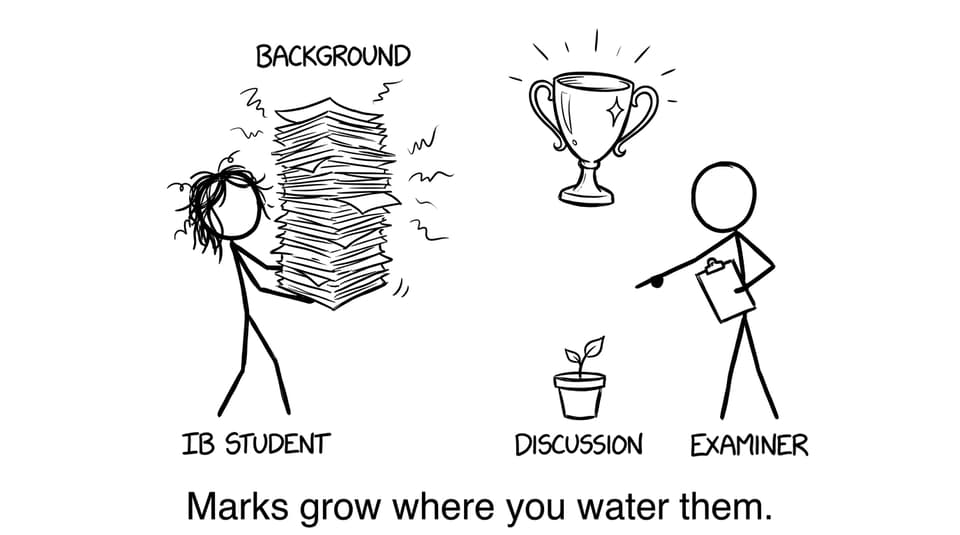
That quiet is exactly why EE Criterion D (Discussion and Evaluation) wins so many marks. It’s the part of the rubric that rewards the skill IB students rarely practice enough: taking evidence and testing it, weighing it against alternatives, acknowledging uncertainty, and drawing a conclusion that feels earned.
If you want the fastest improvement in your EE, don’t begin by adding more quotes. Begin by upgrading the discussion.
EE Criterion D in one sentence
Criterion D rewards the quality of your judgment: how well your EE discusses findings, evaluates evidence, considers limitations, and reaches a balanced conclusion.
If you want a complete map of how this fits into the whole assessment grid, keep this open while you revise: EE marking criteria breakdown.
Quick checklist: what earns marks in EE Criterion D
Use this as a fast diagnostic. If your EE consistently does these, your Criterion D band rises quickly:
-
You interpret results instead of simply presenting them
-
You explain why evidence supports (or weakens) your claim
-
You compare viewpoints or interpretations (not just sources)
-
You acknowledge limitations, uncertainty, and alternative explanations
-
Your conclusion judges confidence and boundaries, not just summarises
When your structure makes space for real discussion, Criterion D gets easier to write. If you’re still reorganising sections, use: How to structure an Extended Essay (EE).
Why EE Criterion D is where the marks live
The easiest way to understand the weighting is this: the IB doesn’t only reward research effort; it rewards what you do with your research.
A strong EE shows that you can think like a beginner researcher. And beginner researchers don’t just collect facts. They:
-
question reliability
-
test competing explanations
-
recognise methodological limits
-
revise conclusions when evidence is weaker than hoped
Criterion D captures that intellectual payoff.
The IB is paying you for reasoning, not reporting
A school report is often a guided tour: “Here’s what happened. Here’s what scholars say.”
A high-scoring EE is closer to a workshop: “Here’s my claim. Here’s the best support. Here’s what complicates it. Here’s what still stands after we pressure-test it.”
Criterion D is the workshop.
Discussion is harder to fake than research
You can write pages of smooth, well-cited background and still avoid taking a position.
But evaluation forces decisions:
-
Which evidence matters most?
-
What would a smart person disagree with?
-
What assumptions are you leaning on?
-
What would change your conclusion?
Those are visible signals of thinking. Examiners can’t miss them.
It protects the IB from “long but hollow” EEs
At 4,000 words, the EE tempts students to inflate the safe sections: background, definitions, extended context.
Criterion D is a counterweight. You can’t pad it with extra facts. Discussion only improves when you show judgment.
If you want to make sure your draft isn’t over-investing in the wrong sections, this formatting guide is also useful for planning space and flow: How to format your EE according to IB guidelines.
It aligns with what universities reward
Universities care less about how many things you read and more about whether you can argue responsibly.
A strong EE conclusion that admits limits and still makes a clear judgment is basically first-year academic writing training.
For the bigger picture: The Extended Essay for university applications.
The biggest trap: mistaking analysis for evaluation in your EE
A lot of IB students say, “I’m analysing,” and they are. But Criterion D wants more.
-
Analysis explains what evidence shows and how it links to the research question.
-
Evaluation judges how convincing that link is, under what conditions, and compared to alternatives.
A simple test:
-
If your paragraph could be pasted into a textbook with minimal changes, it’s probably description.
-
If your paragraph makes a claim that a reasonable reader could challenge, it’s moving toward evaluation.
If your draft is drifting into summary, fix that foundation here: How to make your IB Extended Essay analytical, not descriptive.
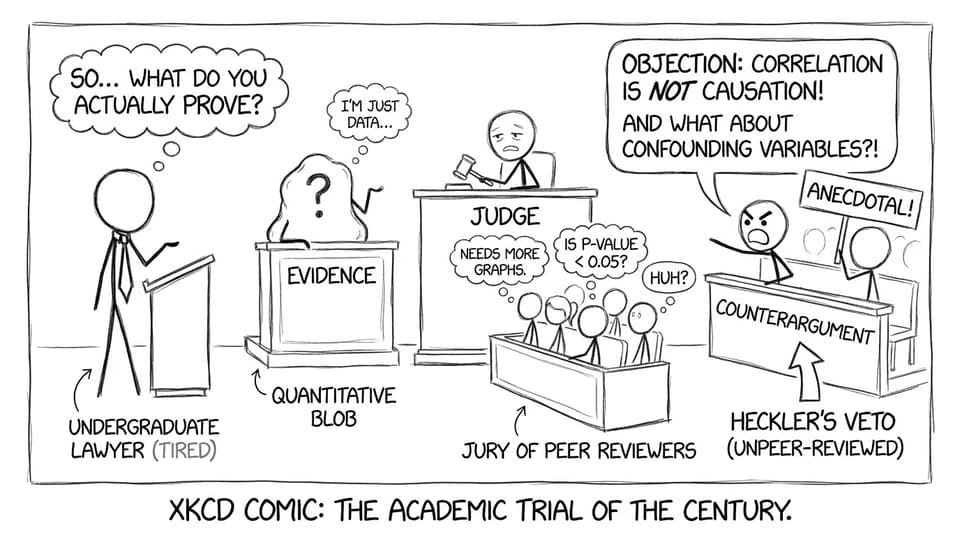
How to write EE discussion that earns top-band Criterion D
Criterion D writing is less about sounding sophisticated and more about sounding precise. Below are repeatable moves you can copy into your EE without rewriting everything.
Use the “claimtoevidencetomeaningtolimitation” loop
Most mid-level EE paragraphs stop at claim + evidence.
High-scoring paragraphs keep going:
-
Claim: what you argue
-
Evidence: the exact data/quote/example
-
Meaning: what the evidence suggests and why it matters
-
Limitation: what it doesn’t prove, or what could weaken the inference
If you do this loop consistently, your discussion becomes examiner-friendly because your reasoning is visible on the page.
Compare interpretations, not just sources
Listing sources is not discussion.
Instead of:
- “Source A says X. Source B says Y.”
Try:
- “Source A’s conclusion depends on [method/assumption]. That makes it persuasive for [context], but weaker for this EE because [reason]. Source B avoids this by [difference], which better matches the research question because [why].”
For examples of what “critical discussion” actually looks like, use: Top tips for writing a critical discussion section in your EE (with examples).
Build a mini-debate inside your EE
Examiners trust an argument that has survived a fair fight.
A simple pattern:
-
Present the strongest support.
-
Present the strongest counterpoint.
-
Decide what survives and why.
You don’t need drama. You need controlled tension and a clear judgment.
Evaluate method even if you’re not in a lab subject
Evaluation is not just “error analysis.” It’s discipline-specific honesty.
-
History: provenance, bias, representativeness, and gaps in the record
-
English: interpretive lens, textual selection, limits of close reading
-
Economics: assumptions, data limitations, external validity
-
Business: model fit, stakeholder perspective, time horizon
If you’re in Business Management, this subject-specific guide makes Criterion D expectations concrete: Criterion D: Discussion and Evaluation (Business Management EE).
Make your conclusion judge, not repeat
A weak EE conclusion is a recap.
A strong EE conclusion answers:
-
What is the most defensible conclusion given the evidence?
-
Where is the conclusion least certain?
-
What would you need to know to be more confident?
-
What does this imply within the limits of the investigation?
If you want a broader rubric reference point, use: Assessment criteria full breakdown + scoring guide.
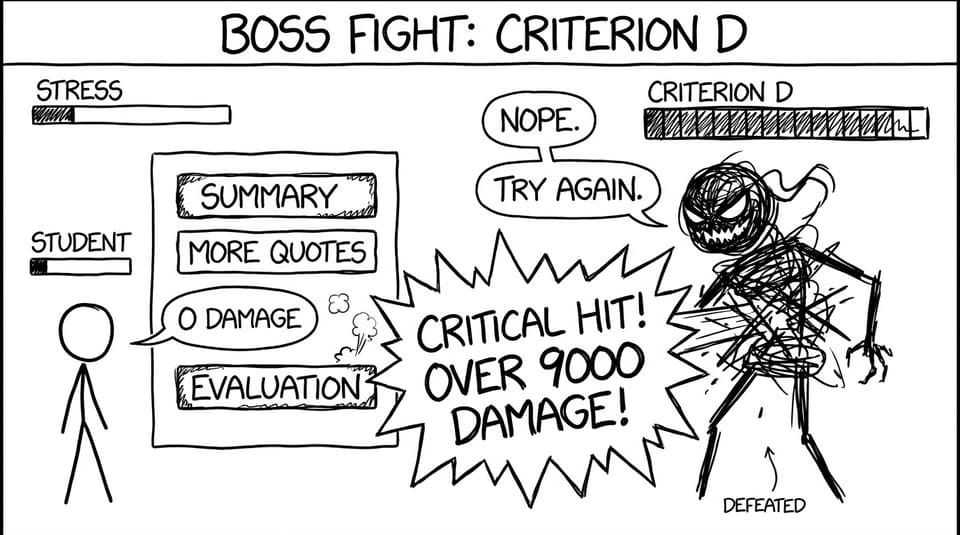
A 15-minute EE Criterion D upgrade (fast self-edit)
This is the quickest way to turn “good research” into “visible thinking” in your EE.
Highlight your judgment verbs
Scan your draft and highlight verbs and phrases like:
-
suggests, implies, indicates
-
strengthens, weakens
-
more convincing, less reliable
-
depends on, assumes
-
limited by, only applies when
If your discussion has few of these, your Criterion D is underpowered.
Add one limitation sentence to every major section
A limitation isn’t an apology. It’s a boundary condition.
Useful templates:
-
“However, this pattern may be inflated because…”
-
“This interpretation relies on…, which may not hold if…”
-
“An alternative explanation is…, which would predict…”
Do this across your body sections and you’ll feel your EE become more balanced.
Add one comparative sentence per section
Force yourself to weigh two explanations:
- “Compared to X, Y better accounts for…”
This single sentence often changes the band because it shows judgment.
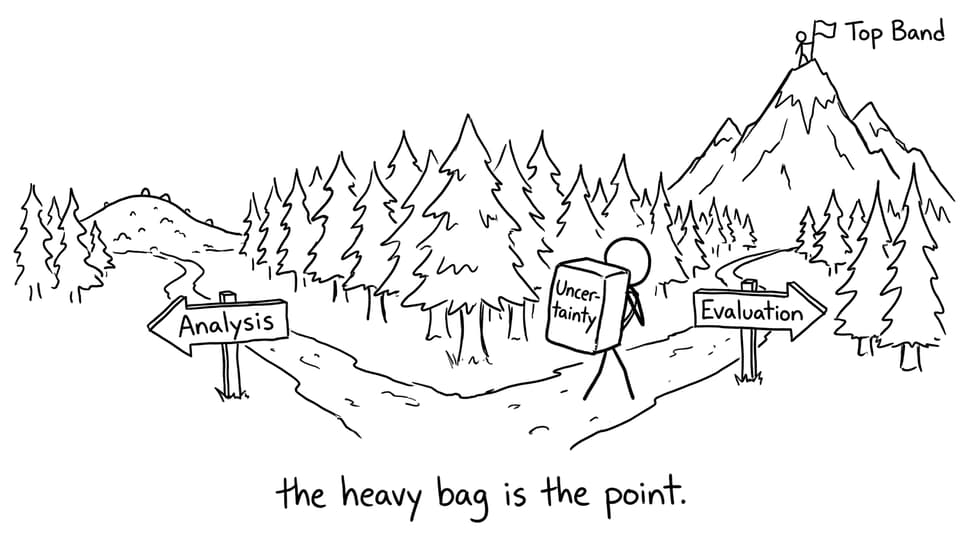
Where the five interdisciplinary EE frameworks fit (and where they don’t)
If you’re writing an interdisciplinary EE, you register it under one of five frameworks:
-
Power, equality, justice
-
Culture, identity, expression
-
Movement, time, space
-
Evidence, measurement, innovation
-
Sustainability, development, change
That framework helps locate your topic and methods across disciplines. But the key point is this: the framework connection itself is not directly assessed. Your marks still come from the criteria, and Criterion D still depends on discussion quality.
So treat the framework like a map, not the destination. It can help you choose concepts and perspectives to compare, which strengthens your EE evaluation. But it won’t replace the need to judge evidence.
How RevisionDojo helps you score higher in EE Criterion D
Criterion D improves fastest when you can iterate: draft, feedback, revise, and repeat.
RevisionDojo is built for that loop.
-
Use the IB Coursework Grader to get criterion-aware feedback you can act on immediately.
-
If you want to understand what examiner-aligned work looks like, explore the Coursework feature and review exemplars in your subject area.
-
When you’re stuck, use RevisionDojo AI Chat to pressure-test counterarguments, generate limitation prompts, and draft “mini-debate” paragraph plans without losing your own voice.
-
To keep your wider IB workload moving while the EE is in revision, RevisionDojo’s Questionbank, Study Notes, Flashcards, Mock Exams, and Predicted Papers help you study efficiently.
-
If you need human guidance, RevisionDojo Tutors can diagnose where your discussion is thin and help you plan specific upgrades.
For more EE strategy articles in one place: All Extended Essay posts.
Closing: treat Criterion D like the point of the EE, not the ending
Most students write their EE as if the goal is to gather enough material to fill the word count.
But the examiner’s real question is simpler: did this student think like a researcher?
Criterion D wins the most marks because it captures that shift from reporting to reasoning. It’s where you show balance, judgment, and the courage to say, “This is what my evidence supports, and this is what it can’t.”
Make your next revision pass a Criterion D pass. Then run the draft through RevisionDojo’s IB Coursework Grader, use AI Chat to pressure-test counterarguments, and keep the rest of your IB prep moving with Questionbank, Study Notes, Flashcards, Mock Exams, Predicted Papers, the Coursework Library, and Tutors.
Your EE doesn’t need more words. It needs stronger evaluation.