

A parent can watch two years of demanding IB work unfold and still be left with a surprisingly basic question: will any of this count once university begins?
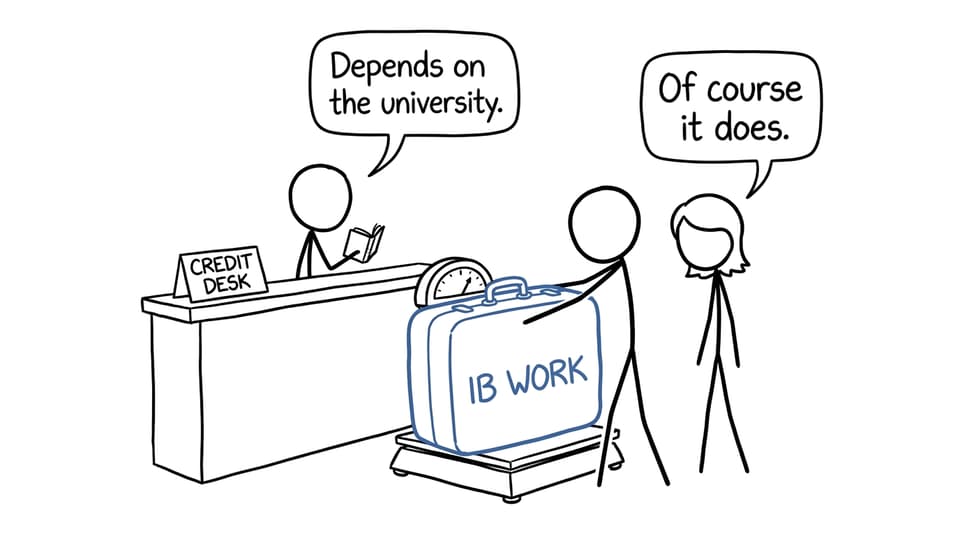
The reassuring answer is yes, the IB Diploma can give university credit, particularly in the United States and Canada. But credit is not automatic or universal. Each university decides which IB subjects it recognizes, what scores qualify, whether Standard Level courses count, and how the resulting credit applies to a degree.
Higher Level results usually carry the most weight. Scores of 5, 6, or 7 often create the strongest opportunities, although some institutions accept a 4 and others require a 6 or 7. Certain universities also award additional credit or advanced standing for completing the full diploma above a specified total.
That makes the IB valuable in two separate ways: it can support admission, and it may reduce or reshape the coursework a student completes after enrolling. Those benefits are related, but they are not the same.
The short answer for IB Diploma parents
If you are comparing university options, begin with this checklist:
- Check the policy of the specific university, campus, faculty, and degree.
- Look for subject-by-subject rules rather than relying only on the total diploma score.
- Expect Higher Level subjects to receive broader recognition than Standard Level subjects.
- Record the minimum score required for each eligible examination.
- Determine whether the award is course credit, elective credit, placement, exemption, or advanced standing.
- Confirm how official IB results must be submitted.
- Ask whether accepting credit could affect prerequisites or the sequence of later courses.
A useful starting point is RevisionDojo’s guide to how many college credits the IB Diploma can provide. Treat broad guidance as orientation, then verify the current policy directly with every institution on the student’s shortlist. Universities can revise these rules, and different faculties within one institution may apply them differently.
How IB university credit actually works
The phrase “university credit” sounds more uniform than it is. In practice, an IB result may produce several different outcomes.
| Outcome | What it can mean for the student |
|---|---|
| Direct course credit | The university awards credit for a named introductory course. |
| Elective credit | The result counts toward the degree total but may not replace a required course. |
| Exemption | The student does not have to take a particular requirement, although credit may not be added. |
| Placement | The student may begin in a more advanced class. |
| Advanced standing | The student enters with a higher academic standing or a block of recognized credit. |
This distinction matters. Ten credits that replace required first-year courses may be more useful than a larger amount of general elective credit that does not fit the degree. Likewise, placement into a higher mathematics course can be valuable even if it adds no credits to the transcript.
Parents should therefore ask not only, “How much credit is awarded?” but also, “What does that credit replace?”
Does IB give university credit for every subject?
Usually not. Many universities evaluate IB examinations subject by subject, with separate score thresholds and course equivalents.
Higher Level subjects tend to receive the broadest recognition because of their depth. The University of Michigan, for example, states that it awards credit only for Higher Level examinations, with qualifying scores and course equivalents varying by subject. The University of California system generally awards units for qualifying Higher Level results and also provides additional units when a student completes the diploma with a sufficiently high total score.
Standard Level recognition is less predictable. Some universities award no SL credit, while others recognize selected SL subjects or use them for placement and requirements rather than degree credit. The American Council on Education has recommended credit for reviewed SL subjects at qualifying scores, but individual institutions remain free to set their own policies.
This is why the HL and SL distinction deserves attention well before applications are submitted. RevisionDojo’s explanation of how universities view HL and SL subjects can help families connect subject selection with both admission and potential credit.
Policies differ sharply by country and university
There is no worldwide conversion table for IB credit. Geography changes the answer, but institutional and degree rules matter just as much.
United States
American universities commonly publish examination-credit charts listing the required level, score, course equivalent, and number of units. Policies can range from no credit in a particular subject to substantial recognition for several HL results.
The University of California currently awards eight quarter units for qualifying HL examinations scored 5, 6, or 7. Students completing the full diploma with 30 or more points also receive six quarter units, in addition to eligible HL examination credit. Campus and degree rules still determine whether those units satisfy a subject requirement, breadth requirement, or elective space.
Admission remains separate. A student can receive an offer without earning credit, or earn a qualifying examination result after admission. Families considering the US should read the guide to using the IB in US college applications rather than treating credit thresholds as admission thresholds.
Canada
Canadian institutions often grant transfer credit or advanced standing for strong HL results, but the scale varies by university and program. McGill states that full diploma students may receive up to 30 transfer credits, depending on their HL subjects, results of 5 or better, entering faculty, and program rules. Waterloo normally considers HL courses with a minimum final grade of 5, while the maximum recognized amount varies across programs.
UBC considers Higher Level and selected Standard Level courses for first-year credit. The University of Toronto Mississauga’s published policy for its 2026 intake awards transfer credit for HL results of at least 5 but not for SL examinations.
These examples reveal the pattern: Canada can be generous, but the student’s subject combination and intended faculty determine the practical benefit.
United Kingdom
In the UK, the IB Diploma is more commonly used to meet entry requirements and conditional offers than to shorten a standard undergraduate degree. Universities frequently specify an overall diploma total alongside grades in relevant HL subjects.
Some institutions use UCAS Tariff points, while others publish direct IB offers. The full diploma itself does not receive one overall UCAS Tariff allocation; its eligible components have separate values. More importantly, universities set their own entry conditions and do not have to use the Tariff.
For a UK applicant, the better question is often whether the chosen subjects and predicted results satisfy the course offer. Families can explore what universities think of the IB Diploma and then check each course page for current IB university requirements.

Why the total diploma score is only part of the picture
It is tempting to think that a 38-point diploma must always receive more credit than a 34-point diploma. Sometimes it will. Often, however, the decisive information is hidden inside the total.
Imagine two students with the same overall score. One has 6s in three HL subjects recognized by the chosen university. The other has strong SL results but HL subjects that receive no equivalent within the intended degree. Their admission profiles may both be compelling, yet their credit awards could look very different.
The most important variables are:
- The final score in each eligible subject
- Whether the subject was taken at HL or SL
- The university’s minimum threshold
- The course equivalent assigned to that result
- The student’s faculty, major, or degree structure
- Limits on the amount of external examination credit
- Rules preventing duplicate credit for overlapping material
A total-score target still matters for admission and for universities that provide a full-diploma award. RevisionDojo’s overview of minimum IB scores for university helps clarify that broader context. Just avoid assuming that an admission target is automatically a credit threshold.
Credit does not always mean graduating early
University credit can create financial or academic flexibility, but it does not guarantee a shorter degree.
A student may still need to complete a fixed sequence of major courses offered only once per year. Professional programs may restrict how external credit applies. Housing arrangements, scholarships, residency requirements, or prerequisite chains can also make early graduation impractical.
Even when it does not shorten university, credit may allow a student to:
- Take a lighter semester during a demanding year
- Add a minor or second area of study
- Move into advanced courses sooner
- Study abroad without delaying graduation
- Explore electives outside the major
- Create room for research or internship commitments
The value of credit is therefore not merely the number printed on a transcript. Its real value is optionality. It gives the student more ways to shape the degree.
What families should do before accepting an offer
Create a simple comparison sheet for every serious university option. Record the official credit policy, date checked, eligible subjects, score thresholds, course equivalents, maximum credit, and submission instructions.
Then contact the relevant admissions or academic advising office if anything remains unclear. Useful questions include:
- Does this credit replace a required course or count only as an elective?
- Is the policy different for the student’s intended faculty?
- Can the student decline an exemption and take the introductory course?
- Will accepting credit affect progression into later subjects?
- When must official IB results arrive?
Official results generally need to be sent through the IB’s authorized transcript process. A school report or screenshot may not satisfy the university’s requirement. Students should follow the instructions in their offer and university portal rather than assuming the results will be matched automatically.
Higher scores can unlock more credit
There is a practical reason to understand these policies before the examination period. At many institutions, one additional point in an HL subject can cross a credit threshold. A 5 rather than a 4, or a 6 rather than a 5, may change the course equivalent or turn an ineligible result into recognized credit.
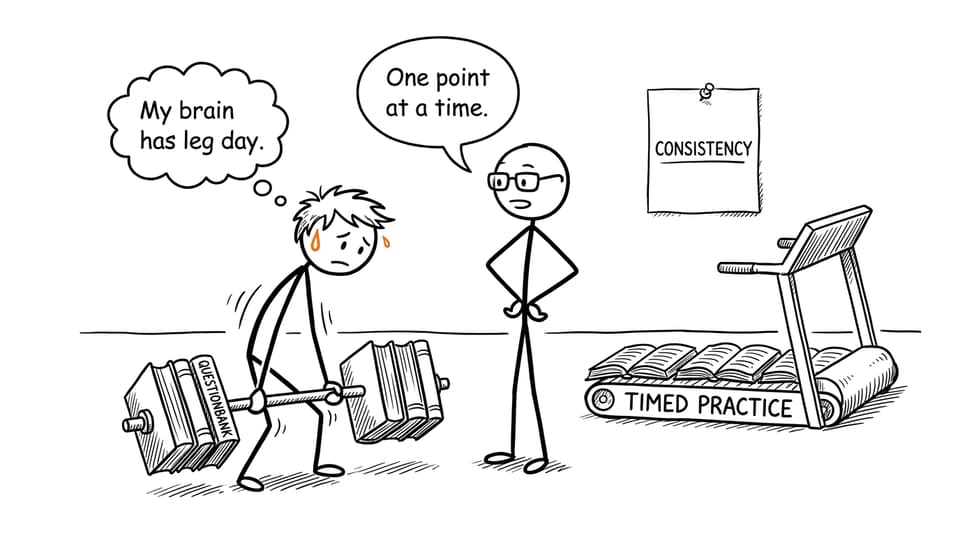
That does not mean students should carry university-credit calculations into every study session. It means consistent practice has a concrete purpose beyond the final diploma total.
RevisionDojo helps students build that consistency through a connected study cycle. They can clarify a topic with Study Notes, retain key ideas with Flashcards, and apply them through the Questionbank. AI Chat helps resolve confusion, while Grading tools reveal where an answer is losing marks. The Coursework Library and Tutors provide further support when independent work needs a clearer model or expert guidance.
As exams approach, RevisionDojo’s complete IB exam-preparation workflow moves students into Predicted Papers and Mock Exams for timed rehearsal. The IB grade calculator can then help them compare practice performance with their targets without turning one result into a false certainty.
The answer is yes, but the details create the value
The IB Diploma can lead to university credit, exemptions, placement, or advanced standing. Strong HL scores usually offer the clearest opportunities, and some universities provide additional recognition for the completed diploma. Yet no single policy applies everywhere.
For parents, the sensible next step is simple: compare current policies for the student’s actual universities and degree choices. For students, the next step is equally clear. Focus on the subjects where a higher result can strengthen admission and potentially unlock meaningful credit.
The diploma’s value is not confined to arriving at university with fewer courses to complete. It lies in arriving with choices. RevisionDojo gives students the structured practice, feedback, and exam preparation needed to pursue those choices one mark at a time.