

The first time most students hear that IB can turn into college credit, it sounds like a secret shortcut.
A friend of a friend “skipped a whole semester.” Someone else “got nothing.” Both stories can be true at the same time. And that’s the part nobody tells you early enough: IB credit isn’t a global promise. It’s a policy decision made one university (and sometimes one department) at a time.
Below is a clear, practical breakdown of how many college credits you can realistically get from IB, what usually matters most, and how to plan your revision so your scores actually convert into something useful.
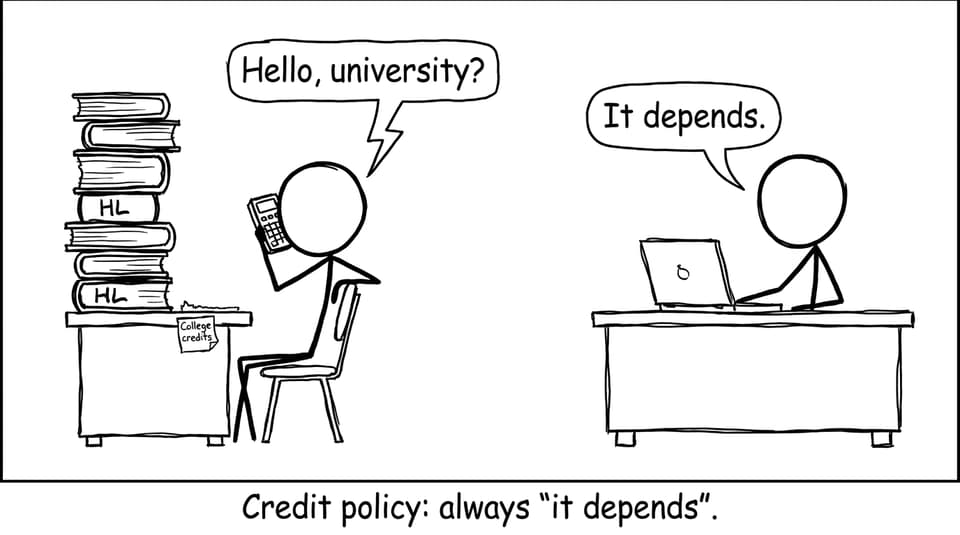
The quick answer: it depends, but patterns exist
Here’s the most honest summary of IB college credit:
-
Higher Level (HL) subjects are the main path to credit.
-
A score threshold is usually required (commonly 4-7, often 5+ for meaningful credit).
-
Standard Level (SL) credit is less common and usually smaller.
-
Some universities grant credit for the IB Diploma as a whole; others only by individual subject.
In other words: you don’t “get credit for doing IB.” You get credit for scoring well in specific parts of IB that a university trusts as equivalent to its own courses.
To keep your revision focused on scores that matter, use a system that pushes you toward exam marks (not just content coverage). A good starting hub is RevisionDojo for IB.
How many college credits can IB actually earn?
There is no universal number, but most outcomes fall into a few common buckets.
If you score highly in multiple HL subjects
This is where the bigger credit stories usually come from.
Students with 5, 6, or 7 in several HL subjects are the most likely to receive:
-
Credit for introductory courses
-
Waived general education requirements
-
Placement into higher-level classes
-
A lighter first-year course load
In more generous systems, that can equal one semester of coursework (and sometimes more). The exact number depends on how a university converts IB results into its own credit system.
If you’re trying to push HL scores upward, build daily practice around targeted questions and feedback loops. RevisionDojo’s Questionbank is designed for that kind of mark-focused repetition.
If you earn the IB Diploma but your HL scores are mixed
Many students land here: diploma earned, effort solid, but not every HL score hits the “credit threshold.”
In that case, universities may still offer:
-
A smaller number of credits
-
Placement advantages
-
Priority registration or advising benefits
Even when formal credit is limited, IB can still function like academic compound interest: university work feels less unfamiliar, and that can be worth more than a few credits on paper.
If you’re hoping SL results will carry the credit
SL credit exists, but it’s less common and usually worth less.
Many universities:
-
Offer no SL credit at all, or
-
Offer a small amount of elective credit, not a direct course replacement
So if your goal is measurable credit, your best bet is usually to treat SL as “score for strength” and HL as “score for both strength and credit.”
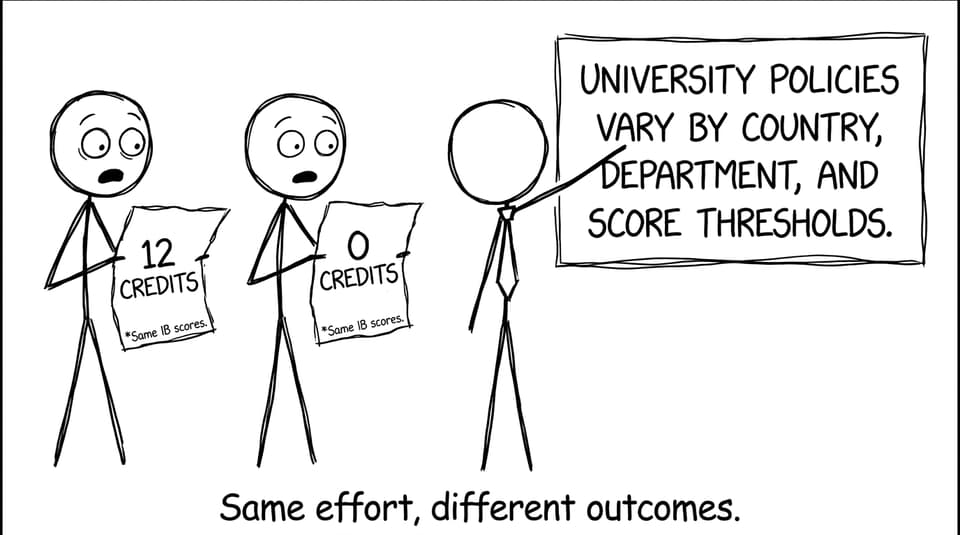
Why IB credit varies so much between universities
If two students with the same IB grades can get different credit outcomes, the natural question is: why?
Common reasons include:
-
Different national systems and how they map pre-university study
-
Department control over what counts as equivalent coursework
-
Concerns about overlap between IB syllabi and the university’s intro sequence
-
Institutional philosophy: some universities prefer students complete their own core curriculum
This is why highly selective universities may award fewer credits. It doesn’t mean IB isn’t rigorous. It means they’re protective of what they teach in-house.
A practical checklist to maximize your IB credit potential
Think of this as planning for two wins: stronger admissions and better credit odds.
Choose HLs with your future major in mind
Credit is more likely when the HL subject clearly matches the degree pathway.
Aim for the threshold that actually triggers credit
A 4 might pass the diploma requirement in some contexts, but a 5 or 6 is often where credit policies become generous. One point can be the difference between “nice effort” and “course waived.”
To raise your ceiling, combine:
-
IB Flashcards with Spaced Repetition (SRS) for daily recall
-
The Flashcards feature to auto-generate cards from weak topics
-
Exam-style practice in the Questionbank, then feedback via AI
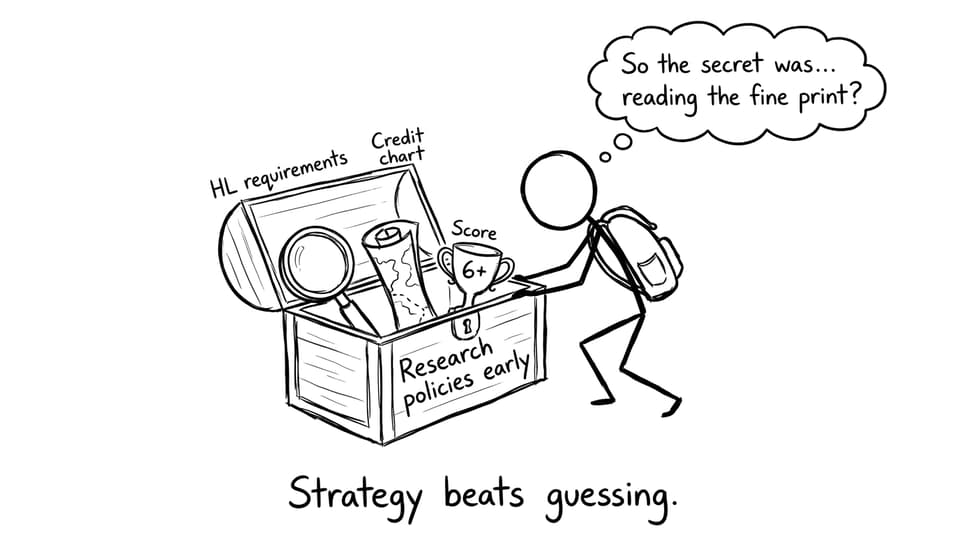
Research policies early (seriously)
Do this before final subject decisions if you can. You’re not trying to game the system; you’re trying to avoid surprises.
If your exams are close and you feel behind, the most useful kind of urgency is structured urgency. This guide helps: How to Study for IB Exams When You Feel Behind.
Using IB revision to convert effort into credit
The hidden trap with IB is that students often revise like “good students” instead of like “credit-seekers.” Credit-seekers optimize for scores, not for hours.
A simple weekly loop:
-
Study Notes to patch one specific gap
-
Flashcards to lock the details you keep forgetting
-
Questionbank sets to build marks under exam-style constraints
-
One timed session weekly using Mock Exams or Predicted Papers
RevisionDojo is built around that loop across IB subjects: Questionbank, Study Notes, Flashcards, AI Chat, Grading tools, Predicted Papers, Mock Exams, Coursework Library, and Tutors.
If you want ideas for what “top-end consistency” looks like, read How 45-Point IB Students Prepare for Exams.
Closing thought: make IB credit a bonus, not the plan
The healthiest way to think about IB college credits is as upside, not entitlement.
Yes, IB can earn you meaningful college credits, especially through strong HL scores. But the exact number depends on university rules, department decisions, and score thresholds you can actually reach. If you plan early, target your HL grades, and practice under real conditions, you give yourself the best odds of turning IB effort into time saved later.
If you want a calmer, more predictable path to those scores, build your routine in RevisionDojo: drill with the Questionbank, lock memory with Flashcards, get unstuck with AI Chat, and rehearse pressure with Predicted Papers and Mock Exams. Your future self will feel the difference when university starts.