
If you have ever walked out of an IB History exam thinking, I knew that topic, so why did my answer feel… off? you have already learned the quiet truth of Group 3: marks are often lost on execution, not knowledge.
In IB History, your memory is only the raw material. The exam rewards how well you shape it under pressure: reading the question precisely, choosing evidence on purpose, and building an argument an examiner can follow at speed. Most students do not fail because they are lazy. They fail because they repeat the same small errors, in the same stressful conditions, with the same predictable results.
This guide breaks down the most common mistakes in IB History exams and shows you exactly how to avoid themwith a few strategic tools from RevisionDojo to make the fixes stick for Group 3.
A quick checklist for Group 3 exam technique
Use this before every timed practice:
-
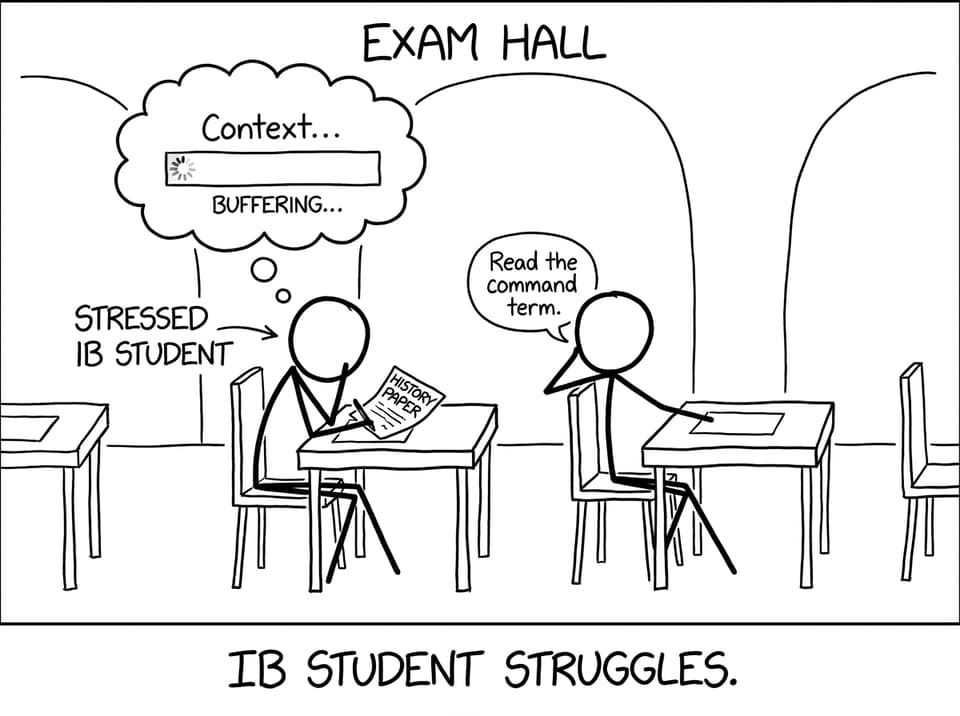
Read the question twice and circle the command term
-
Write a one-sentence thesis that answers the question directly
-
Pick 2-3 arguments and attach specific evidence to each
-
Add one counterargument or alternative perspective
-
Keep analysis heavier than narration
-
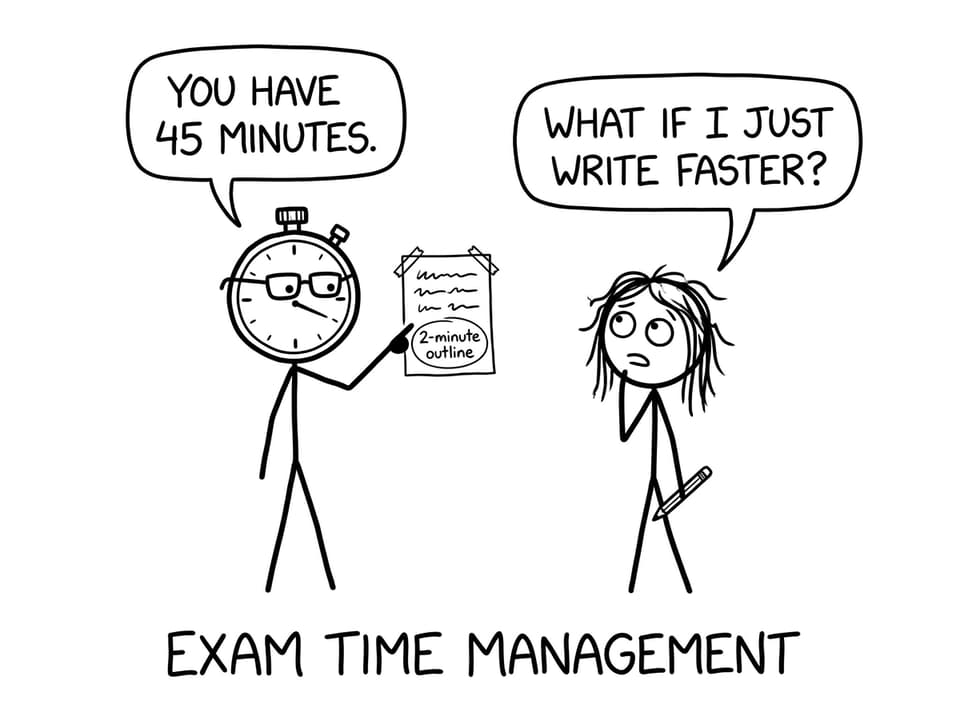
Timebox planning (2-5 minutes) so you finish every response
If you want a broader plan that fits your whole revision week, pair this with How to Study for IB Exams: Step-by-Step Guide.
Misreading the question (the most expensive Group 3 mistake)
In IB History, the fastest way to lose marks is to answer a question you wish was asked. Under exam adrenaline, students latch onto a familiar topic (Cold War, authoritarian states, wars) and start writing before they have translated the prompt.
How to avoid it
-
Slow down at the start: 30 seconds of clarity saves 10 minutes of irrelevant paragraphs.
-
Underline the command term (evaluate, discuss, compare, to what extent).
-
Define the scope in the margin: timeframe, region, and focus.
To train this systematically, do short daily drills from the IB History Resources hub and force yourself to write only the thesis first. In RevisionDojo’s AI Chat, ask: “What is the command term demanding here, and what would a top-band thesis look like?” That one prompt can recalibrate your whole response.
Writing vague, general answers without precise evidence
Group 3 examiners reward specificity because it proves you can select evidence, not just recall it. Vague lines like “there were many causes” or “people reacted differently” read like fog. They do not become convincing just because you add more words.
How to avoid it
-
Anchor each paragraph with 2-3 concrete details: dates, policies, leaders, turning points, or outcomes.
-
Use “for example” once per paragraph, and make it real.
-
Build a personal evidence bank by theme (causation, consequence, change, significance, perspective).
RevisionDojo’s Study Notes and Flashcards help here: convert your best evidence into ruthless recall prompts (one fact per card), then test yourself until retrieval is automatic.
Poor essay structure that hides your argument
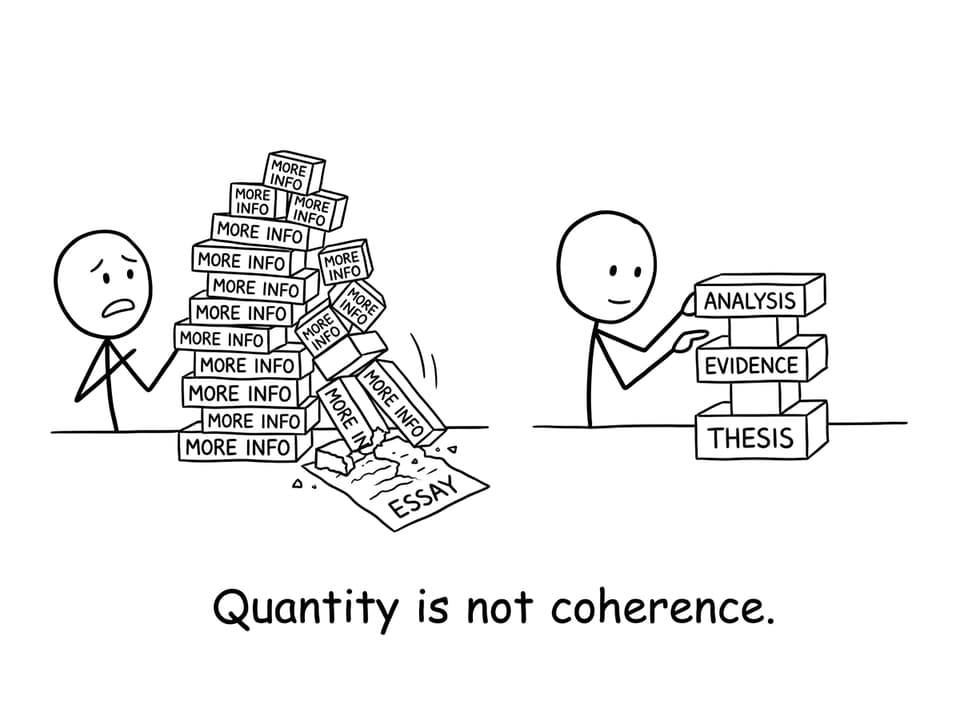
Many Group 3 students know the content but bury it in a long, wandering answer. Examiners are scanning for an argument they can reward. If they have to work to find it, you are donating marks.
How to avoid it
-
Plan in bullets: thesis, 2-3 arguments, counterpoint, conclusion.
-
Start each paragraph with a claim (a mini-thesis), not background.
-
End each paragraph with “so what?”; link back to the question.
For a clean structure template, use Mastering IB History Essay Structure and Planning and then practise that structure using RevisionDojo’s Mock Exams and Grading tools so you can see where your writing stops being analytical.
Ignoring command terms (or treating them like decoration)
Command terms are not polite suggestions. In Group 3, they are the marking logic.
-
Compare requires both similarities and differences.
-
Evaluate requires a judgment with criteria.
-
To what extent requires a balanced argument and a clear final stance.
How to avoid it
When you plan, write the command term as a mini-instruction above your outline. Then check each paragraph: does it perform that instruction?
If you are uncertain how Paper 1 vs Paper 2 demands change your writing, revise with How To Ace IB History Paper 1 And Paper 2 Exams.
Overloading with information instead of selecting what matters
This is the classic Group 3 trap: you panic, you dump everything you know, and the answer becomes a scrapbook. High marks come from relevance and control.
How to avoid it
-
Choose fewer points, then go deeper.
-
Cut any detail that does not strengthen your thesis.
-
Treat your evidence like a witness in court: only call it if it supports the case.
A strong way to practise selectivity is to build timed sets in RevisionDojo’s Questionbank and force yourself to answer with a strict word budget.
Weak thesis statements that do not take a position
A thesis like “this essay will discuss causes of X” is a timetable, not an argument. In Group 3 essays, your thesis is your contract with the examiner.
How to avoid it
-
Answer in one sentence: “X was primarily caused by A, although B and C mattered because…”
-
Signal criteria: political, economic, ideological, social (whatever fits the question).
-
Make it defensible: something you can prove in 2-3 paragraphs.
If you want models of thesis-led writing, read Tips for Writing IB History Essays: A Comprehensive Guide.
Description without analysis (telling the story, not explaining it)
IB History punishes summary when it replaces thinking. In Group 3, analysis means you explain why something mattered, how it changed outcomes, or what it reveals about historical debate.
How to avoid it
In each paragraph, force one of these sentences:
-
“This mattered because…”
-
“This suggests that…”
-
“However, this is limited because…”
Then, in RevisionDojo, submit one practice response to the AI Chat and ask: “Underline narration. Rewrite those lines as analysis.” Do this a few times and your style shifts.
Neglecting counterarguments and perspectives
A one-sided answer can sound confident but score lower. Group 3 rewards balance: showing you understand alternatives, then explaining why your argument still stands.
How to avoid it
-
Add one paragraph (or one chunk within a paragraph) that challenges your thesis.
-
Use “some historians argue…” carefully; even without naming, you can show interpretive awareness.
-
Resolve the tension: explain why your criteria lead to your final judgment.
For HL students who need even more synthesis and historiography, pair this approach with Mastering IB History Paper 3: Essential Strategies for Higher Level Success.
Timing mistakes that turn good thinking into unfinished scripts
Time pressure makes smart students look unprepared. Group 3 exams are as much pacing as knowledge.
How to avoid it
-
Practise under real timing early, not in the final week.
-
Use a fixed plan window (2-5 minutes) and a fixed conclusion window (last 3 minutes).
-
Train stamina with full-length practice.
A practical routine is explained in Preparing for IB History with Mock Exams and Practice Tests and reinforced with RevisionDojo’s Predicted Papers for realistic full-paper runs: IB History Predicted Papers.
Poor source analysis in Paper 1 (OPVL done on autopilot)
Paper 1 rewards precision. Many Group 3 students either (1) summarise sources, or (2) recite OPVL mechanically without linking to the question.
How to avoid it
-
Use OPVL, but always tie it to the claim you are making.
-
Evaluate with context: value and limitation depend on the historical situation.
-
Cross-reference sources actively: where do they agree, and why might they disagree?
For the full Paper 1 breakdown and common pitfalls, revisit How To Ace IB History Paper 1 And Paper 2 Exams.
Final thought: make Group 3 marks predictable
The goal is not to become a different person by exam day. It is to become more consistent. In Group 3 History, consistency comes from eliminating avoidable mistakes: misreading questions, vague evidence, weak structure, low analysis, and poor timing.
RevisionDojo is built to make that loop simple: learn fast with Study Notes, lock facts with Flashcards, practise with the Questionbank, pressure-test with Mock Exams and Predicted Papers, then improve with AI Chat and Grading tools. If you want the calm feeling of “I have done this before” on exam day, start your next practice set today inside the IB History Resources hub, and treat every mistake as a reusable lesson, not a personal flaw.