
A History Extended Essay rarely fails because the student “didn’t work hard enough.”
It fails because the work is pointed in ten directions at once.
You start with a topic you genuinely care about. Then you read one more article. Then one more. Suddenly your document is 18 pages of notes, your research question has become a mood, and your draft feels like a timeline wearing a suit.
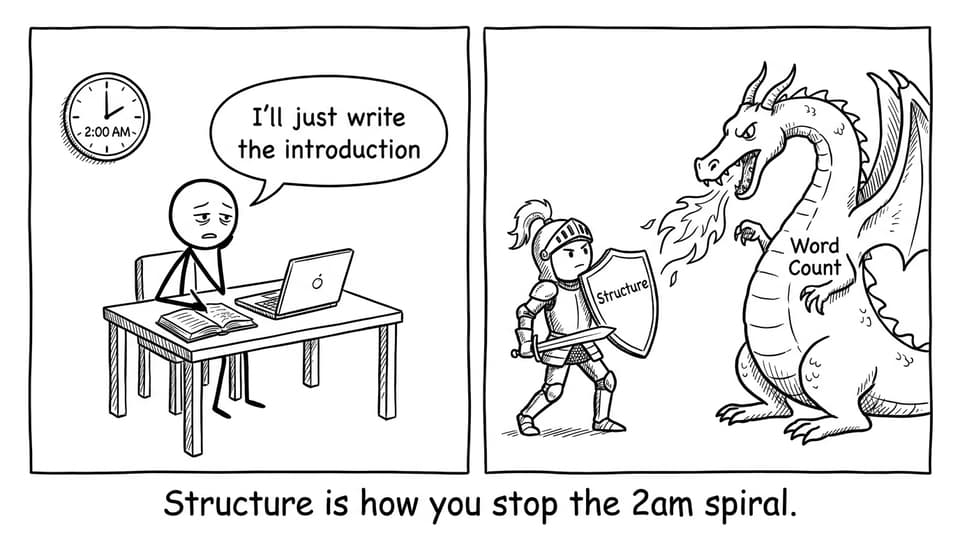
A strong IB Extended Essay is the opposite. It is a narrow question, argued with discipline. It has a shape you can feel while reading: you know where you are, why each paragraph exists, and what it is doing for the overall line of argument.
This guide shows you a practical, examiner-friendly way to structure an IB Extended Essay in History so your thinking stays clear under pressure.
Quick structure checklist (the version you tape above your desk)
Before you write a single “Chapter 1,” make sure your IB Extended Essay plan includes:
-
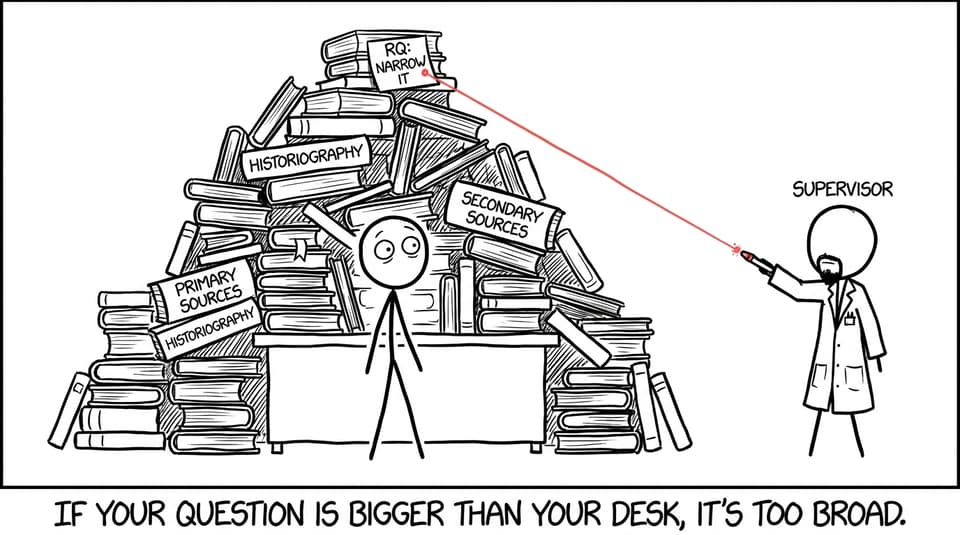
A focused, answerable research question (RQ) that fits 4,000 words
-
A table of contents that matches your actual headings
-
An introduction that states the RQ, scope, and working argument
-
A body built from claims (not narrative) and organized logically (thematic or chronological)
-
Source evaluation woven into analysis, not dumped in one paragraph
-
A conclusion that answers the RQ and acknowledges limits
-
Consistent citations and a complete bibliography
-
Reflection completed honestly and specifically (not generic)
If you want subject-specific expectations in one place, keep the official-aligned guidance open via the IB History Extended Essay Guide.
Why structure decides your grade (more than people admit)
In History, you can read widely and still score modestly if the essay becomes descriptive. Structure is how you force your knowledge to become argument.
A clear structure also helps you “show your work” for the IB Extended Essay criteria. The examiner is not trying to guess what you meant. They are scanning for evidence of historical method: focus, knowledge, analysis, evaluation, and reflection.
RevisionDojo’s workflow tools make this easier when you draft: the IB History EE Grader translates rubric language into actionable feedback, and the wider IB Coursework Grader helps you iterate faster than waiting for the next supervisor meeting.
The core sections of an IB Extended Essay (History)
Title page (simple, correct, and boring)
Keep it clean. Your title should reflect your research question without trying to be clever. Include the required candidate/session details your school expects, the subject (History), and your final word count.
The goal here is compliance, not originality. Save your originality for your argument.
Table of contents (a promise you must keep)
Your table of contents is a contract with the reader. It should match your actual headings and page numbers.
A practical tip: don’t finalize it until the end, but create the heading structure early so your drafting has guardrails.
Introduction (where most students lose marks quietly)
A high-scoring IB Extended Essay introduction does five things, in roughly this order:
-
States the research question in one sentence
-
Gives just enough historical context to make the question meaningful
-
Defines key terms, dates, and geographic scope
-
Signals your method and source base (what kinds of evidence you will use)
-
Presents a clear, arguable working thesis (your best answer so far)
The most common trap is writing a beautiful background story and forgetting to commit to an argument. Your reader should finish the introduction knowing exactly what you will prove and what you will not cover.
Building the body: three practical “chapters” that work
There is no single mandatory template for every IB Extended Essay, but most strong History essays end up following a logic like this: set up the debate, analyze the evidence, then evaluate and weigh.
Historiography and context (the “map of the debate”)
This is where you prove you are not alone in the conversation. Summarize key historians’ positions and show what they disagree about.
Keep it purposeful:
-
Choose 2-4 major interpretations that directly shape your question
-
Explain what each interpretation emphasizes (cause, motive, structure, ideology, economics, contingency)
-
Use it to justify your approach (why your essay’s angle is worth doing)
This section should not become a literature dump. Think of it as setting the chessboard.
If you need models of what good looks like, study samples from the IB History Examples library and the wider IB Coursework Examples hub. Seeing full-length structure makes your own outlining decisions feel less abstract.
Analysis sections (where your marks are actually made)
Choose one organizing logic:
-
Thematic (best when comparing causes, groups, institutions, or ideas)
-
Chronological (best when tracing change over time or decision chains)
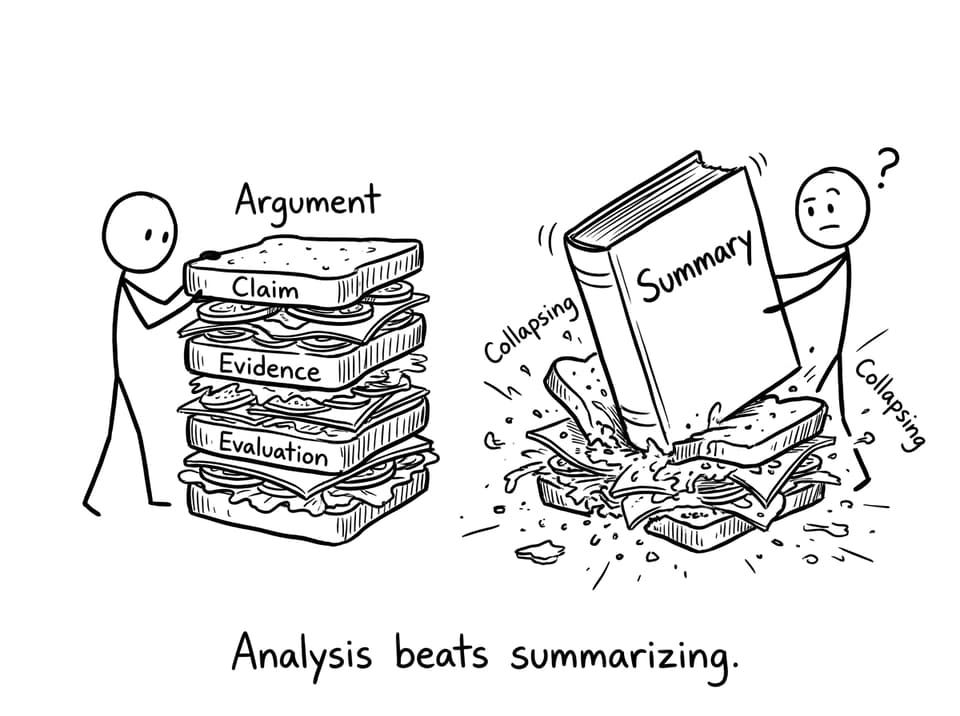
Then build each subsection with the same internal rhythm:
-
Claim (a mini-answer to part of the RQ)
-
Evidence (primary + secondary sources)
-
Analysis (how evidence supports the claim)
-
Evaluation (limits, bias, reliability, alternative explanations)
-
Link (how this subsection moves you toward the final answer)
This repeated rhythm is how an IB Extended Essay stays coherent even when the topic is complex.
Discussion and evaluation (the “weighing” layer)
Students often treat evaluation like a small paragraph at the end. In a strong IB Extended Essay, evaluation is continuous.
But it also helps to include a dedicated space where you weigh competing interpretations and explain why your conclusion is the most reasonable.
Here are evaluation moves examiners notice:
-
Comparing two historians on the same event and explaining why they differ
-
Showing how a primary source’s purpose and audience affects its reliability
-
Acknowledging what your evidence cannot prove (and what it can)
-
Explaining how changing the scope would change the answer
For day-to-day help building analysis habits that carry into exams too, keep the IB History resources hub nearby. It ties together Study Notes, Questionbank practice, and exam-focused tools so your essay skills reinforce your Paper 2 and Paper 3 writing.
Conclusion (answer the question like you mean it)
Your conclusion should feel inevitable, not rushed.
A reliable approach:
-
Restate the research question in fresh wording
-
Give a direct answer (your thesis, now confirmed or revised)
-
Summarize your 2-4 strongest reasons (not every point)
-
Explain significance (why this answer matters historically)
-
State limitations and what further research could clarify
Avoid introducing brand-new evidence here. The conclusion is about judgment, not discovery.
References, bibliography, and appendices (do the professional basics)
A strong IB Extended Essay looks academically honest before the examiner reads a word of analysis.
-
Use one citation style consistently (ask your supervisor what your school prefers)
-
Include every cited source in the bibliography
-
Distinguish primary and secondary sources if it helps clarity
-
Only use appendices for genuinely necessary material (and reference them in-text)
If you want to avoid common structural pitfalls, read Mistakes to Avoid in IB Extended Essays. It is one of the fastest ways to catch problems before they harden into your draft.
A calm drafting workflow that actually finishes your IB Extended Essay
Here is a process that works when exams are also looming:
-
Outline first: headings + one sentence per paragraph
-
Draft ugly but complete: write section by section, not perfectly
-
Run feedback loops: use RevisionDojo AI Chat for targeted questions, then confirm improvements with the Grading tools
-
Tighten citations as you go (don’t “do them later”)
-
Do one clarity edit pass (topic sentences, transitions, repeated points)
When time is tight, it helps to learn from a sprint plan too: IB Extended Essay in a Week? What You Need to Know explains what to prioritize so structure doesn’t collapse.
Closing: structure is how you protect your best thinking
A History IB Extended Essay is not a test of how many facts you can collect. It is a test of whether you can make facts behave, whether you can shape evidence into a disciplined, persuasive answer to a focused question.
If you want that process to feel less lonely, build it inside RevisionDojo: use the Coursework Library for exemplars, the Grading tools for rubric-aligned feedback, AI Chat to diagnose weak paragraphs, and keep your exam momentum alive with Study Notes, Flashcards, a Questionbank, Predicted Papers, and Mock Exams. When you need human guidance, Tutors are there too.
Your essay does not need to be perfect. It needs to be structured. And a structured IB Extended Essay is the kind you can finish, defend, and feel proud of on submission day.