



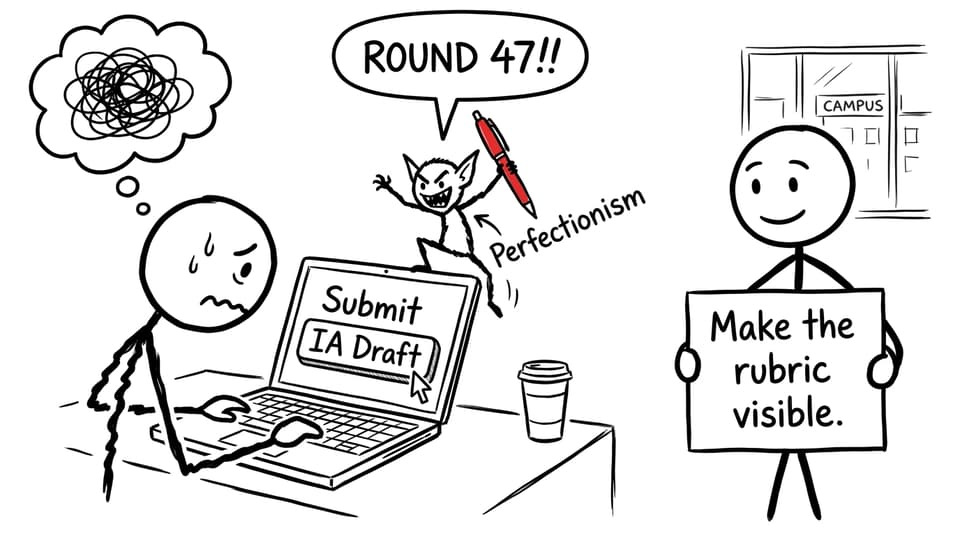
Submitting your IA draft can feel like watching a door close in slow motion. You click “submit,” your heart drops, and suddenly every sentence you’ve ever written looks suspicious. The truth is calmer than your brain is telling you: in most IB schools, a submitted draft is not the end of your IA. It’s a checkpoint. The point of the draft is to get feedback, then revise your IA into something clearer, tighter, and more aligned with the rubric.
Can you revise your IA after submitting a draft?
Yes, you can usually revise your IA after submitting a draft. In fact, that’s the entire purpose of drafting: you reveal what’s working, what’s unclear, and what’s missing, then you improve it before final submission.
Two important realities can coexist:
-
Your teacher’s feedback may be limited by IB rules and school policy.
-
Your responsibility is still to use that feedback (plus your own checking) to make your IA meet the criteria.
If you want the longer context on how feedback works for IB coursework, read How to Use Feedback to Improve Your IB IA and EE. And if you’re wondering what “a strong IA” even means across subjects, start with IB Internal Assessment Guides.
The fast checklist: what to change first in your IA
Before you rewrite anything, run this quick IA revision checklist:
-
Does the research question/aim still match what you actually did?
-
Are method steps clear enough to replicate (where relevant)?
-
Is your analysis doing more than describing results?
-
Do you explicitly link evidence back to the research question?
-
Have you addressed limitations and improvements (evaluation)?
-
Are formatting, citations, and labeling consistent?
For a focused “diagnose first” approach, use How to Fix a Weak IA Draft Before Submission.
How to turn feedback into a stronger IA (without spiraling)
Understand the feedback (don’t translate it emotionally)
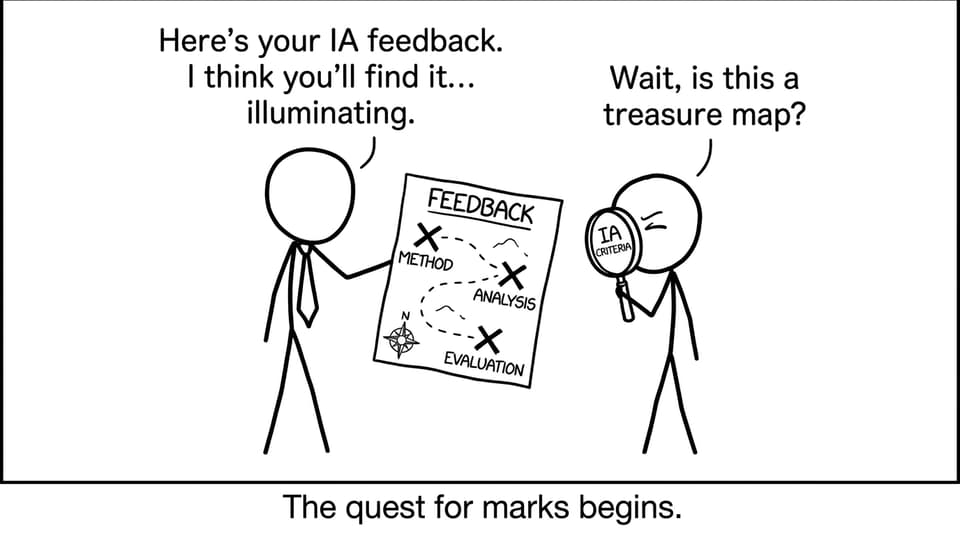
When you get comments back, your first job is to read them like an editor, not like a defendant. Sort feedback into three buckets:
-
Rubric alignment: “This doesn’t meet the criterion yet.”
-
Logic and clarity: “I can’t follow your reasoning.”
-
Surface polish: grammar, formatting, labels.
If a comment is vague (“needs more depth”), ask one precise follow-up: Which section would earn more marks if I made it more explicit? That one question often saves hours of guessing.
Plan revisions like a triage list
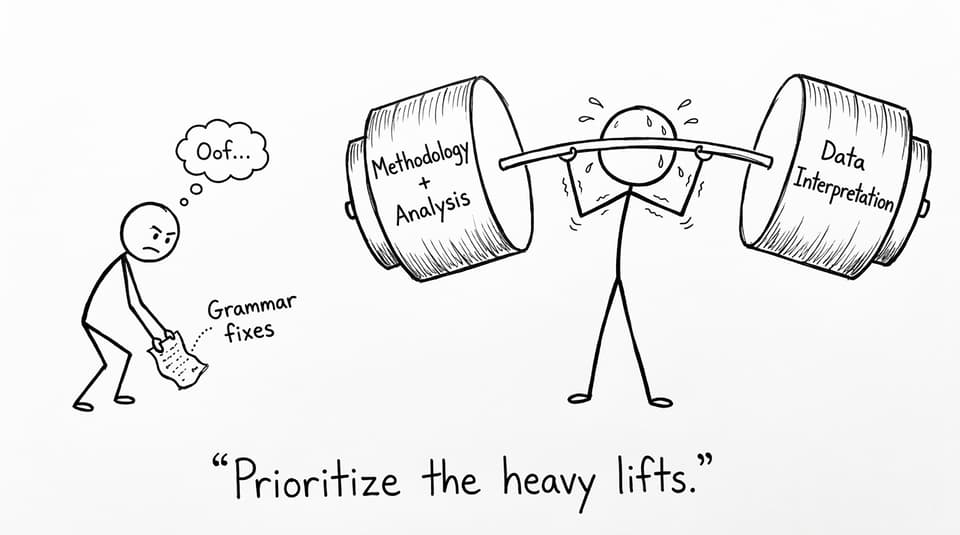
High-scoring IA drafts usually improve through big, deliberate edits first and small edits last. A useful order is:
-
Focus: tighten the aim or research question if needed.
-
Structure: ensure each section does one job clearly.
-
Method and evidence: fix design/variables/justification.
-
Analysis and evaluation: deepen interpretation and limitations.
-
Language and formatting: clarity, citations, presentation.
If your IA research question is part of the problem, use How to Write a Strong IA Research Question.
Revise the IA in “criterion-sized” chunks
A reliable way to revise an IA is to pick one criterion-linked chunk per session. For example:
-
Session 1: rewrite the aim/research question and a leaner introduction.
-
Session 2: rewrite method wording so it’s replicable and controlled.
-
Session 3: redo analysis paragraphs so they interpret trends, not just list them.
-
Session 4: strengthen evaluation (limitations, improvements, significance).
If you’re unsure whether your analysis is actually doing enough, this guide helps: How to Use Data Effectively in Your IA Analysis.
Use the right kind of help at the right time
A draft revision cycle gets easier when feedback is faster and more structured.
-
Use RevisionDojo’s Grading tools (especially the IB Coursework Grader) to get criterion-aware direction when you’re between teacher feedback rounds.
-
Use AI Chat to ask narrow questions like “What is missing from my evaluation paragraph to make limitations explicit?”
-
Use the Coursework Library to compare what “good” looks like without copying structure blindly.
-
Use Tutors when you need human strategy, not just edits.
To see how AI fits into a healthy draft loop, read How Can AI Be Used to Improve My IA Drafts and Feedback Process?.
A realistic example: revising a weak methodology and shallow analysis
Imagine your teacher writes: “Method lacks detail; analysis is descriptive.” That’s common, and it’s fixable.
Your IA action plan could be:
-
Method: add specific quantities, timing, controls, and a clear rationale for choices (so someone else could repeat it).
-
Analysis: add short interpretive sentences after each key result: what it shows, why it matters, how it links to the research question.
-
Evaluation: state limitations as cause-and-effect, then propose improvements that directly address those causes.
You’re not “making it longer.” You’re making the marks visible.
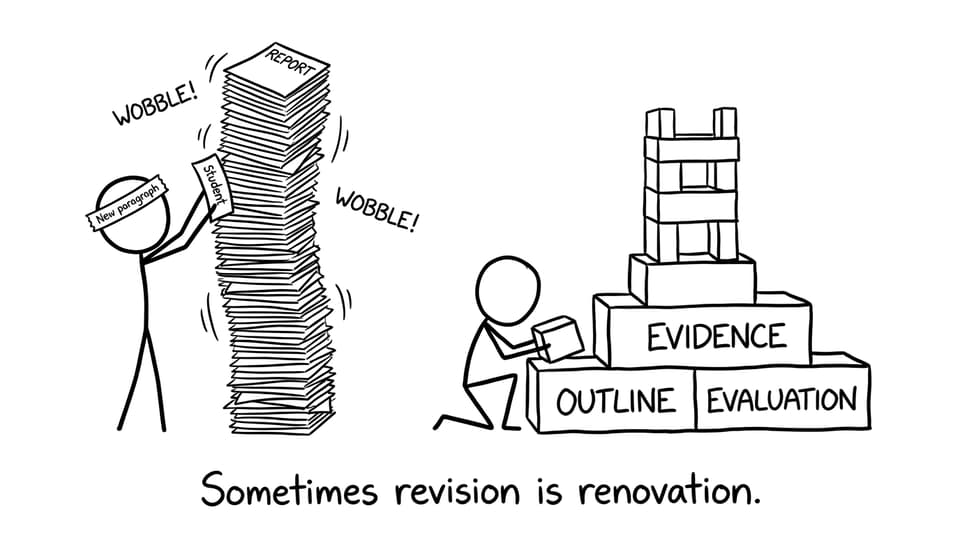
Closing: treat your IA draft like a checkpoint, not a verdict
Revising your IA after submitting a draft isn’t a loophole. It’s the process. Your best work usually shows up after you’ve seen what your first version hides: unclear logic, under-explained method choices, or analysis that never quite says “so what?”
If you want a calmer way to revise your IA while still preparing for exams, build a loop with RevisionDojo: use Study Notes, Flashcards, and the Questionbank for exam confidence, and use AI Chat, Grading tools, the Coursework Library, and Tutors to turn IA feedback into clear next steps. And before you submit the final IA, read your work once like an examiner: can they instantly see how each section earns marks?
That’s the real revision skill. And it’s learnable.