


Your IA feels fine until the night you read it like a stranger.
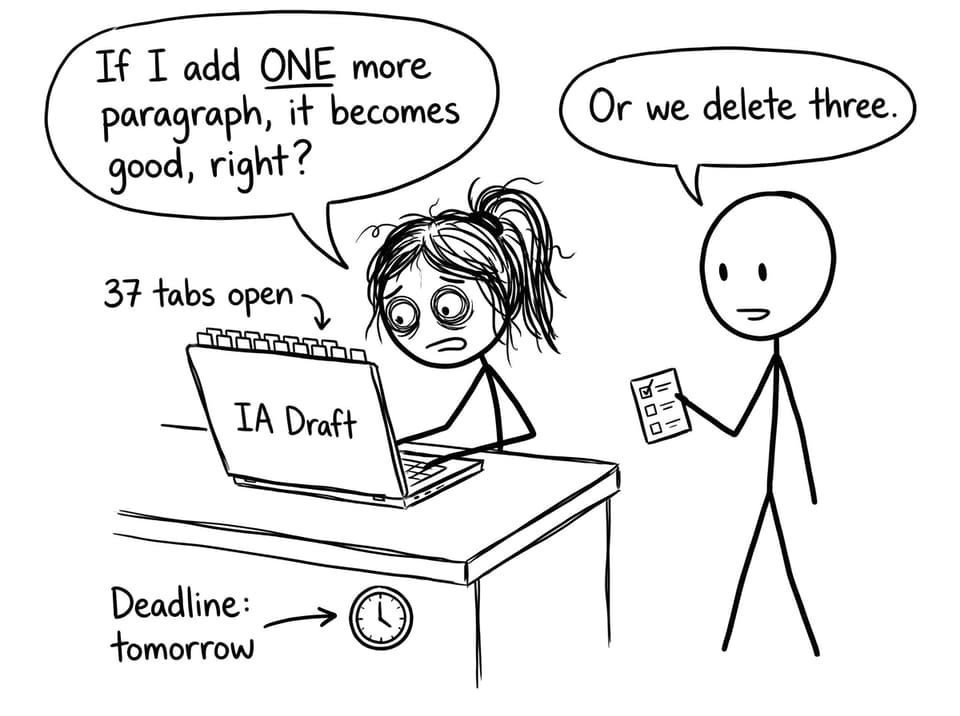
Suddenly, it’s not “bad,” exactly. It’s just… foggy. The research question is there, but your paragraphs wander. Your results exist, but the meaning is shy. And the deadline sits in the corner like a quiet threat.
The comforting truth: most weak IA drafts don’t fail because you lack work. They fail because the examiner can’t see how the work earns marks. Your job is to make the value obvious.
A 30-minute IA triage checklist
Before you rewrite anything, do this quick scan of your IA:
-
Restate your research question on page 1 and again where your analysis begins.
-
For each paragraph, answer: How does this help answer the research question?
-
Delete or shrink background that doesn’t change an analytical decision.
-
Add “so what?” sentences after key data points.
-
Make evaluation specific: limitation -> impact -> realistic improvement.
If you want a rubric-aligned map while you do this, start with RevisionDojo’s IA Guides and the broader Coursework Guides.
Tighten your IA focus (marks love relevance)
A common weak IA pattern is “trying to impress by covering everything.” That usually creates long introductions and thin analysis.
Instead, treat focus like budgeting. Every sentence costs attention. If a sentence doesn’t directly support your research question, your method choice, your data interpretation, or your evaluation, it’s spending money you don’t have.
Practical move: open your draft and highlight anything that’s “interesting context” but not essential. Cut 30% of it. Your IA will instantly read more confident.
Need help checking that your question is actually analytical? Use How to Write a Strong IA Research Question.
Upgrade analysis fast: add the missing “because”
Many students write results like a diary: this happened, then this happened. Examiners reward interpretation.
After every key piece of evidence in your IA, add 2-3 lines that do three jobs:
-
Meaning: what does the pattern show?
-
Reason: why might it happen (theory, model, or logic)?
-
Consequence: how does it answer the research question?
That’s it. Small bridges, placed often, change the entire grade ceiling.
If your draft struggles with methods clarity or results presentation, these are fast wins:
Make your structure easy to reward
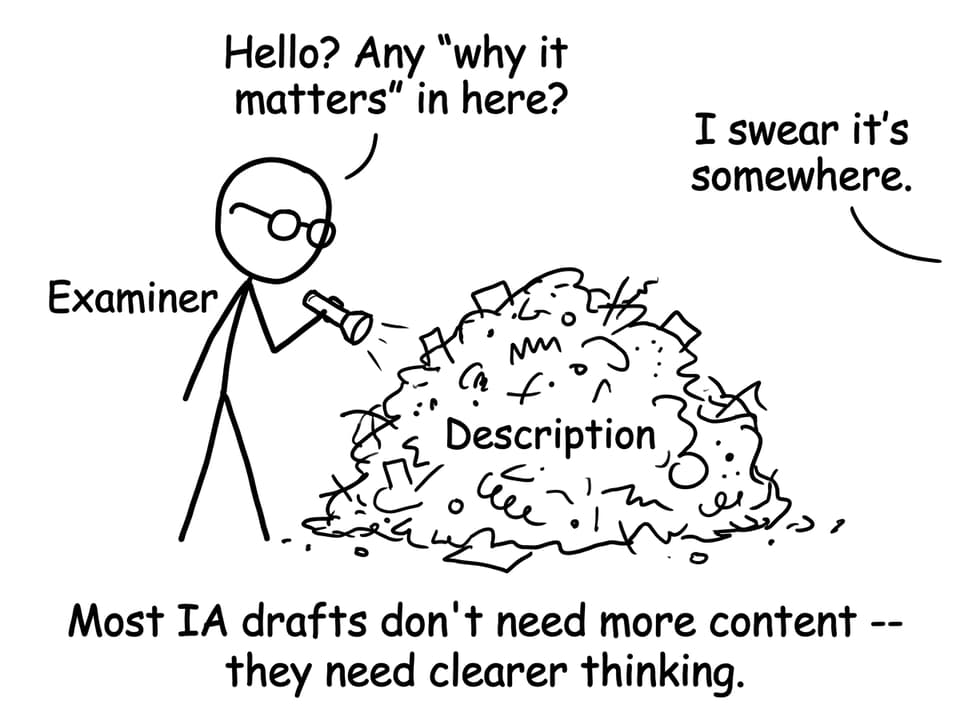
Examiners don’t hunt for your best thinking. If it’s buried, it’s invisible.
Quick structural fixes for your IA:
-
Start paragraphs with a claim that answers the research question.
-
Use short topic sentences in analysis and evaluation.
-
Split any paragraph longer than 8 lines.
-
Label tables/figures clearly and reference them in-text.
Then run one clean polish pass using How to Proofread and Polish Your IA Before Submission.
Strengthen evaluation and conclusions (without rewriting everything)
Weak IA endings are often generic because students are tired. But evaluation is where judgment shows.
Use this simple pattern:
-
Limitation: what specifically weakened reliability/validity?
-
Impact: what direction did it likely push results?
-
Improvement: what exact change fixes it next time?
If you’re unsure about citation strength, check How Many Sources Should an IA Have? and Do References Count in the IA Word Count?.
How RevisionDojo helps you fix a weak IA draft quickly
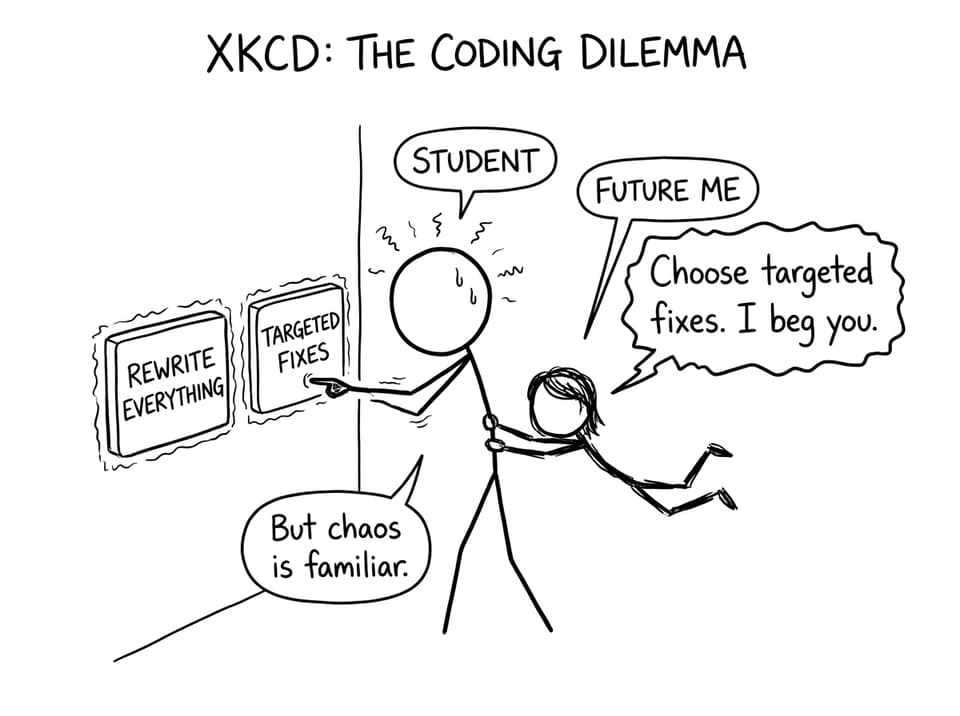
A good IA fix is mostly a feedback problem: you need someone (or something) to point at the exact places where marks are unclear.
RevisionDojo is built for that loop:
-
Use the Coursework feature hub to stay rubric-focused.
-
Run your draft through the IB Coursework Grader for criterion-based direction.
-
Ask AI Chat for targeted rewrites like “compress this background to 3 sentences without losing meaning.”
-
Use Study Notes and Flashcards to tighten definitions so your IA stops over-explaining.
-
Keep exam prep moving with the Questionbank, Mock Exams, and Predicted Papers while your coursework finalizes.
-
When you want a human set of eyes, use Tutors for high-stakes feedback.
Final thought: make the marks visible
A strong IA isn’t louder. It’s clearer.
If your draft feels weak, don’t panic and pile on more pages. Tighten focus, add the missing “because,” and make evaluation specific. Then use RevisionDojo to speed up the loop: rubric guidance, grading feedback, exemplars, and the tools that keep you moving toward exams without burning out.
Your IA can still become something you’re proud to submit.


