

Your first IA draft feels like a brave little boat. Then feedback arrives, and suddenly the ocean has opinions.
That moment can go two ways. You can treat comments like a verdict ("I’m bad at this"). Or you can treat them like a compass ("I know what to do next"). The students who earn top marks on an IA and a strong Extended Essay usually aren’t “naturals” at writing. They’re simply better at using feedback without panicking, without outsourcing the thinking, and without wasting time on tiny fixes that don’t move the score.
This guide gives you a calm, repeatable way to use supervisor and teacher feedback to improve your IA and EE while staying inside IB academic honesty rules.
The quick IA feedback checklist (use this every time)
Before you revise a single sentence of your IA, do these six steps:
-
Collect all feedback in one place (comments, emails, meeting notes).
-
Translate each comment into an IB-criterion issue (clarity, method, analysis, evaluation).
-
Sort into Major / Medium / Minor.
-
Choose 1-2 priorities for the next revision cycle.
-
Rewrite the section in your own words (no copy-paste fixes).
-
Re-check against the rubric with a final read.
If you want to decode confusing comments faster, this post is a useful companion: Why IA Feedback Feels Confusing for IB Students.
Start by submitting a complete IA draft (not a “half-draft”)
Feedback quality depends on what you give people to react to. A partial IA draft forces your teacher to talk about surface issues because they can’t see the full logic.
A complete draft should include:
-
A clear research question or focus
-
The full structure from introduction to conclusion
-
Your data/evidence and what it suggests
-
A real attempt at analysis and evaluation
Even if it’s messy, a full IA draft lets feedback target what actually earns marks: coherence, depth, method, and justified conclusions. If you’re unsure what “complete” looks like for your subject, calibrate with the Coursework Library and browse IB Coursework Examples: IA, EE and TOK Exemplars.
Know what supervisor feedback is allowed to do (and what it can’t)
IB rules exist for a reason: your IA and EE must be your own work.
In general, supervisors and teachers can:
-
Ask open-ended questions that reveal weaknesses
-
Point out where argument, structure, or method is unclear
-
Suggest areas to develop (without rewriting them)
They cannot:
-
Line-edit your grammar sentence-by-sentence
-
Rewrite paragraphs
-
Add content for you
That boundary is not a punishment. It’s the system protecting your independence as a researcher and writer. For practical context on how marking works and why the rubric matters so much, read: Who Marks the IA? The Truth Behind Your Final Score.
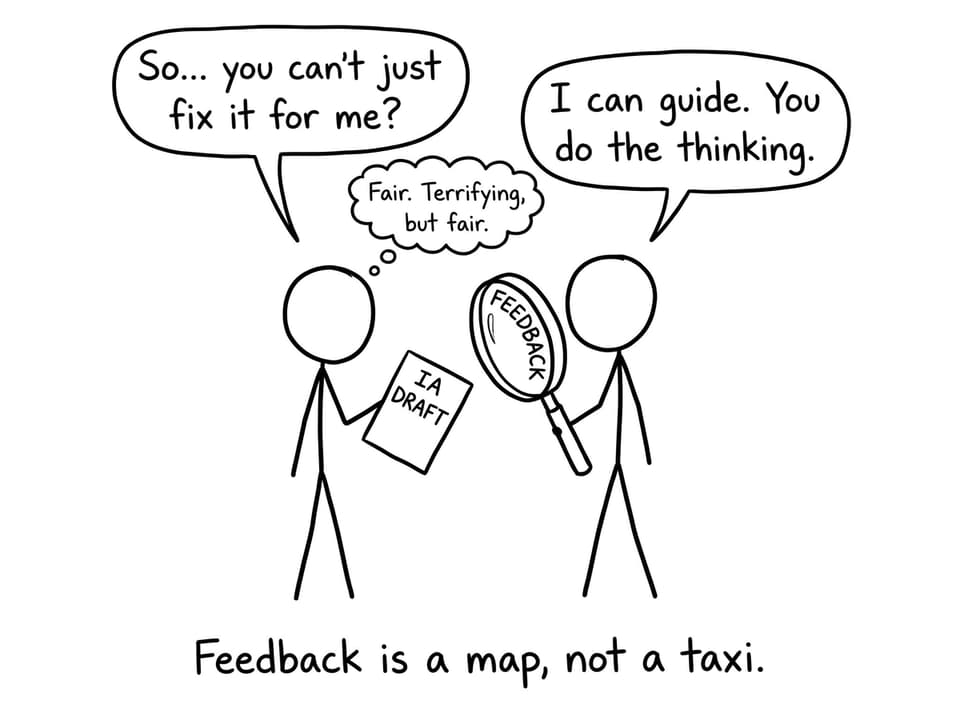
Turn IA feedback into action steps, not emotions
Most feedback feels vague because it describes a symptom, not the fix.
For example:
-
“Too descriptive” usually means: you stated results but didn’t interpret them.
-
“Unclear focus” often means: your research question isn’t controlling your paragraphs.
-
“Method needs justification” means: you made choices, but didn’t explain why they were reasonable.
A simple translation method for every IA comment:
-
What is the reader struggling to believe/understand?
-
Where exactly is that happening (page/section)?
-
What would evidence of improvement look like? (One stronger graph? One evaluation paragraph? One clearer link back to the question?)
If you want a structured second opinion that speaks in rubric language, use the IB Coursework Grader to get criterion-by-criterion feedback you can convert into a revision plan.
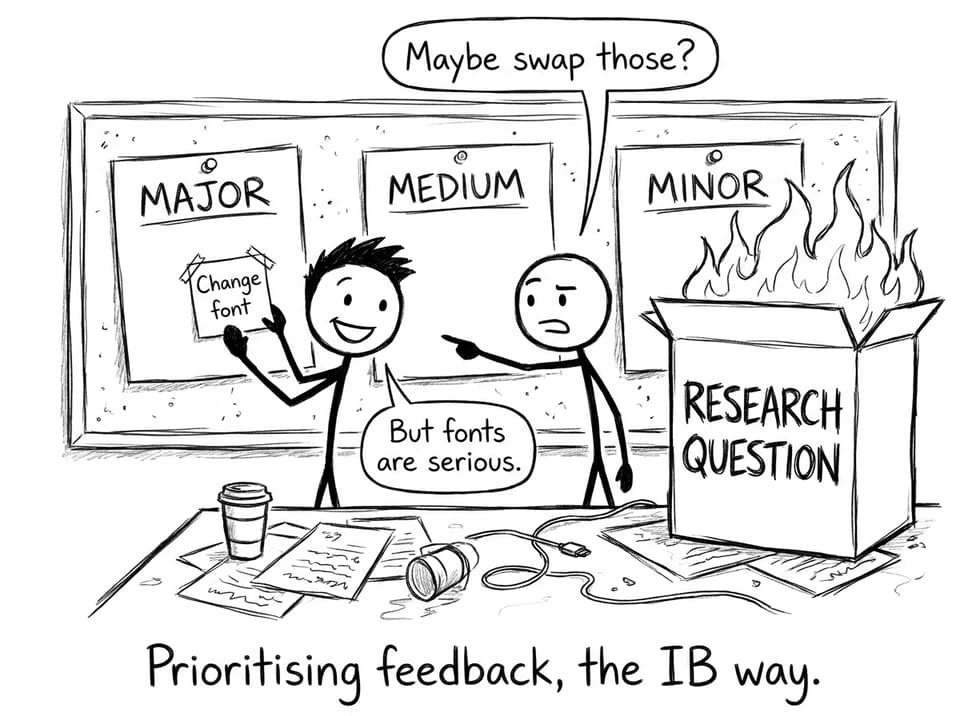
Prioritise feedback like a strategist: Major, Medium, Minor
Top-scoring students protect their time. They do not spend an hour reformatting an IA bibliography when the research question is drifting.
Use this sorting system:
Major fixes (highest impact)
-
Research question too broad or inconsistent
-
Weak analysis (results shown, but not interpreted)
-
Methodological flaws (uncontrolled variables, unclear sampling, missing justification)
-
Evaluation missing or generic
Medium fixes
-
Paragraph flow and signposting
-
Linking evidence back to claims
-
Making the conclusion match the evidence
Minor fixes
-
Formatting, labels, and citation consistency
-
Typo cleanup and presentation polish
A helpful way to pressure-test your priorities is to skim how moderation works: How IA Moderation Works (and How to Protect Your Grade).
Use feedback as a dialogue (the questions that unlock better comments)
The best feedback often comes after you ask one good question.
Bring your teacher or supervisor prompts like:
-
“Which section is currently costing me the most marks, and why?”
-
“Where do you see me describing instead of analysing?”
-
“Is my evaluation actually specific to my data, or just a template?”
For the EE, feedback becomes more powerful when you treat it like project management. If you’re working under the newer EE expectations, keep this bookmarked: IB Extended Essay 2027 Changes: What to Know for EE.
A proven feedback loop for your IA (and how RevisionDojo fits)
Here’s a loop you can repeat weekly without burning out:
-
Draft one section of your IA (not the whole document at once).
-
Run a rubric check using IB IA Grading Service: Professional Assessment in Minutes as your workflow model.
-
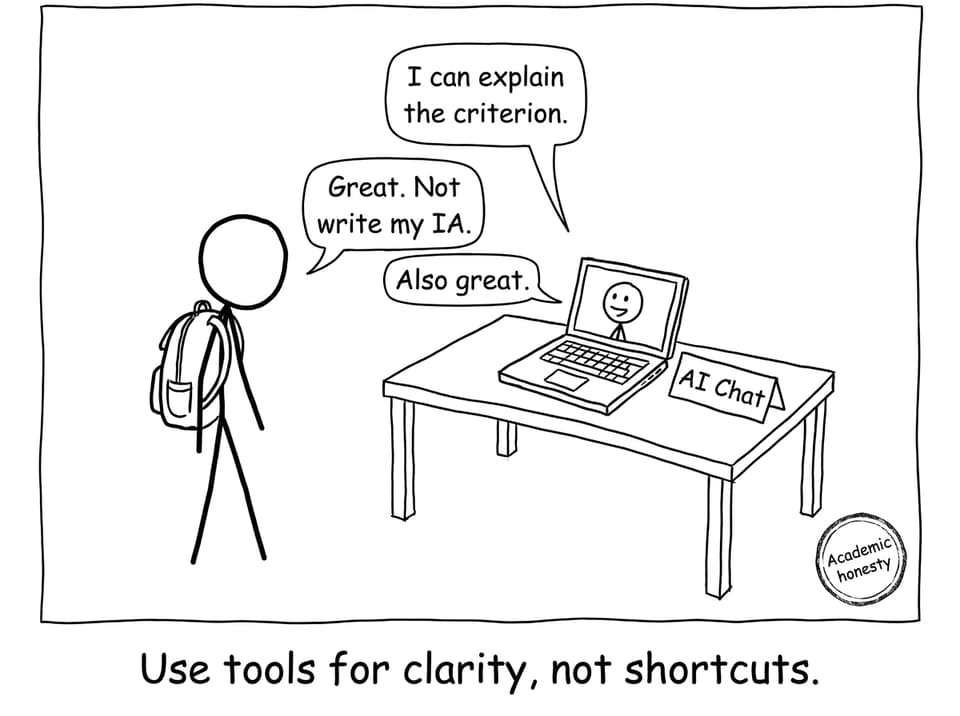
Ask one targeted question using Jojo-style support (RevisionDojo’s AI Chat is built for this) like: “What would stronger evaluation look like here?”
-
Revise only what moves marks (Major then Medium).
-
Keep exam prep alive with short practice sets in the Questionbank so the IA doesn’t quietly steal your final grade.
This is also where RevisionDojo’s broader system helps: Study Notes and Flashcards keep content stable, the Questionbank keeps your exam technique sharp, Mock Exams and Predicted Papers keep timing real, and Tutors give you human guidance when you need it.
Closing: Make feedback your unfair advantage
The truth is simple: your IA score rarely jumps because you “worked harder.” It jumps because you worked smarter on the specific parts feedback reveals.
So the next time comments land and your stomach drops, slow down. Sort the feedback. Translate it into criteria. Fix the big things first. Then use RevisionDojo as your steady loop: exemplars in the Coursework Library, rubric clarity through Grading tools, targeted support with AI Chat and Tutors, and exam momentum through Study Notes, Flashcards, the Questionbank, Mock Exams, and Predicted Papers.
Your IA doesn’t need perfection. It needs progress you can explain and evidence you can defend.