
The school bag is ready. The timetable has been checked. Yet your child seems quieter, more irritable, or suddenly convinced that starting the IB will be impossible.
If you are worried about back to school anxiety before IB, the most helpful response is neither to dismiss the fear nor to solve the entire Diploma Programme in one evening. Listen first, identify the specific worry, restore a predictable routine, agree on one manageable academic starting point, and contact the school early if anxiety begins interfering with sleep, daily life, or attendance.
The IB can look enormous from the outside. Students typically study six subjects alongside the Diploma Programme core: Theory of Knowledge, the Extended Essay, and Creativity, Activity, Service. But your child does not begin all of it at once. Anxiety often presents the whole two-year journey as if it must be completed tomorrow. Your role is to bring the horizon closer.
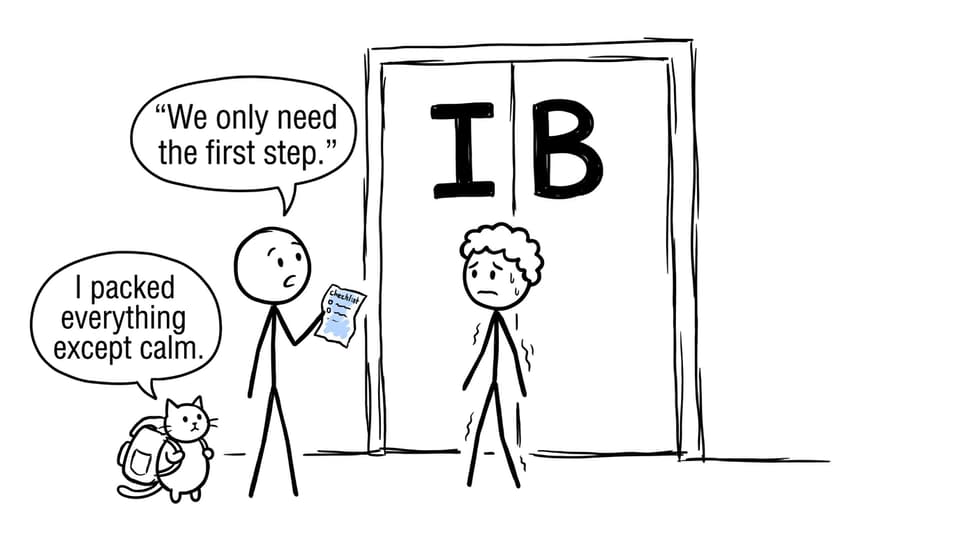
A calm checklist for the days before IB starts
Use this as a practical starting point:
- Ask what feels hardest without immediately offering solutions.
- Separate ordinary transition nerves from anxiety that disrupts daily functioning.
- Re-establish consistent sleep, meals, movement, and morning routines.
- Turn vague fears into specific, solvable questions.
- Confirm the first week's timetable, transport, materials, and school contacts.
- Create a small academic starting plan rather than an intensive revision schedule.
- Let teachers or the IB coordinator know early when support may be needed.
- Seek professional guidance if anxiety is persistent, severe, or affecting attendance.
The aim is not to guarantee that nothing difficult will happen. No parent can make that promise. The aim is to show your child that difficult moments can be named, planned for, and handled with support.
Listen for the fear beneath the IB label
When a student says, “The IB is going to be too much,” the sentence may contain several different worries. They may be afraid of choosing the wrong subjects, falling behind, disappointing teachers, making friends, managing coursework, or losing every free hour they currently enjoy.
Each fear needs a different response. General reassurance rarely reaches a specific worry.
Try questions such as:
- “Which part of the first week feels most uncertain?”
- “Are you more worried about the work, the people, or the new routine?”
- “What do you imagine happening when you say it will be too much?”
- “Would you like me to listen, help you plan, or contact someone?”
That final question matters. Teenagers often resist conversations because they expect every feeling to trigger a lecture, a timetable, or an email to school. Giving them some choice restores a sense of control.
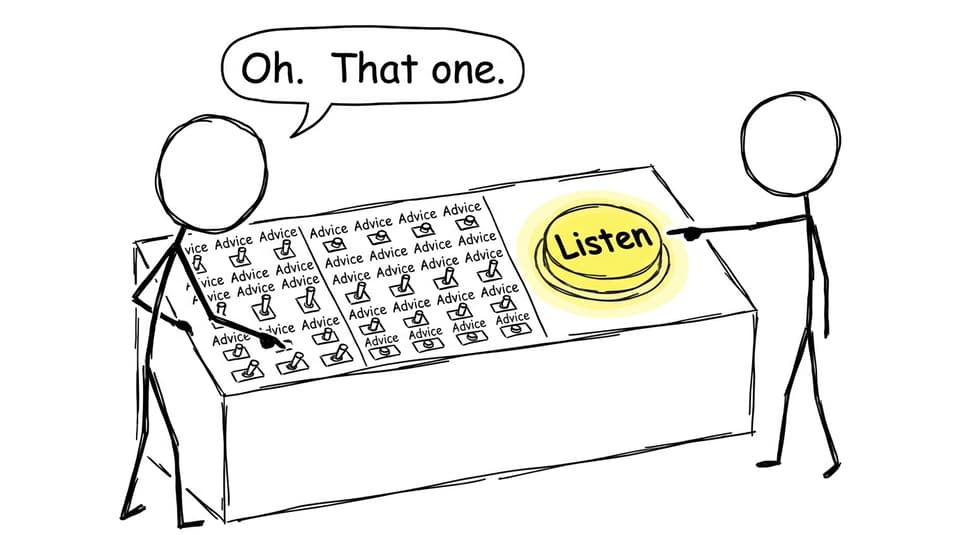
Validation does not mean agreeing with every anxious prediction. You can say, “It makes sense that a new programme feels uncertain,” without confirming, “Yes, it will be unbearable.” Listen first. Then help your child test the prediction against what is actually known.
Recognize how school anxiety may appear
Anxiety is not always expressed as visible worry. In teenagers, it may appear as irritability, withdrawal, procrastination, repeated reassurance-seeking, difficulty sleeping, headaches, stomach discomfort, or resistance to discussing school.
One sign on its own does not establish an anxiety disorder. Look instead for patterns, intensity, and impact. A restless night before orientation can be an understandable response to change. Repeated physical complaints, panic, worsening sleep, or refusal to attend deserve closer attention.
It is also worth asking whether something concrete is contributing to the distress. Possible factors include bullying, friendship difficulties, learning needs, previous academic setbacks, uncertainty about subject choices, or fear created by alarming stories about the IB.
Parents should avoid diagnosing the cause from a distance. Curiosity is more useful than certainty.
Reduce uncertainty before trying to increase confidence
Confidence is often treated as a feeling students must somehow produce. In practice, it frequently follows familiarity.
Before term begins, help your child learn the ordinary details of the day. Check the route, arrival time, dress requirements, lunch arrangements, room locations, timetable, and whom to approach if they feel overwhelmed. Attend an orientation or visit the campus if the school offers that option.
Then rehearse the morning routine. This is not childish. It simply removes decisions from a moment when anxiety may already be high.
A few days before school, gradually return sleep and waking times to the term-time schedule. Prepare essential materials together, but resist turning preparation into repeated checking. The goal is enough certainty to begin, not perfect control over everything that might happen.
A useful family plan can be very short:
| Moment | Agreed response |
|---|---|
| Anxiety rises at home | Pause, name the worry, and use a familiar calming strategy |
| The morning feels difficult | Follow the prepared routine and focus only on reaching school |
| Anxiety rises during school | Contact the agreed teacher, counsellor, or pastoral staff member |
| The day ends | Ask what helped before asking about homework |
Give appropriate IB stress support without taking over
Parents understandably want to prevent mistakes. But managing every deadline, choosing every study method, and monitoring every free moment can send an unintended message: “You cannot handle this without me.”
A better role is to provide structure around the student rather than control over the student.
Agree on a weekly check-in rather than asking about assignments several times a day. Keep the conversation brief: what is coming up, what feels unclear, and what support is needed? If one subject becomes a recurring concern, use a focused approach like the one in this parent guide to IB subject struggles.
The same principle applies later to larger tasks. The Extended Essay, for example, becomes less frightening when treated as a sequence of decisions rather than one 4,000-word demand. Parents can prepare by reading this guide to supporting Extended Essay overwhelm, without making pre-IB life revolve around work that has not started.
Your child needs room for sleep, meals, movement, friendships, and activities unrelated to grades. A balanced IB daily routine can provide a reference point, but it should remain adjustable. A routine is a support rail, not a moral test.
Is IB too stressful for your child?
The IB is academically demanding, but the question “Is IB too stressful?” cannot be answered by the programme's reputation alone. Stress depends on subject fit, school support, expectations, health, study habits, and what else is happening in the student's life.
Instead of debating whether the IB is universally manageable, ask more useful questions:
- Does your child understand why they chose the programme?
- Are their Higher Level choices suitable for their interests and goals?
- Do they know where to ask for academic and emotional support?
- Can they maintain basic routines without sacrificing sleep?
- Are expectations ambitious but realistic?
IB Diploma parents should also examine the emotional climate at home. If every conversation centres on scores, university admission, or future consequences, ordinary setbacks can begin to feel catastrophic. Praise honest effort, help-seeking, and recovery from mistakes alongside academic achievement.
If stress later becomes sustained exhaustion, cynicism, or an inability to work, this parent guide to IB burnout explains how to respond without simply demanding more effort.
Build a first-week IB preparation plan
The first week is for orientation, not proving readiness for final examinations. A student does not need an elaborate colour-coded system before meeting their teachers. They need a place to record tasks, a simple routine for reviewing lessons, and permission to adjust the system after learning what school actually requires.
Here is a low-pressure plan:
Before the first day
Confirm logistics, prepare materials, and ask your child to choose one calming activity for the evening. Avoid a last-minute academic marathon.
During the first three school days
Record subject expectations and important contacts. After school, spend ten minutes organizing handouts and tasks. Complete assigned work, but do not add hours of speculative revision.
At the end of the first week
Identify one subject that feels comfortable and one that feels uncertain. Review one small topic from the uncertain subject, then write down any question to ask the teacher. Use a balanced IB study schedule only as a flexible template.
This creates evidence: your child can attend, gather information, complete one task, and ask one question. Evidence is often more calming than encouragement alone.
Know when to involve the school or a professional
Contact the school early if anxiety is affecting attendance, participation, learning, or relationships. An IB coordinator, form tutor, counsellor, pastoral lead, or appropriate learning-support contact may help clarify expectations and create a practical support plan.
Before the conversation, note what you have observed, when it occurs, and what appears to help. Include your child where possible. The purpose is not to attach a label but to prevent manageable difficulties from becoming entrenched.
Seek guidance from a qualified healthcare or mental health professional when anxiety is severe, persists, causes panic, substantially disrupts sleep or everyday life, or contributes to school avoidance. Physical symptoms should not automatically be attributed to anxiety; consult an appropriate medical professional when symptoms are concerning or unexplained. If your child expresses thoughts of self-harm or appears in immediate danger, use local emergency or crisis services promptly.
Make day one feel less like a blank page
Uncertainty loses some of its power when a student knows where to start. That is where RevisionDojo can quietly support the transition.
Rather than confronting the whole IB syllabus, a student can open one relevant section of Study Notes, clarify a concept through AI Chat, review a few Flashcards, and try a small Questionbank set. The RevisionDojo IB exam-preparation workflow keeps learning, recall, practice, and feedback in one place.
Later, when those needs become relevant, Grading tools and the Coursework Library can make expectations clearer, while Predicted Papers and Mock Exams can support structured exam practice. Tutors provide targeted human help when a student needs more than independent study. Families can explore the available support through RevisionDojo for parents and families.
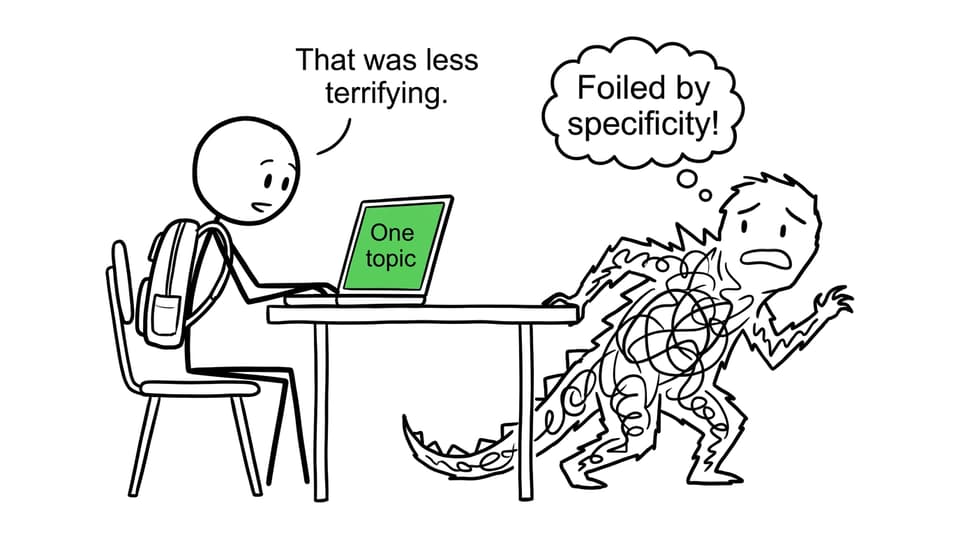
For the first week, keep it simpler still: choose one subject, review one topic, answer a few questions, and stop. The purpose is not to race ahead. It is to replace “I have no idea where to begin” with “I know what my next step is.”
Your child does not need to feel completely fearless before IB starts. They need to feel heard, supported, and capable of taking the next manageable action. Begin with one calm conversation tonight. Then build the first week together, one ordinary day at a time.