
Your IA can feel like a marathon: research question, method, data, analysis… and then the conclusion, scribbled when your brain is already in shutdown mode.
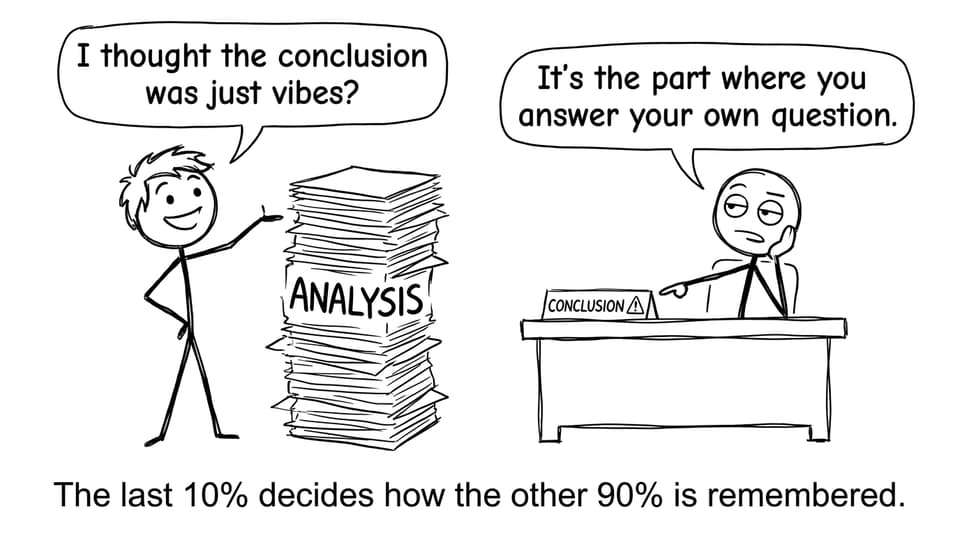
But here’s the quiet truth examiners live by: the conclusion is where they decide whether you actually understood what you just did. A weak ending doesn’t just lose marks in that section of your IA, it changes how the whole investigation feels to the reader.
A quick checklist for a high-scoring IA conclusion
Before you submit your IA, your conclusion should do five things:
-
Answer the research question directly (no fog, no dancing around it)
-
Summarise only the key findings (not every number you calculated)
-
Explain what the findings mean (your judgement, supported by evidence)
-
Keep limitations brief and proportionate (save the deep dive for evaluation)
-
Avoid introducing anything new (no new data, graphs, or theories)
If you want subject-specific examples, RevisionDojo’s IA resources hub is a useful starting point: IB IA Guides: Structure, Rubrics & Support.
Why your IA conclusion gets capped (even when the analysis is good)
Vague endings don’t earn marks
A common IA conclusion problem is writing “safe” sentences that never land anywhere.
If your research question asks to what extent X affects Y, then your conclusion needs a clear extent, direction, and condition. Not “the results suggest there may be a relationship.” That’s the academic equivalent of shrugging.
If you’re unsure what “direct” sounds like, compare your ending to models like How to Make Your IA Conclusion Stand Out.
Repeating results isn’t the same as concluding
Many students use their IA conclusion as a copy-paste of the results paragraph.
Examiners already saw your table, your trendline, your quotes, your significance test, your source evaluation. The conclusion is where you synthesise those pieces and state the final judgement they support.
A helpful framing question: “So what?”
If you want a concrete template for turning results into meaning, see What a Strong IA or EE Conclusion Actually Does.
Overdoing limitations can sabotage your IA
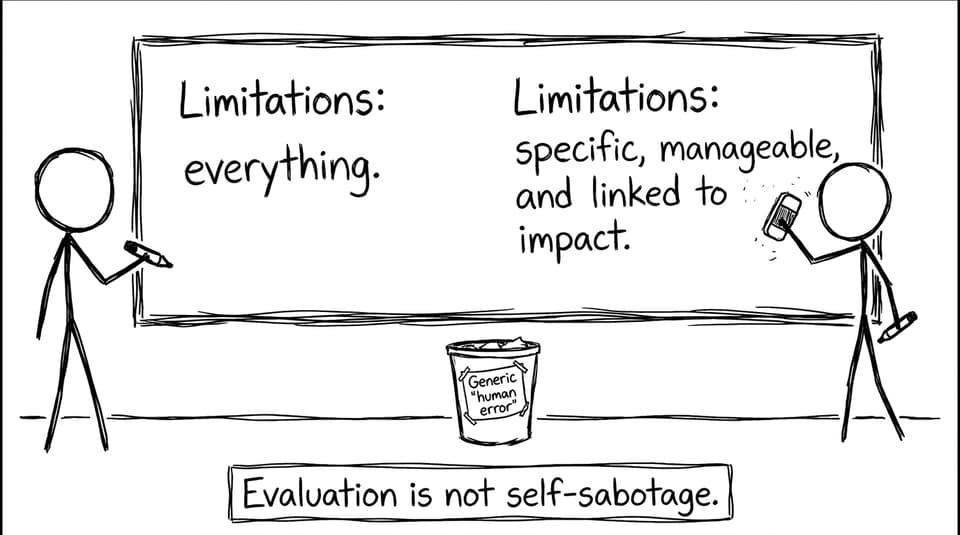
Limitations matter. But if your conclusion reads like a legal apology, it makes your entire IA feel unreliable.
Keep the conclusion focused on the claim your evidence supports. Then, in evaluation, you can be more analytical about reliability, uncertainty, and improvements.
For a clean separation between these sections, use How to Write a Compelling IA Evaluation Section.
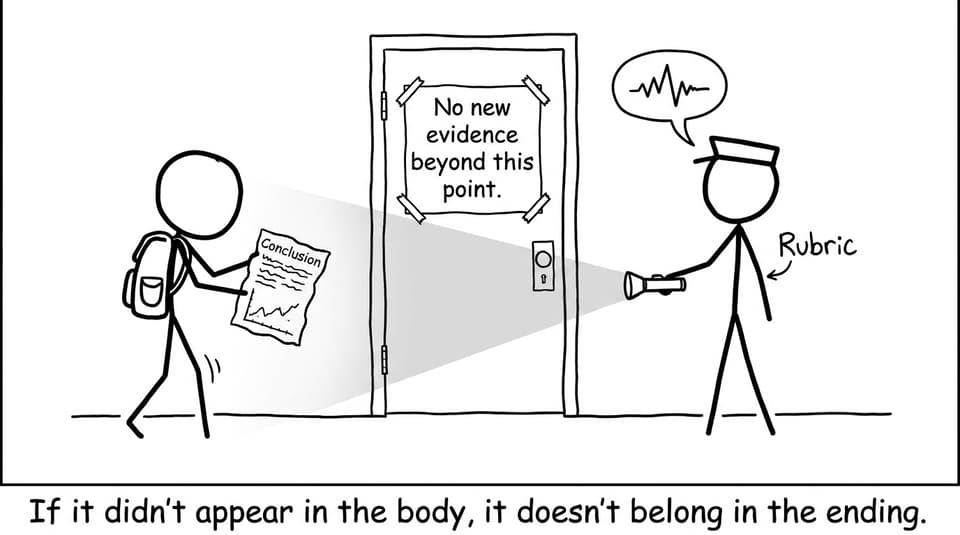
Adding new information in the conclusion is a red flag
Some students realise too late that one extra statistic or source would make the IA stronger, then sneak it into the conclusion.
That move usually backfires. If it wasn’t analysed earlier, it’s not supporting your argument; it’s confusing it.
Tone matters more than you think
A strong IA conclusion can be cautious and confident.
You’re allowed to say “Based on the data collected, X is supported within these conditions.” That’s academically mature.
What costs marks is sounding unsure without reason: “maybe,” “kind of,” “not very reliable,” “I’m not sure.” Precision earns trust. Apology drains it.
How to fix your IA conclusion in 15 minutes
-
Copy your research question into the first sentence of the conclusion and answer it directly.
-
Choose 2-3 pieces of evidence you already discussed and write one sentence explaining what they imply.
-
Add one “boundary” sentence: under what conditions does your conclusion hold?
-
Add one short limitation sentence (max), then stop.
-
Read it aloud. If it sounds like a summary, add one line of judgement.
Then do a final polish pass using How to Proofread and Polish Your IA Before Submission.
A final note before you submit your IA
The conclusion is the last thing an examiner reads, but it becomes the first thing they remember. Treat it like a final judgement, not an afterthought.
If you want a clear path from draft to stronger marks, start with How to Make Your IA Conclusion Stand Out, then run your IA through the IB Coursework Grader and iterate once with the specific fixes it suggests. Your ending can be the part that lifts the whole investigation, not the part that quietly caps it.