
The conclusion isn’t a goodbye: it’s your verdict
The last page of an IA often gets written when you’re tired and slightly resentful. You’ve run the experiment, argued the case, formatted the graphs, and now you just want to “wrap it up.” So you recap. You restate. You repeat.
And that’s the trap.
A strong IA conclusion isn’t a summary section. It’s the moment you show the examiner you understand what your own investigation proved, what it didn’t, and why the result is worth caring about. In other words: your conclusion is where your IA turns from “work” into “judgment.”
If you want a rubric-aligned overview before you edit, start with the IB Internal Assessment guides and the broader IB coursework guides hub.
A quick checklist for an IA or EE conclusion
Use this as a final scan. A high-impact IA conclusion usually does five things:
-
Restates the research question (cleanly, once)
-
Answers it directly using your key results
-
Explains what the results mean in context (the “so what?”)
-
Acknowledges the most important limitations and their impact
-
Ends with realistic improvements or extensions (only if they follow logically)
For subject-specific models, browse the IA-focused posts collected under All #IA Posts.
What a strong IA conclusion actually does (and why it earns marks)
It answers the research question like a confident adult
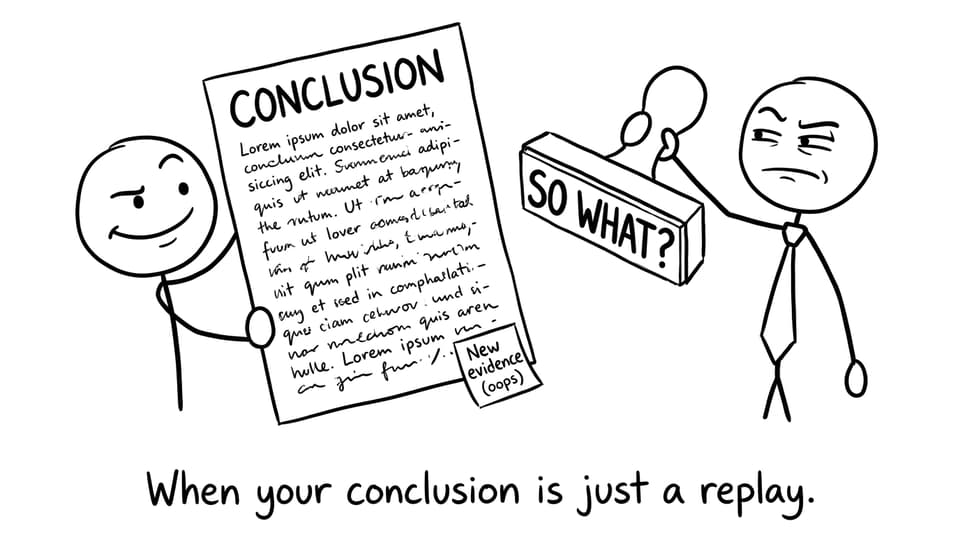
Examiners read your IA conclusion looking for a decision, not a replay. If your research question asked “How does X affect Y?”, the conclusion must say what happened and how strongly, based on your evidence.
This is where tone matters. “The results were kind of unclear” without explanation sounds like you don’t trust your own method. But “The data suggests X increases Y within the tested range, though the relationship weakens beyond…” shows you can make a bounded, evidence-based claim.
If your question still feels fuzzy, fixing the conclusion won’t save you. Use Refine Your IA Research Question for Clarity and Focus and then rewrite your final paragraph with that sharper target.
It translates results into meaning (not just numbers)
A conclusion earns its space by interpreting. That means connecting your processed data to the concepts of the subject and explaining why the pattern makes sense.
For a science IA, this often looks like linking a trend to theory and then stating what that implies about the system. For a humanities IA, it might be explaining what your evidence reveals about causation, significance, or perspective.
If you want a clean example of what “meaning” looks like in a conclusion, see How to Make Your IA Conclusion Stand Out.
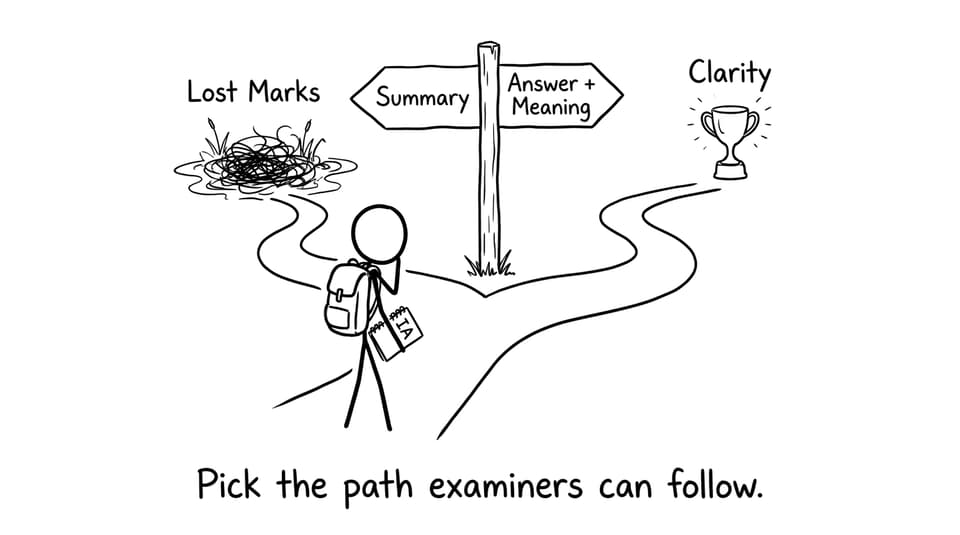
It synthesizes the whole investigation into one coherent insight
The best IA conclusions don’t hop between points like a checklist. They bring strands together: your data, your analysis choices, and your reasoning. The reader should feel the ending is inevitable.
A simple test: if someone read only your introduction and conclusion, would they understand the claim you proved and the logic that supports it? If not, your conclusion is probably summarizing sections rather than synthesizing them.
To calibrate what “coherent” looks like, compare against exemplars such as Chemistry IA examples (even if you’re not a Chem student, you can learn structure from strong samples).
It acknowledges limitations without sabotaging your own work
Strong conclusions don’t pretend the study was perfect. They name the biggest limitation and explain its effect on confidence in the answer.
This is different from apologizing. “My results were unreliable” is a dead end. “Random error in temperature control likely increased scatter, reducing certainty about the gradient” is examiner-friendly evaluation.
If your evaluation is thin, strengthen it before you rewrite the IA conclusion. Use How to Write a Compelling IA Evaluation Section.
It refuses to introduce new information
New evidence in the conclusion is usually a sign your argument didn’t land earlier. The conclusion is where you cash the cheque you’ve been writing across the report.
If you discover a “great point” while concluding, it belongs in analysis, discussion, or evaluation. Then your IA conclusion can stay clean: answer, meaning, limits, significance.
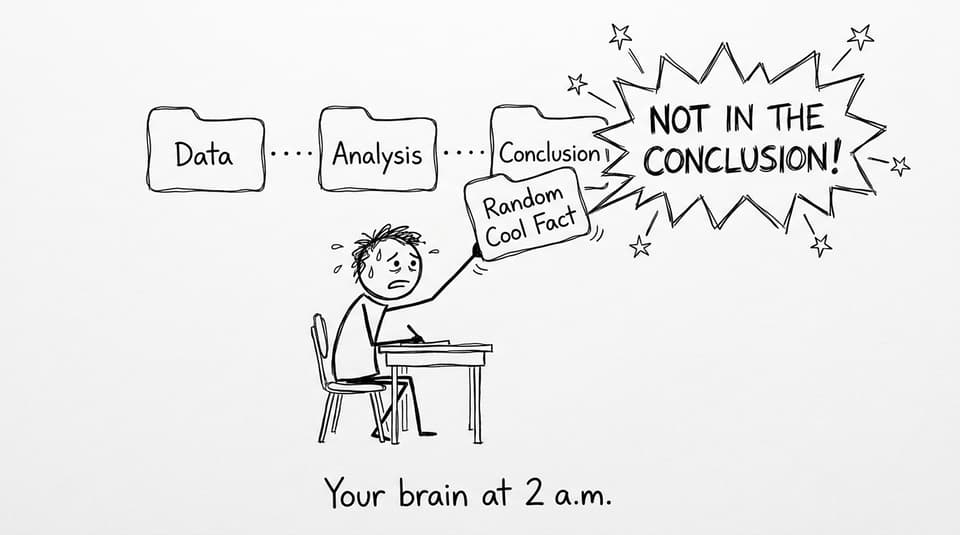
A final way to upgrade your IA conclusion in 10 minutes
Open your IA and write one sentence: “Therefore, the answer to my research question is…” Then force yourself to justify it using only evidence you’ve already presented. Add one sentence explaining meaning. Add one sentence naming the biggest limitation and its impact. Stop.
If you want this to feel easier, RevisionDojo is built for exactly this kind of final-mile work: use Study Notes and Flashcards to keep terminology sharp, AI Chat to test whether your conclusion actually answers the research question, Grading tools to check rubric language, and the Coursework Library plus Tutors when you need models and human feedback.
When your conclusion does its real job, the whole IA reads like it knew where it was going all along.