


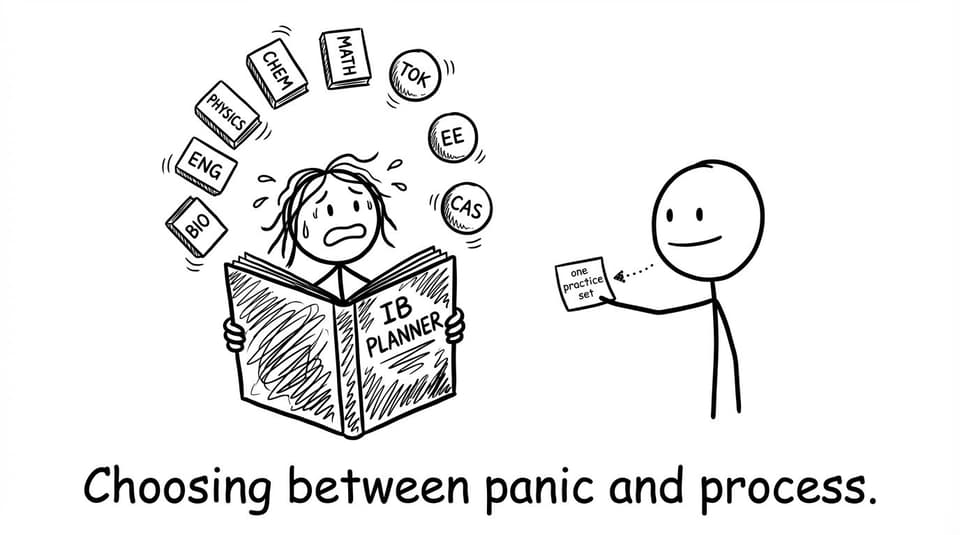
If you want the truth about IB in 2026, it's this: the programme doesn't reward intensity as much as it rewards direction.
Most students don't burn out because IB is "too hard" in some abstract way. They burn out because they work hard without a feedback loop. They revise without proof. They grind without a scoreboard. And by March, everything feels personal.
But IB can absolutely be worth it in 2026, especially if you're already in it, already close to exams, and want a realistic way to turn stress into marks.
The quick answer: when IB is worth it (and when it isn't)
Here's a calm checklist you can run in two minutes.
IB is worth it in 2026 if…
- You want a qualification that's recognized broadly by universities.
- You value being trained across writing, analysis, and problem-solving (not just memorizing).
- You're willing to practice in the format the IB actually grades.
- You can build a system that protects your momentum during exam season.
IB is not worth it (for you) if…
- The workload is actively harming your health and your school can't adjust support.
- You're trapped in constant panic, with no time to sleep or recover.
- You're studying "a lot" but not improving because you don't get feedback.
That last point matters, because it's the one you can fix quickly.
If you need a central place to run that fix, start with RevisionDojo for IB; it's built around exam practice loops, not motivational speeches.
What changed in 2026: the IB is the same, but students are different
The IB hasn't suddenly become a different qualification in 2026. The rubrics, command terms, and the basic logic of assessment still reward the same thing: clear thinking, expressed clearly, under constraint.
What has changed is the environment students revise in:
- More distraction, more content, more "study advice," less clarity.
- More AI tools available, but also more confusion about what's allowed and what actually helps.
- More pressure to be efficient because life is busy and attention is expensive.
So the "Is IB worth it?" question often hides a more practical one:
Are you revising in a way that produces mark-scheme results?
When the answer becomes yes, IB starts feeling less like chaos and more like training.
A practical overview: the IB value equation
If you're an exam-season student, IB is worth it when the benefits outweigh three costs:
The costs
- Time cost: six subjects plus core components is real.
- Stress cost: uncertainty is the hidden tax of the IB.
- Opportunity cost: you say "no" to other things to say "yes" to revision.
The benefits
- Transferable skills: writing, evaluation, structured argument, lab reasoning.
- University readiness: the programme forces you to handle deadlines and complexity.
- Optional upside: some pathways may value the breadth and rigor.
The catch: you only collect the benefits if you finish the year with evidence of skill, not just memories of surviving.
That's why the rest of this article is about building evidence.
The real reason IB feels "not worth it" during exams
During exams, IB can feel like you're paying for a gym membership that only lets you see the weights once.
You revise. You reread. You highlight. You watch videos. You "feel" productive.
Then a timed paper happens.
And suddenly your brain is a different person.
That gap is the source of most "IB isn't worth it" thoughts.
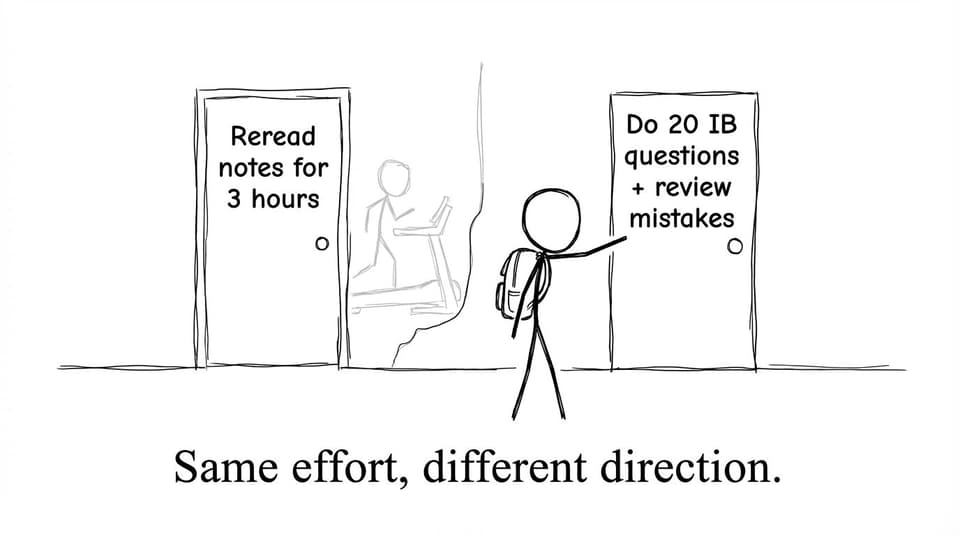
The fix is not to "work harder."
The fix is to change the unit of progress from hours to mark-scheme outputs.
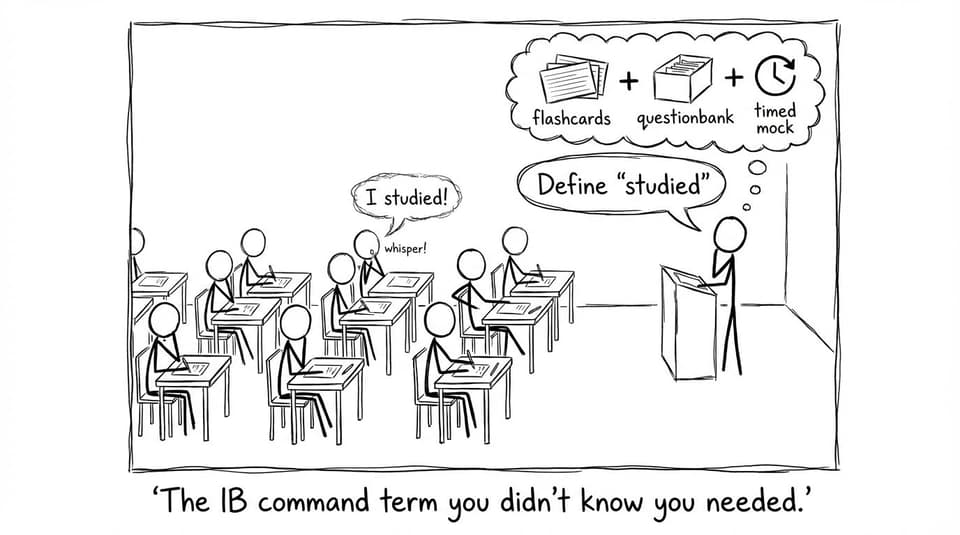
RevisionDojo's ecosystem is designed for exactly that: Study Notes for clarity, Flashcards for recall, Questionbank for exam practice, AI Chat for getting unstuck, and Mock Exams plus Predicted Papers for simulation.
IB is worth it when you stop confusing learning with training
Learning is understanding.
Training is performing.
IB grades training.
That's why the most useful workflow is simple and slightly boring:
The IB loop that works: Learn -> Drill -> Review -> Retest
- Learn: one focused topic, one clean explanation.
- Drill: exam-style questions immediately.
- Review: analyze mistakes like they're data.
- Retest: come back until the error pattern disappears.
If you want a ready-made drill environment, use:
- Study Notes to learn faster without rewriting everything
- Flashcards to keep recall alive daily
- Questionbank to practice with feedback and tracking
That's how IB becomes predictable.
The strongest argument that IB is worth it: it creates a scoreboard
There's a quiet relief in knowing what "better" looks like.
In IB, "better" can be measured:
- Did you interpret the command term correctly?
- Did you include the marking points?
- Did your structure match what the examiner rewards?
- Did you manage time and still answer fully?
A scoreboard turns anxiety into strategy.
That's why exam-season students benefit so much from tools that give immediate, criterion-aware feedback.
RevisionDojo's Jojo AI is built for that moment when you finish a response and need to know, calmly, what would earn the next mark.
If you want to understand how this approach changes your prep, read Lessons the IB Teaches That School Never Mentions.
What to do if you're already deep into IB exam prep in 2026
If you're in April and reading this, you don't need inspiration. You need a plan that fits inside a tired life.
Here's one that works for most IB students.
A 14-day IB reset plan (simple, not heroic)
Days 1-3: clarity
- Pick 2 weak topics per subject.
- Use Notes + Flashcards + Question Bank (Free) to learn the minimum needed.
- Create a small flashcard deck per topic.
Days 4-10: targeted training
- Daily: 10 minutes flashcards + 40 minutes Questionbank + 10 minutes review.
- Use Comprehensive IB Question Bank: Thousands of Practice Questions to understand how to use practice strategically.
Days 11-14: simulation
- Run a timed paper section.
- Review mistakes and retest weak topics.
- Repeat.
If you want the step-by-step for running realistic timed practice, follow How to Run Timed IB Mock Exams in RevisionDojo (Exam Mode + Test Builder).
Where RevisionDojo makes IB feel worth it (because it reduces uncertainty)
Most students don't need "more resources." They need fewer decisions.
RevisionDojo reduces decisions by connecting the workflow:
- Questionbank to drill what the IB actually asks
- Study Notes to clarify topics without endless rewriting
- Flashcards for spaced repetition when you're busy
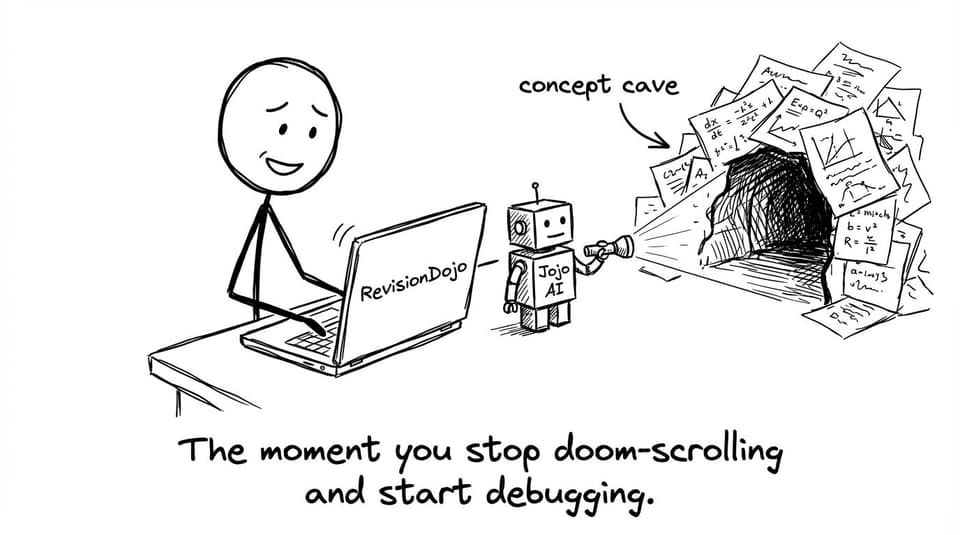
- AI Chat to stop small confusion from becoming a two-hour spiral
- Mock Exams to build timing and stamina
- Predicted Papers to rehearse likely paper structures
- Grading tools for rubric-aligned coursework feedback
- Coursework Library to see what strong work looks like
- Tutors when you need a human to simplify the chaos and raise the ceiling
If you're curious how the platform fits as an all-in-one system, see Best all-in-one IB study tool (notes + questions + mocks + AI).
The honest comparison: IB vs "something easier" in 2026
It's tempting to compare IB to another pathway and imagine less pressure.
Sometimes that's fair.
But if you're already in the IB and preparing for exams, the comparison that matters is closer to home:
What version of your next 8 weeks gives you the highest probability of a better final result?
In other words, the programme choice might be fixed. Your process is not.
That's why "Is IB worth it?" often becomes "Can I still meaningfully improve?"
And yes. You can.
Closing: the calm verdict on whether IB is worth it in 2026
IB is worth it in 2026 when you treat it like training.
Not because it promises a perfect future.
Not because it's prestigious.
But because it gives you a clear standard and lets you get better in visible ways.
If your exam season feels heavy, don't try to carry it with willpower alone. Build a loop: learn, drill, review, retest. Then run timed simulations until "panic" is replaced by familiarity.
When you're ready to make that shift, start here: RevisionDojo for IB. Use the Study Notes to get clarity, the Questionbank to practice what the IB rewards, Flashcards to keep recall alive, AI Chat to get unstuck, and Mock Exams plus Predicted Papers to rehearse pressure.
Because the best answer to "Is IB worth it?" is not a debate.
It's a score that starts improving.