


If you have ever stared at your school portal at 1:00 a.m. wondering whether an IA grade can materialize through sheer willpower, you already understand the strange psychology of waiting. The work is finished. The file is uploaded. The rubric boxes are ticked. And yet your brain keeps asking the same question: when are IA grades released?
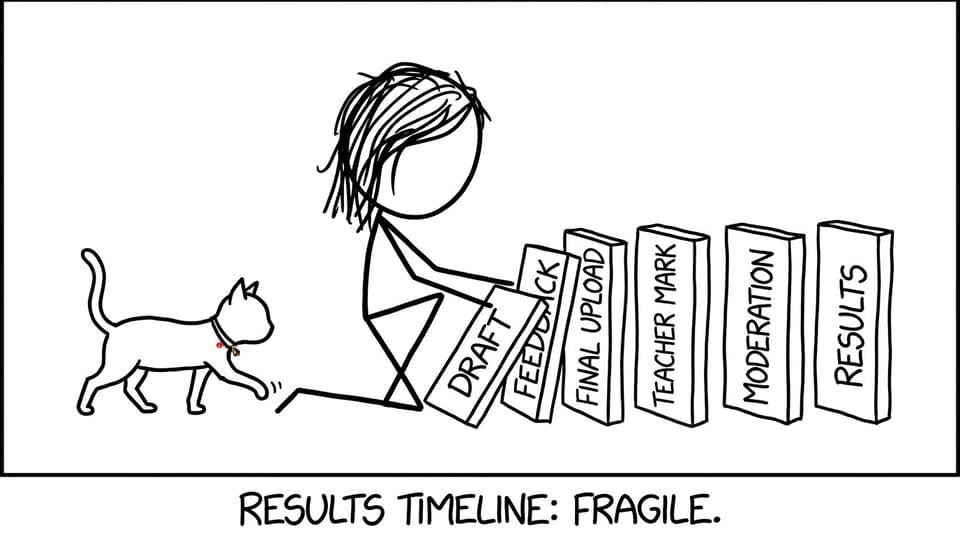
The frustrating truth is that an IA grade is not a single moment. It is a chain of moments: teacher marking, internal standardization, submission deadlines, moderation, and finally the day your overall subject grade appears. Once you see the chain, the waiting becomes more predictable, and you can make smarter choices while you wait.
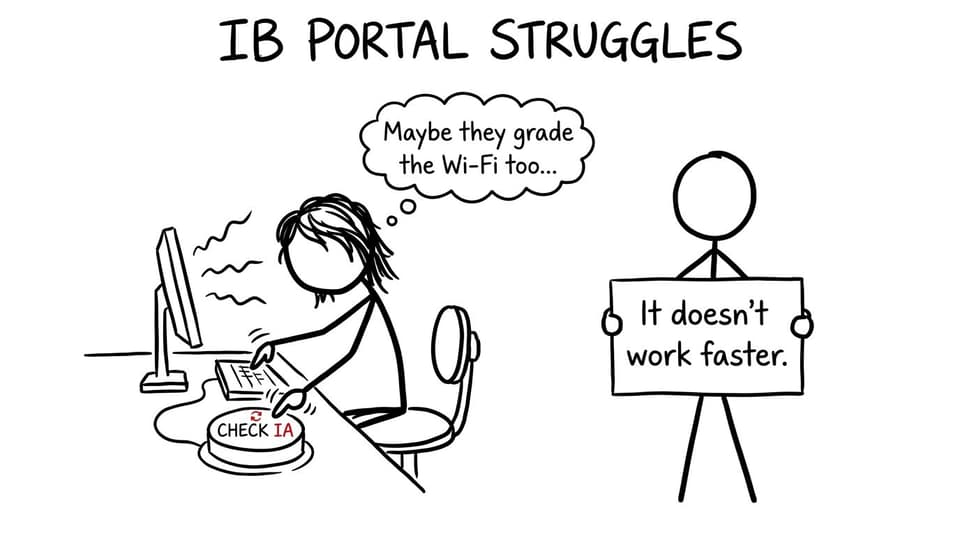
Quick answer: when are IA grades released?
An IA grade is released in two practical senses:
- School release (teacher-provided): Your teacher can give you an estimated IA mark after they assess your final submission. This timing varies by school and subject, but it typically happens weeks or months before final exams.
- Official release (IB results): Your final outcome, the grade that includes the moderated IA contribution, is released on IB results day, when your subject grades (1 to 7) are published.
For many students, the confusion comes from mixing these two things. Your teacher's IA mark is real and useful for improvement and expectation-setting. But your official result is the one that ultimately counts, because moderation can shift what your school awarded.
To understand the timeline end-to-end, it helps to look at what happens to an IA after you hand it in.
The IA grade timeline (what actually happens)
Your teacher marks your IA first
Your IA is internally assessed. That means your subject teacher uses the official criteria to award a mark. This is the first "grade" you will hear about.
If you want to understand how teacher marking works, read Who Grades the IAs? because it clarifies the difference between internal assessment and what the IB does later.
At this stage, your best move is to treat the teacher mark like a diagnostic. If it is lower than you hoped, you can still control a lot of your final outcome through exam performance. And if it is high, you should protect it by building exam consistency.
Schools standardize before submission
Many schools run internal standardization. Teachers compare samples across classes to align what "a 17" or "a 22" means, so one class is not graded more harshly than another.
RevisionDojo describes the logic of alignment clearly in Using RevisionDojo to Standardize Internal Assessments Across Departments. Even if you are not a teacher, it is useful to know this step exists: it is one reason your IA grade might be delayed inside your school.
Your school submits marks and sample work to the IB
Next comes the part most students do not see. Your school submits IA marks for the cohort and sends a sample of student work to the IB for moderation. The point is not to re-mark every IA for every student. The point is to check whether the school's marking is aligned with the global standard.
This is where timing becomes less personal. Your IA grade is now inside a system designed for fairness across thousands of schools.
Moderation happens (and it can change things)
Moderation is the process that scares people because it feels mysterious.
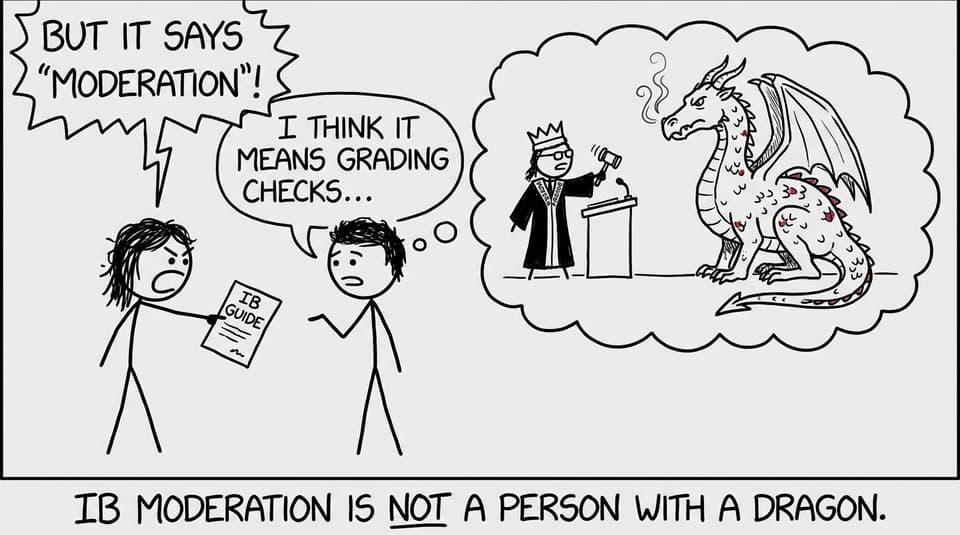
Here is the calmer framing: moderation is like calibration. The IB looks at a sample of IA work, compares the school's marks to the IB examiner's marks, and applies adjustments if needed. Sometimes the adjustment is none. Sometimes it nudges marks up or down. Occasionally it shifts them more.
If you want to ground your expectations, it helps to understand what typical score ranges look like. RevisionDojo's breakdown in Cracking the Code: Unveiling The IA Grade Boundaries makes the conversion feel less like rumor and more like arithmetic.
Your final grade appears on results day
Your final subject grade includes your externally assessed components plus your IA component, weighted according to the course design. You typically see the final grade, not a neatly packaged "final IA score" on the candidate portal.
To get the exact logistics right, use How to Check Your IB Results Online (Step-by-Step). It also includes typical results release dates and what to do if the site is slow.
When will you hear your IA grade? A realistic checklist
Students ask "when are IA grades released?" because they want a date. Schools cannot always give a single date, but you can usually get clarity with better questions.
Here is a short checklist you can use with your teacher or coordinator:
- When will teachers finish marking the final IA submissions?
- Will the department do standardization, and when?
- Will students be told the raw IA mark, or only general feedback?
- When are internal deadlines (the school's) for uploading to the IB?
- On results day, will the school provide component marks afterward (if requested)?
If you want to take control of your own understanding, pair this checklist with an IA rubric tool. For example, RevisionDojo has subject-specific graders such as the IB Maths AA IA Grader and the IB Business Management IA Grader. Even if your subject is different, seeing how criterion-by-criterion scoring works helps you interpret any IA mark you receive.
Why your teacher might not tell you an IA grade (and what to do instead)
Sometimes a teacher will not give a precise IA grade early. That can feel like secrecy, but it is often self-protection against false certainty.
Three common reasons:
- The mark is provisional: internal standardization may shift it.
- Moderation risk: teachers avoid promising a number that could change.
- Feedback focus: teachers want you focused on improving the work, not bargaining for a point.
If you are in that situation, ask for something more helpful than a number: ask which criteria are strongest, which are weakest, and what one change would most improve the IA. Then use tools to turn that into action.
A practical loop inside RevisionDojo looks like this:
- Use Study Notes to strengthen the content behind your analysis.
- Use Flashcards to lock in definitions, formulas, and key evaluation phrases.
- Use the Questionbank to keep exams moving while coursework stress is high.
- Use AI Chat to clarify confusing rubric language or methodology choices.
- Use Grading tools to sanity-check your criterion performance.
- Use Mock Exams to prove timing and reduce the feeling that your IA decides everything.
- Use Predicted Papers to practice likely patterns when you need structure.
- Use the Coursework Library to compare what top-band work looks like.
- If you are truly stuck, talk to Tutors for targeted, low-drama help.
Even if your IA is already submitted, that same system helps you stabilize while you wait.
What matters more than the IA release date: your buffer
The smartest students treat the IA like a foundation, not a verdict. The goal is to build an exam buffer so a small moderation shift does not change your final grade.
This is where grade boundaries thinking becomes useful. Boundaries shift by session, and you cannot control them, but you can control your margin above them.
Use these two tools together:
- IB Grade Boundaries to see how boundaries have moved across sessions.
- IB Grade Calculator to translate realistic practice performance into a likely overall outcome.
Then build a plan that assumes your IA stays roughly where your teacher marked it, but you still aim for marks you can repeatedly earn under time pressure.
Overview: what to do while waiting for IA grades
Here is a calm, high-impact plan for the waiting period:
- Collect facts: ask your teacher when marking and standardization end.
- Estimate responsibly: use an IA grader or rubric checklist to approximate your band.
- Shift to what you control: begin a weekly rhythm of timed practice.
- Convert mistakes into assets: turn recurring errors into Flashcards.
- Reduce uncertainty: do one full timed block using a structured mock format.
If you want an exam-prep system that feels modern but not chaotic, RevisionDojo App: The Smarter Way to Prep for IB Exams lays out a clean workflow you can copy.
Closing: stop waiting for the IA, start building leverage
So, when are IA grades released? Partly when your teacher finishes marking and shares an internal result, and finally when your overall grade is released on IB results day after moderation. The waiting is real, but it does not have to be empty.
If your IA is already submitted, your best move is to shift from refreshing to refining. Use RevisionDojo to build a quiet advantage: Study Notes to clarify content, Flashcards to lock in recall, Questionbank to drill weak areas, AI Chat to unblock confusion, Grading tools to improve your writing, and Mock Exams plus Predicted Papers to make exam day feel familiar. The IA is one component of your story. RevisionDojo helps you write the rest of it on purpose.