


A strange thing happens in IB Languages exams: the moment you decide you must understand every word, your brain stops understanding any of them.
That’s why IB German Ab Initio Paper 2 often feels brutal. It’s not because you’re “bad at German.” It’s because Paper 2 punishes the most natural student instinct: translating line-by-line.
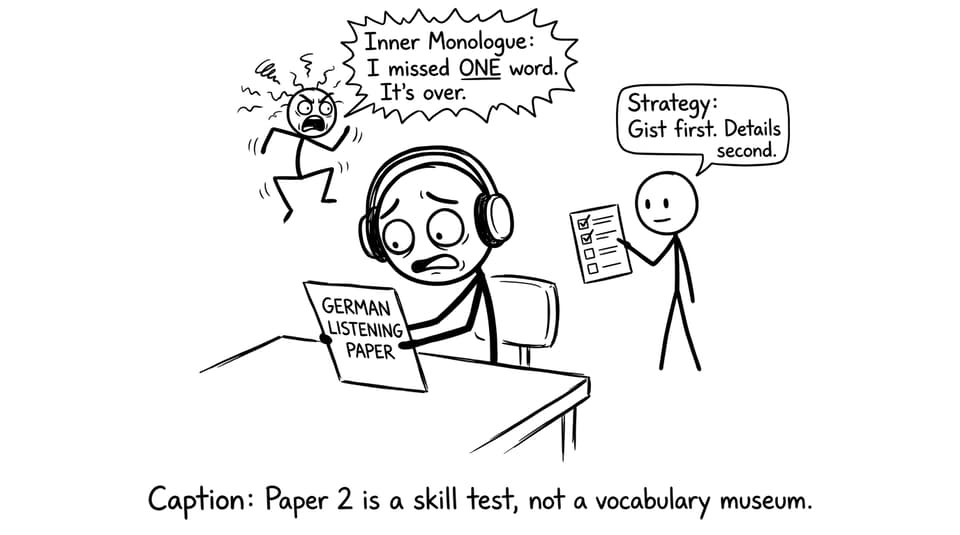
Paper 2 is built to reward a different skill set: getting the gist fast, hunting for evidence, and staying calm when the audio runs past a word you don’t know. In this 2025 guide, you’ll get a practical playbook for both reading and listening, plus a RevisionDojo-based training loop that makes improvement measurable.
Paper 2 in one glance (what you’re actually training)
Paper 2 is 1 hour 45 minutes and 50% of your final grade. It has two parts: reading comprehension and listening comprehension.
If you need the full exam breakdown, keep this open while you revise: IB German Ab Initio Exam Format (2025 Guide).
Here’s the checklist that works for most IB Languages students:
-
Read the questions first (they are your map).
-
Skim for topic + tone, then scan for proof.
-
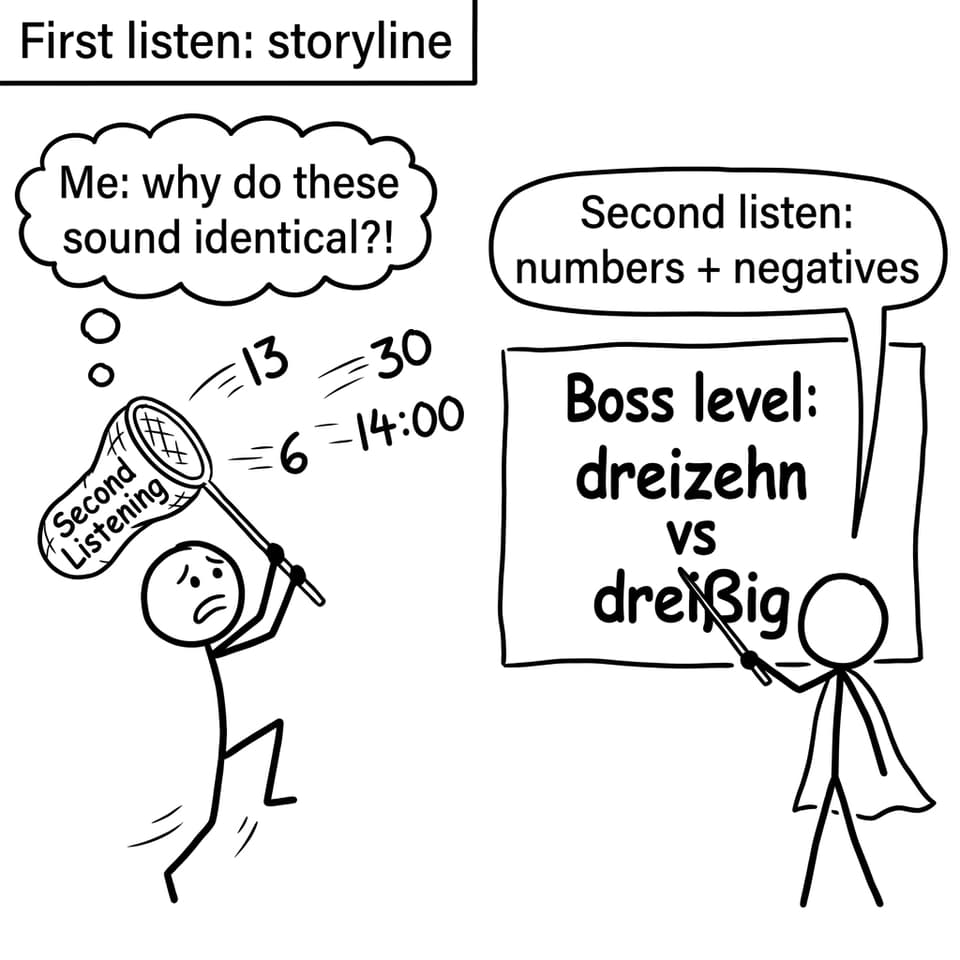
In listening: first play = storyline, second play = details.
-
Treat unknown words as background noise unless they repeat.
-
Use timing rules so one hard question can’t steal your whole section.
IB Languages reading strategies for German Ab Initio Paper 2
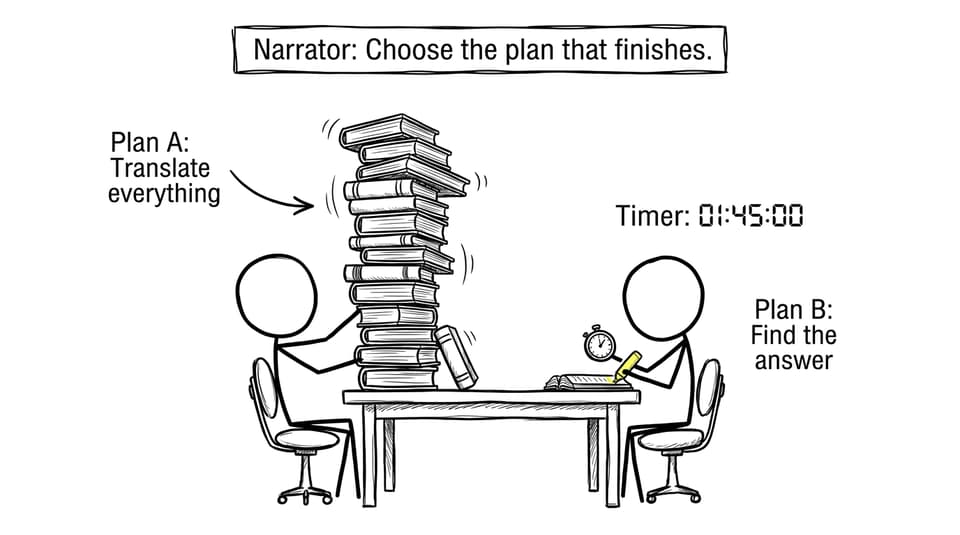
Reading in Paper 2 is less “reading” and more “finding.” You’re not here to admire every sentence. You’re here to extract answers under time pressure.
Skim like a journalist, then read like a detective
First pass: grab the headline idea.
-
Who is speaking (teen, parent, school, business)?
-
Where are we (school, train station, online shop)?
-
What’s the situation (complaint, invitation, announcement)?
Second pass: hunt the exact lines that match question wording. Many IB Languages marks are lost because students write a true statement that is not the specific answer asked.
Stop translating; start chunking
German compound words look scary until you split them:
-
Krankenschwester = krank + Schwester
-
Bahnhofsausgang = Bahnhof + Ausgang
Your goal is functional meaning. Examiners reward comprehension, not perfect bilingual beauty.
Circle “answer magnets”
These are the details that usually carry marks:
-
Numbers, dates, prices
-
Names and places
-
Modal verbs (kann, muss, will)
-
Negatives (nicht, kein)
-
Time markers (gestern, nächste Woche, um 10 Uhr)
If you want structured reading practice, build it by topic using Paper 2 Reading, then reinforce the same themes using the IB German ab initio Revision Notes.
IB Languages listening strategies for German Ab Initio Paper 2
Listening feels harder because it won’t wait for you. But that’s also why strategy matters more than vocabulary.
Use the two-play system on purpose
Treat the first play as a trailer, not a test.
-
First play: Who? Where? What’s happening? What’s the mood?
-
Second play: Capture the scoring details (numbers, times, reasons, contrasts).
If you write full answers after play one, you’re guessing. Train yourself to jot keywords only, then confirm on play two.
For targeted drills, use Paper 2 Listening Questionbank and keep a running “trap list” from mistakes.
Learn the classic traps (and expect them)
Some errors are so common they’re practically a feature:
-
Numbers: dreizehn (13) vs dreißig (30)
-
Negatives: nicht/kein flipping the meaning
-
Contrast words: aber, obwohl, trotzdem hiding the real point
A helpful resource to review before timed practice: Paper 2 (listening) Common Pitfalls.
Take notes that your future self can read
Write ugly, fast keywords. Use arrows for cause/effect. Use symbols:
-
“+” = likes/advantage
-
“:” = dislikes/problem
-
“!” = something repeated
-
“?” = unclear but maybe important
This is a core IB Languages habit: notes aren’t a transcript. They’re a memory trigger.
Timing that protects your score
A simple plan (adjust slightly for your strengths):
-
Reading: ~50-55 minutes
-
Listening: ~45-50 minutes
Two rules that save marks in IB Languages:
-
If you’re stuck, move on and come back with fresh context.
-
Never let one question become a time leak. A “maybe” answer beats a blank page.
A RevisionDojo training loop that actually improves Paper 2
Most students do “more practice” and hope it turns into progress. A better loop is: practice, feedback, repeat.
Here’s a calm weekly system using RevisionDojo:
-
Learn fast with the German ab initio hub and topic-by-topic Study Notes.
-
Retain daily using IB Flashcards with Spaced Repetition (short sessions beat long cramming).
-
Apply under pressure with the Questionbank for reading and listening sets.
-
Get unstuck instantly using AI Chat when a grammar point or phrasing keeps confusing you.
-
Measure progress with Grading tools and build exam realism through Mock Exams and Predicted Papers (especially as 2025 approaches).
-
If you need human guidance, use Tutors for feedback on strategy and error patterns.
If you want a broader exam-prep system that fits all subjects, this is worth reading once: RevisionDojo App: The Smarter Way to Prep for IB Exams.
Closing: make Paper 2 predictable
The best IB Languages students don’t walk into Paper 2 hoping the texts are easy. They walk in with a method: questions-first reading, two-play listening, trap awareness, and timing rules that protect their score.
If you want that method to feel automatic by exam day, build your practice loop on RevisionDojo: Questionbank for volume, Study Notes for clarity, Flashcards for retention, AI Chat for quick fixes, plus Mock Exams, Predicted Papers, Grading tools, the Coursework Library, and Tutors when you need an extra edge. Start with the German ab initio hub and turn Paper 2 from a fear into a routine.


