
When the exam clock starts, most students don’t panic because they “don’t know enough German.” They panic because the blank page feels like a judgment.
Paper 1 has a quiet secret: it’s one of the most trainable tasks in IB Languages. Not because you can predict the exact prompt, but because you can predict the shape of what earns marks: clear communication, appropriate register, and a structure that makes your message easy to follow.
This 2025 guide breaks down what to do before you write, while you write, and in the final minutes when smart checking can quietly add marks.
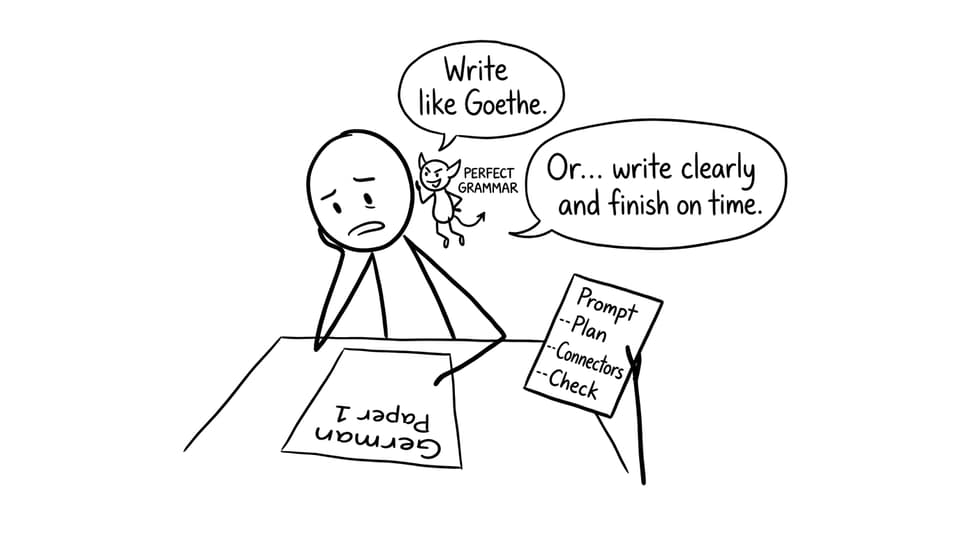
IB Languages German Ab Initio Paper 1: the essentials
If you’re revising for IB Languages, you want the format to be boringly familiar.
Here’s the snapshot for IB German ab initio Paper 1:
-
Time: 1 hour
-
Task: write 1 text (choose 1 of 2 prompts)
-
Word count: 200--250 words
-
Common text types: email/letter, blog post, diary entry, short article
-
What you’re assessed on: content, language accuracy/range, clarity of message, and text type conventions
For the exact assessment language, keep the criteria open while you practice: Paper 1 writing criteria (Schreiben).
If you want a full overview of the course structure inside IB Languages, this helps you align everything: IB German Ab Initio Exam Format (2025 Guide).
A quick Paper 1 checklist (save this)
Use this mini routine every time you practice IB Languages writing:
-
Identify audience + purpose + required bullet points
-
Pick the correct register (du vs Sie)
-
Plan 3 paragraphs (intro, body, close)
-
Use 6--10 connectors (not all in one sentence)
-
Show tense range (present + past + future/conditional if safe)
-
Leave 10--15 minutes to check predictable errors
RevisionDojo makes this loop easier because you can move from learning to doing in one place: Study Notes for clarity, Flashcards for recall, the Questionbank for targeted practice, AI Chat when you’re stuck, and Grading tools when you need feedback that matches how marks are awarded.
Strategy that actually works: write for the reader, not the teacher
A reliable way to improve in IB Languages is to picture a real reader.
If the task is an email to a friend, your job is to sound like a friendly 16-year-old, not a mini-academic. If it’s a formal letter, your job is to be clear and polite, not “impressive.” Paper 1 rewards communication under constraints.
A practical drill:
-
In your first sentence, make the purpose obvious.
-
In every paragraph, include one concrete detail (place, time, number, simple description).
-
End with a natural closing that matches the text type.
For extra targeted practice on register (a big mark-maker in IB Languages German), drill it directly: Formal vs. Informal Register (Sie vs. du) Questionbank.
Strategy that saves marks: plan your structure before you chase vocabulary
Planning isn’t a luxury. It’s what keeps you from wandering into sentences you can’t finish.
Use a simple three-part structure:
Opening that anchors the text type
-
Email: greeting + reason for writing
-
Blog: title + hook line
-
Diary: date + emotion
-
Article: title + short intro statement
Middle that delivers the prompt requirements
Aim for 2 short body paragraphs. Give each one a job.
-
Paragraph 1: what happened / key facts
-
Paragraph 2: opinions + reasons + small reflection
Ending that closes naturally
Close the relationship, not just the text.
-
Email: a question + sign-off
-
Blog: invite comments
-
Diary: final feeling / hope for tomorrow
-
Article: brief takeaway
If you want a broader roadmap for building consistency across IB Languages skills, this is a strong companion: How to Build a Full Self-Study Language Plan for One Year.
Strategy examiners notice: connectors that guide the reader
Connectors are the quiet architecture of IB Languages writing. They help with clarity and they help you control German word order in a safe way.
Build a short list you can use without thinking:
-
Sequencing: zuerst, dann, danach, schließlich
-
Adding: außerdem, auch
-
Contrasting: aber, trotzdem
-
Reason/result: weil, deshalb
-
Softening: meiner Meinung nach, ich finde, ich denke
Rule of thumb: use connectors to create short, stable sentences rather than one long risky sentence.
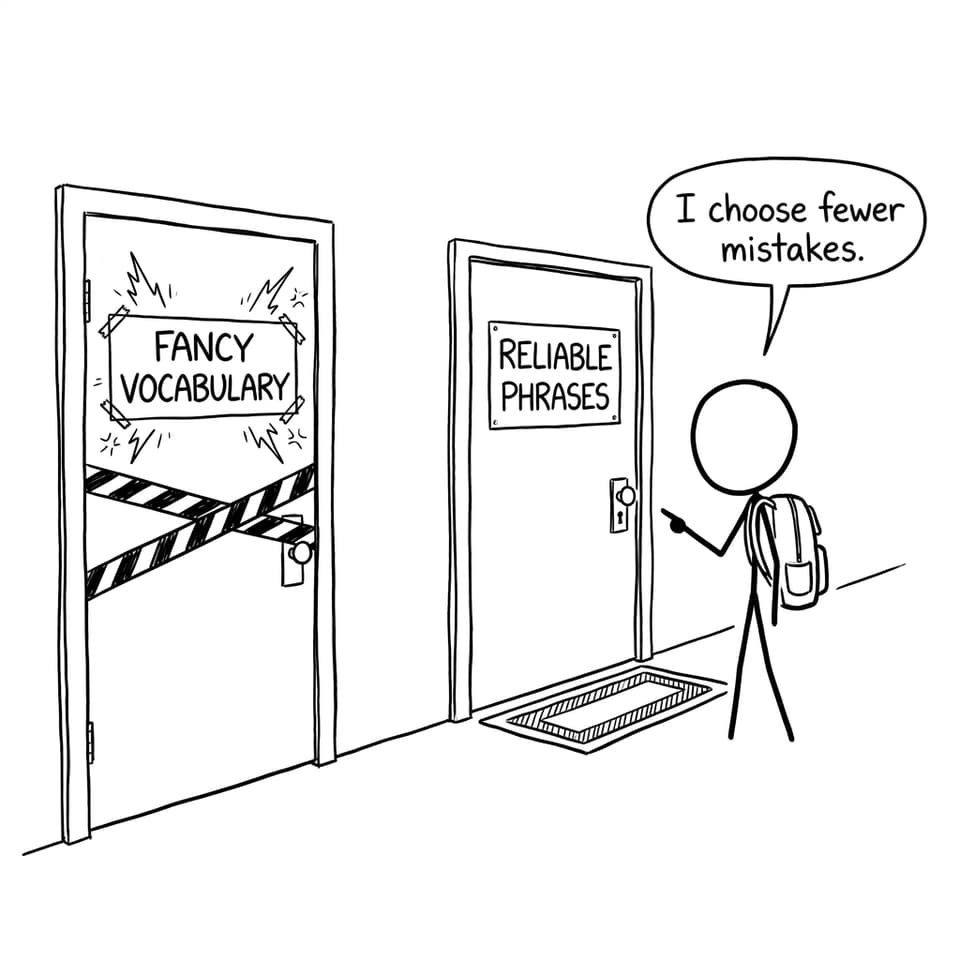
Strategy for “range” without chaos: keep your grammar ambitious but controlled
Students hear “show range” and immediately try to build a sentence that collapses under its own weight.
In IB Languages Paper 1, range can be simple:
-
Present: Ich gehe / Ich mache
-
Past (Perfekt): Ich habe besucht / Ich bin gefahren
-
Future: Ich werde lernen / Ich werde reisen
-
Modal verbs: Ich kann / Ich muss / Ich will
Then sprinkle in one or two safe upgrades:
-
A subordinate clause you trust: weil + verb at end
-
A comparison you can control: besser als, genauso wie
RevisionDojo’s German ab initio hub is useful here because you can combine vocabulary practice, text-type drilling, and exam-style writing practice inside one workflow.
Strategy that feels boring (and wins): time management you can repeat
The most effective IB Languages strategy is the one you can execute when you’re tired.
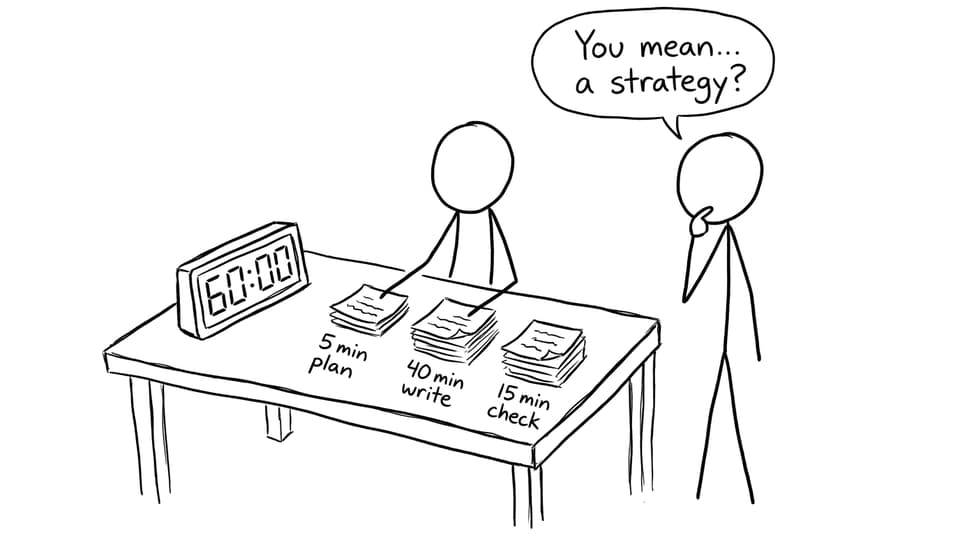
Use this timing split:
-
5 min: interpret prompt + plan
-
40 min: write
-
15 min: check and improve
What to check in those final minutes:
-
Verb position after weil/dass (if you used them)
-
Capital letters for nouns
-
Your most common article errors (der/die/das)
-
One quick scan for missing verbs
-
Register consistency (du/Sie)
If you want to practice under pressure, build your repetition around timed sets and feedback loops using RevisionDojo’s Mock Exams and then patch weak spots with the Questionbank: Questionbank.
Mistakes that quietly cap your score
These are the most common leaks in IB Languages Paper 1 writing:
-
Writing under 200 words because you “finished early”
-
Missing one bullet point from the prompt
-
Mixing du and Sie in the same piece
-
Repeating the same basic verbs (machen, gehen) without variation
-
Overreaching on vocabulary and creating 10 avoidable errors
A good fix is to build a small phrase bank per theme. The five themes structure is explained here: Themes and topics in IB German ab initio.
The calm way to win Paper 1
Paper 1 stops feeling scary when you stop treating it like a talent test. It’s a routine: prompt, plan, write clearly, check smartly.
That’s why IB Languages writing improves so fast when you practice the same workflow again and again. If you want that workflow in one place, RevisionDojo gives you the tools that match how improvement actually happens: Study Notes for quick clarity, Flashcards for retrieval, a focused Questionbank for repetition, AI Chat for instant help, plus Mock Exams, Predicted Papers, Grading tools, a Coursework Library, and Tutors when you need a human strategy reset.
Next step: pick one prompt today and write one timed 200--250 word piece. Then mark it with the criteria, log your three biggest patterns, and repeat. That’s how Paper 1 becomes predictable--in the best way.