
If you’ve ever watched someone refresh a login page like it’s a defibrillator, you already understand IB results day.
Not because a number is destiny, but because it feels like one for about ten loud minutes.
In most families, the student has rehearsed this moment for weeks. The parent has, too, just in a different way: imagining the celebration, imagining the silence, imagining how to respond if the outcome lands somewhere in the middle. On IB results day, your reaction becomes the weather. Calm makes the room breathable. Panic makes everything feel permanent.
This guide is written for IB students preparing for exams, but it’s also the message many parents wish they’d heard earlier: the goal is not to control the outcome. The goal is to protect the person.
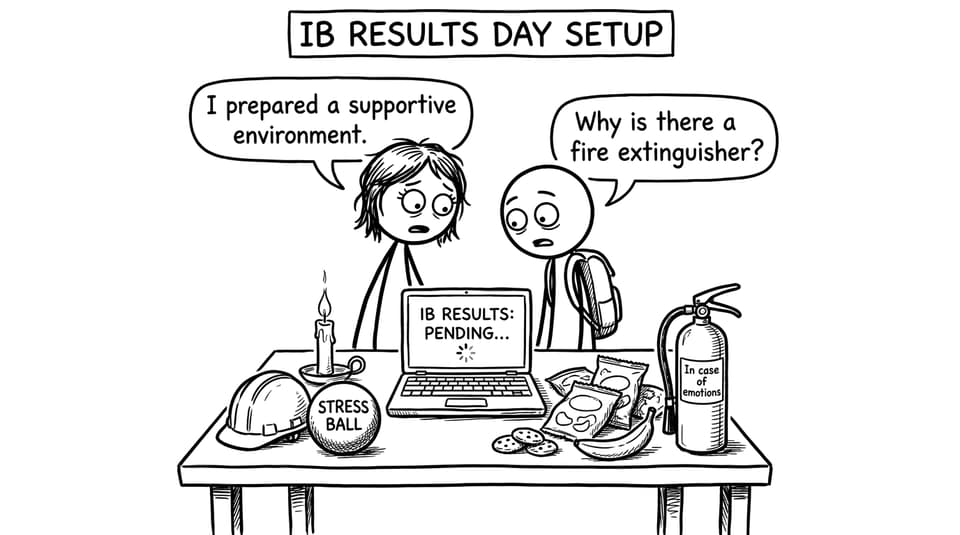
A quick IB results day checklist (for parents and students)
Before you open anything, agree on a simple plan. Here’s the checklist that keeps IB results day from becoming a family memory you avoid later:
-
Choose where results will be opened (quiet beats crowded)
-
Decide who will be there (one supportive person is enough)
-
Set a no-comparisons window (at least a few hours)
-
Prepare three outcome scripts: great, okay, disappointing
-
Keep one next-step contact ready (your IB coordinator)
-
Remember the rule: data first, meaning later
If you want a student-focused walkthrough for the same day, keep this open too: What to Do on IB Results Day (Step-by-Step).
Why IB results day hits harder than people expect
The IB is two years of sustained effort condensed into a screen. It’s also a social event disguised as a private moment. Friends message. Group chats light up. Someone posts. Someone disappears.
And your brain does what brains do under uncertainty: it tries to turn a score into a story about identity.
The healthiest parent move is to refuse that conversion in real time. Not by being cold, but by being steady. You can acknowledge that IB results matter while still insisting they are not a referendum on your child’s worth.
If you want to reduce the stress around logistics and timing, these guides help:
The best way to handle IB results day is to manage the first 60 minutes
The first hour is where parents accidentally do the most damage, usually with good intentions. Here’s a better script: stabilize, reflect, then plan.
Stabilize first (yes, even if results are amazing)
Ask for basics before analysis:
-
“Do you want a minute alone or do you want me here?”
-
“Do you want to talk now or after a walk?”
-
“Have you eaten?”
The body leads the mind. If you lower adrenaline, you improve judgment.
A student-friendly emotional plan is here: IB Results Day: How to Prepare Emotionally.
Build a 24-hour comparison shield
Most IB students don’t spiral because of their score alone. They spiral because of what they think it means compared to everyone else.
Agree ahead of time: group chats can wait.

If exam stress and comparison have been a theme during prep, these are worth reading together:
If the IB results are strong: celebrate the right thing
When results are at or above target, parents often rush to make it “a big moment.” But some students feel relief more than joy. Others feel strangely empty after months of pressure.
A better approach is to celebrate effort, discipline, and problem-solving, because those are the transferable wins the IB quietly trained.
Try:
-
“What part of the last two years are you most proud of?”
-
“What was the hardest week, and how did you get through it?”
-
“Who helped you most? Want to message them?”
If your student is already thinking about the next academic push, point them toward structure rather than more pressure. RevisionDojo works well here because it turns motivation into a plan: Study Notes to review efficiently, Flashcards for recall, and the Questionbank for exam-style practice with feedback.
If the IB results are disappointing: protect the person, then build options
Disappointment on IB results day can look like anger, silence, jokes, tears, or an immediate attempt to “explain it away.” Your job is not to force optimism. It’s to keep the moment from becoming identity.
What parents can say that actually helps
Say one of these and then pause:
-
“I’m here. We don’t have to solve this today.”
-
“This hurts. That makes sense.”
-
“Let’s get the facts, then we’ll decide what matters.”
Avoid:
-
Instant problem-solving
-
Comparing to siblings or friends
-
Lectures about effort (even if true)
What to do next (without turning it into a crisis)
Within 24--72 hours, shift into information and options:
-
Contact your IB coordinator about timelines and procedures
-
Ask about component details and whether any formal review route is reasonable
-
Check university conditions calmly before assuming the worst
This countdown guide helps students plan those steps without panic: IB Results Day Countdown: Everything to Prepare.
And if uncertainty about coursework marks is fueling the stress, this explainer reduces a lot of confusion: Can You See Your IA Marks Before Results Day?.
The quiet long game: what IB results day should teach you
Most IB students learn content. The deeper lesson is emotional stamina: how to receive feedback without collapsing into it.
Results day is a practice rep for adulthood. You will get outcomes you love, outcomes you can live with, and outcomes you wouldn’t choose. The skill is learning to stay constructive across all three.
That’s also the logic behind how RevisionDojo is built: not just resources, but a repeatable improvement loop. Students use the Questionbank to target weak topics, Study Notes to rebuild understanding fast, Flashcards to keep daily recall alive, AI Chat to get unstuck without embarrassment, Grading tools to align writing with what examiners reward, and Predicted Papers plus Mock Exams to make pressure familiar. When confidence dips, the Coursework Library and Tutors add examples and human clarity.
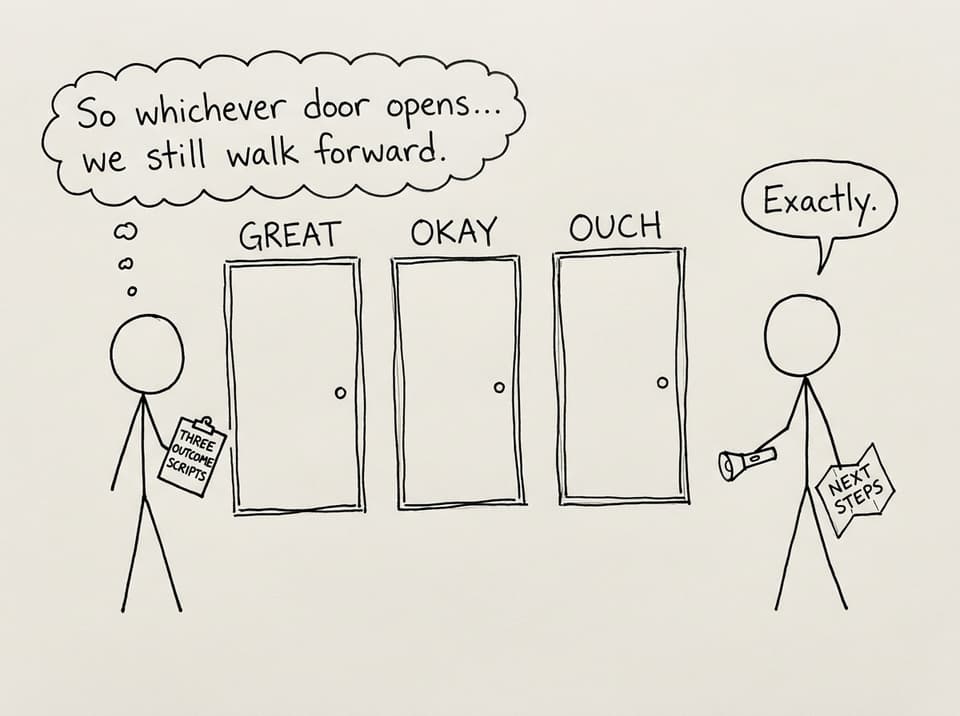
Closing: the IB result is a number, but your response is a lesson
On IB results day, parents don’t just witness a score. They teach a philosophy in real time: “You are more than outcomes, and we can build options from reality.”
If you’re an IB student reading this, share it with your parent and agree on the simple plan: one calm room, one supportive person, one comparison shield, three outcome scripts.
And if the next chapter includes retaking, rebuilding, or simply preparing more confidently for what comes next, make RevisionDojo your steady base: Questionbank, Study Notes, Flashcards, AI Chat, Grading tools, Predicted Papers, Mock Exams, Coursework Library, and Tutors -- all designed to turn emotion into momentum, and momentum into results.
