


Mitochondria get introduced like a fun fact: “powerhouse of the cell.” Then exam season arrives, and that phrase stops feeling cute.
Because in IB Biology, mitochondria aren’t a single-topic detail. They are the quiet engine behind respiration questions, membranes questions, endosymbiosis questions, data questions, and those Paper 2 prompts that ask you to explain with relentless precision. When you truly understand the function of mitochondria, a lot of the syllabus becomes less noisy.
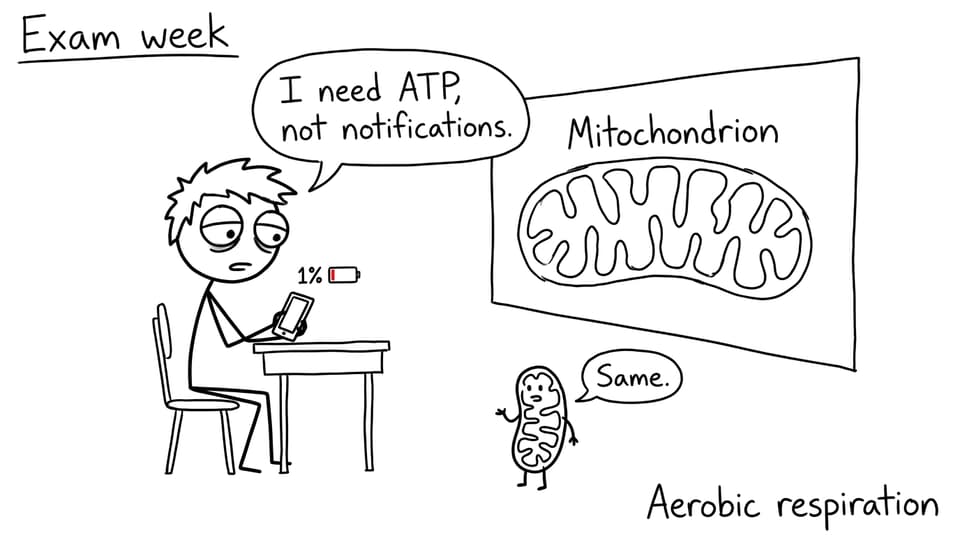
Quick mitochondria checklist (for IB Biology answers)
Keep this mini-plan in your head for IB Biology short answers and long responses:
-
State the main function: ATP production by aerobic respiration
-
Link structure to function: double membrane, cristae, matrix
-
Place each respiration stage in the right location
-
Add one “extra role” (apoptosis, heat, Ca²⁺ handling) if the marks suggest depth
-
Use the command term properly (describe vs explain)
If you want a broader exam strategy around this kind of foundational knowledge, pair this with How to Pass IB Biology SL Exams: Proven Study Strategy.
The primary function of mitochondria in IB Biology
The core function of mitochondria is ATP generation through aerobic respiration.
ATP (adenosine triphosphate) is the cell’s usable energy currency. In IB Biology, it’s almost never enough to say “ATP gives energy.” You should connect ATP to what it pays for, such as:
-
active transport across membranes
-
muscle contraction
-
biosynthesis (including protein synthesis)
-
DNA replication and cell division
In aerobic respiration, mitochondria host the high-yield stages that make far more ATP than anaerobic pathways. That’s why energy-demanding cells (muscle, neurons, sperm) typically contain many mitochondria.
To drill how the IB phrases these ideas, practice with topic-aligned questions like B2.2 Organelles and compartmentalization - IB Questionbank.
How mitochondria structure supports their function
In IB Biology, structure-function explanations are a common marking opportunity. Mitochondria are designed for controlled energy transfer, not just “making ATP.”
The key parts you must label and use
-
Outer membrane: boundary and transport interface
-
Inner membrane: location of electron transport chain and ATP synthase
-
Cristae: folds that increase inner membrane surface area
-
Intermembrane space: where the proton gradient builds
-
Matrix: enzymes for the link reaction and Krebs cycle
-
Mitochondrial DNA and ribosomes: supports limited protein synthesis and independent replication
If you want a clean, syllabus-aligned set of notes for this, use IB Biology Topic B2.2.4: Adaptations of the Mitochondrion for Production of ATP.
And when you’re revising organelles more broadly, Notes for A2.2.6 Eukaryote cell structure helps you keep mitochondria in context.
Where respiration stages happen (and why examiners care)
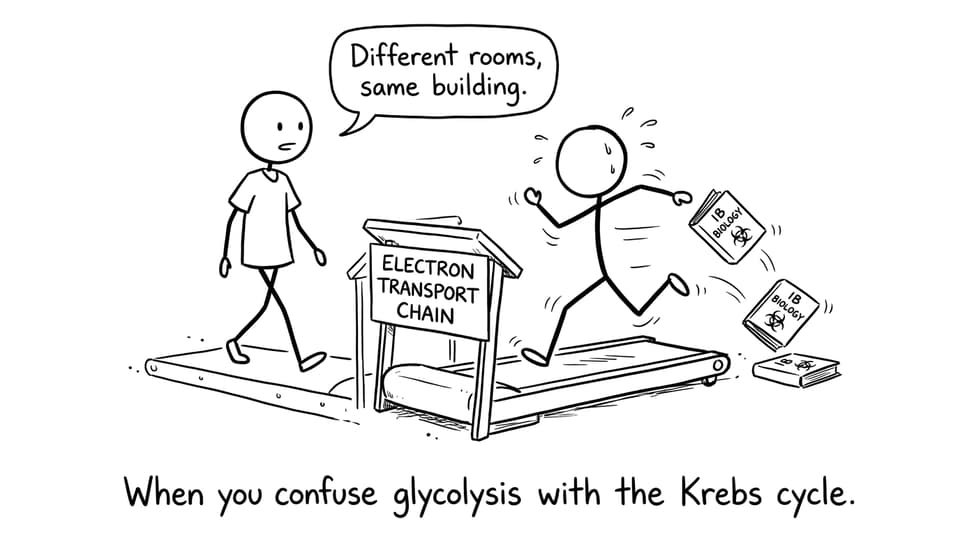
A frequent IB Biology mistake is mixing the stages of respiration or placing them in the wrong compartment.
-
Glycolysis happens in the cytoplasm (not inside mitochondria).
-
Link reaction and Krebs cycle occur in the matrix.
-
Electron transport chain and ATP synthase sit on the inner membrane.
-
The proton gradient builds in the intermembrane space.
Markers reward location because location is mechanism. If you can’t place the steps, you can’t truly explain the function of mitochondria.
For exam writing clarity, it helps to master instruction words. See How to Understand IB Biology Command Terms for Exam Success and How to Use IB Command Terms Effectively in Exam Responses.
Mitochondria do more than ATP
ATP production is the headline, but mitochondria also support cellular stability. In IB Biology, these “extra roles” can add depth in longer answers:
-
apoptosis (programmed cell death)
-
thermogenesis (heat production in certain tissues)
-
calcium ion (Ca²⁺) regulation
-
contributions to steroid synthesis in some cells
If you’re using RevisionDojo, this is where Study Notes plus Flashcards work well: one card for the main function, one card for “bonus roles,” and one card for “structure-function links.”
Mitochondria and endosymbiosis (easy marks if you’re ready)
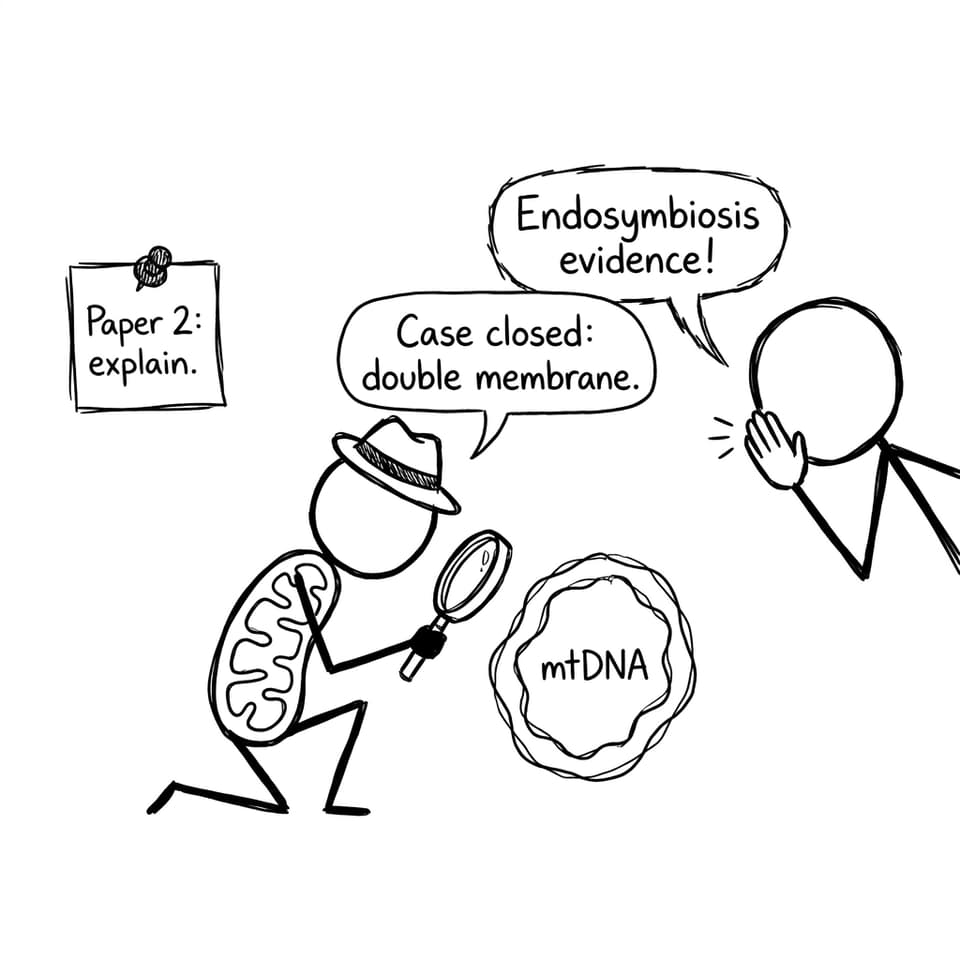
The endosymbiotic theory explains why mitochondria look partly like bacteria.
Evidence you can state in IB Biology includes:
-
circular DNA
-
70S ribosomes
-
binary fission-like replication
-
double membrane consistent with engulfment
For a focused explanation you can borrow into Paper 2 responses, use How Mitochondria and Chloroplasts Provide Evidence for Endosymbiosis. And for precise terminology, keep IB Biology Key Definitions open while you revise.
Bring mitochondria practice into your RevisionDojo routine
Knowing the function of mitochondria is one of those IB Biology upgrades that makes everything else feel more predictable. The next step is training it under exam conditions: mixed questions, short explanations, data interpretation, and fast correction.
Use IB Biology Resources to combine Questionbank practice with Study Notes, Flashcards, and AI Chat when you get stuck. Then tighten your answers with Grading tools, build timed sets with Mock Exams, and revise strategically with Predicted Papers (without guessing). If you’re also working on coursework, the Coursework Library and Tutors help you keep your IA strong while exam prep accelerates.
If mitochondria keep showing up in your IB Biology questions, take it as a hint: master the engine, and the rest of the cell starts to make sense.