This site uses cookie tracking technologies. Learn more in our Cookie Policy.
IB Biology: Reproductive Isolation and Speciation | RevisionDojo
Join 600k+ Students Already Crushing Their Exams
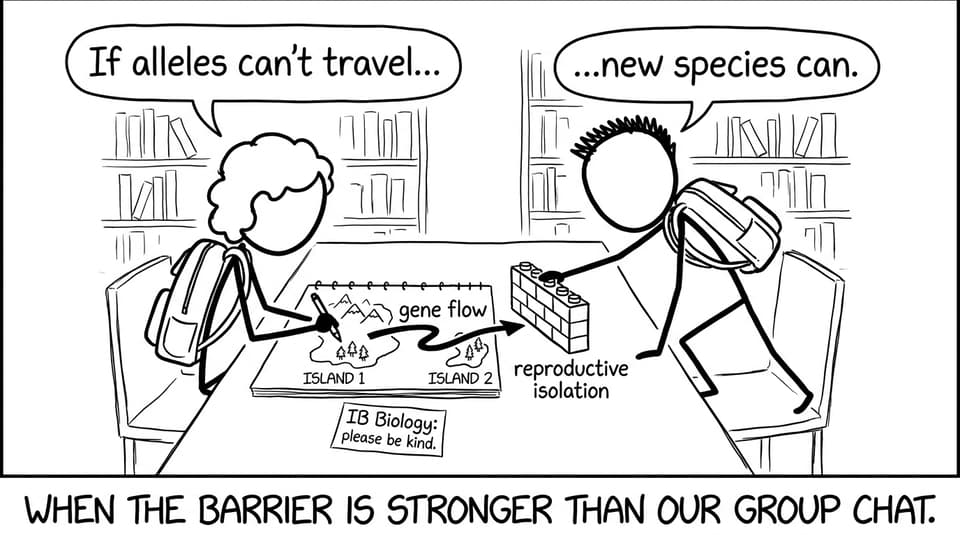
A quiet detail sits underneath almost every speciation question in IB Biology: evolution doesn’t just need difference. It needs separation. Not always a mountain range or an ocean, but a break in gene flow that lasts long enough for two populations to stop sharing the same genetic future. That break is reproductive isolation, and once you can see it, speciation questions start to feel less like memorising and more like following a story.
Two IB students block gene flow with a LEGO barrier
The exam checklist: what must happen for speciation?
When you’re revising IB Biology, it helps to treat speciation like a three-step chain:
Isolation happens (gene flow is reduced or stopped)
How isolation becomes new species: allopatric vs sympatric speciation
Most IB Biology questions then ask you to connect barriers to the two pathways.
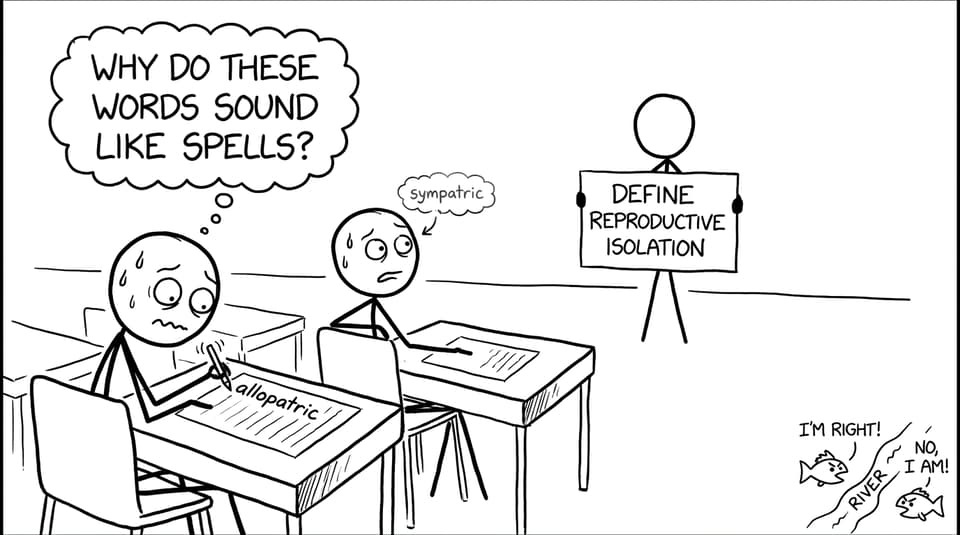
Allopatric speciation (geographic separation)
A physical barrier splits a population: river, mountain range, island formation, rising sea levels. With no gene flow, each side experiences its own selection pressures and drift. Over time, reproductive isolation evolves as a consequence of divergence.
Sympatric speciation (same geographic area)
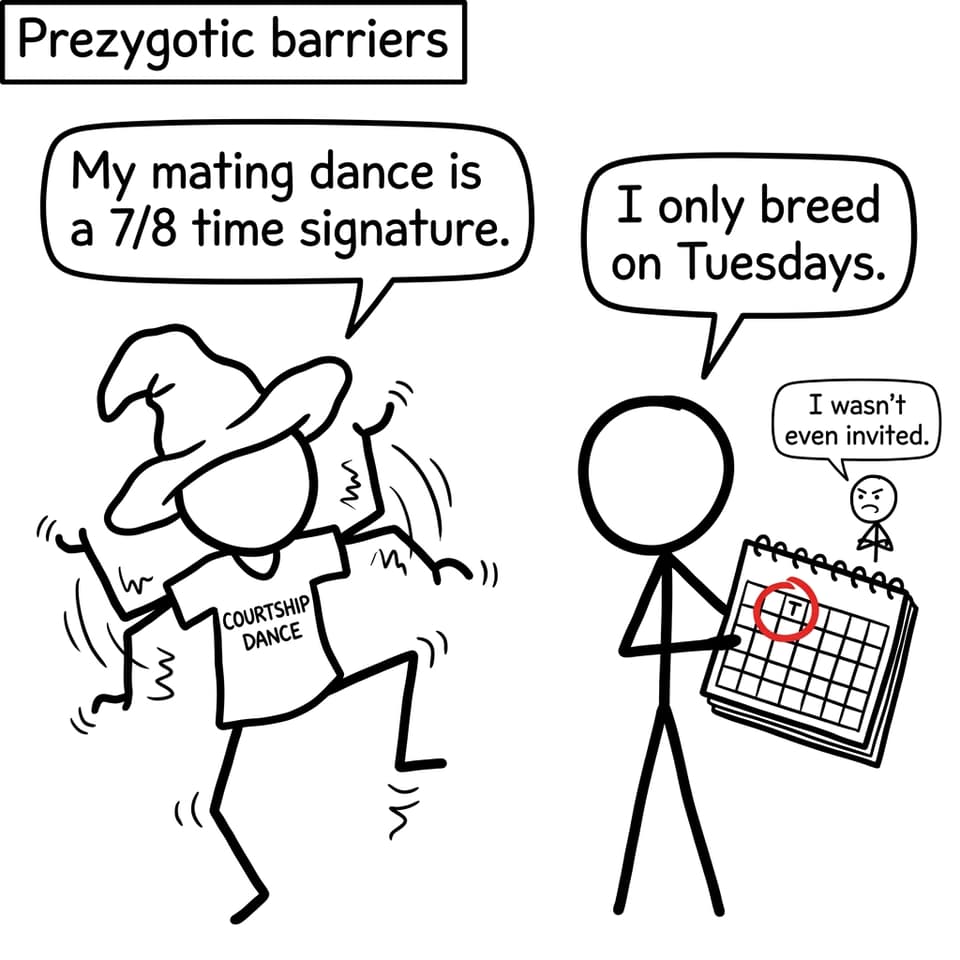
No physical barrier is required. Reproductive isolation can arise through:
Behavioral differences (assortative mating)
Ecological niche separation (feeding or habitat preferences)
Chromosomal changes in plants (polyploidy can create instant isolation)
You’ll see these ideas appear across A4.1, especially in HL-style prompts comparing mechanisms and evaluating which barrier is strongest.
Bringing it home: make IB Biology speciation feel inevitable
Speciation is what happens when a single population stops sharing the same set of choices. Reproductive isolation closes the gate on gene flow, and evolution does the rest--slowly, then all at once, until interbreeding is no longer possible.
If you want this topic to be automatic by exam day, use RevisionDojo as your loop: learn it in Study Notes, lock it in with Flashcards, stress-test it with the Questionbank, and polish your responses with AI Chat and Grading tools. That’s how IB Biology revision stops being hope and starts being control.