


A tiny clue hiding in plain sight
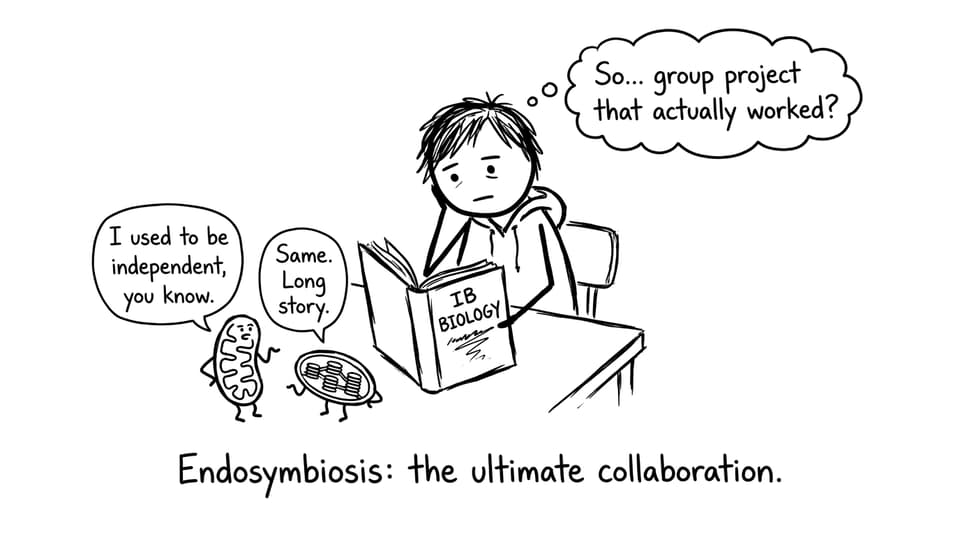
In IB Biology, endosymbiosis can feel like one of those topics you “get” until an exam question asks for evidence and your mind goes blank. The irony is that the evidence is literally sitting inside every eukaryotic cell you draw: mitochondria and chloroplasts.
The endosymbiosis theory is basically evolution’s quiet plot twist. A larger cell didn’t just defeat a smaller bacterium. It kept it. Over time, that partnership became so integrated that we now call the former bacterium an organelle. When you learn to spot the fingerprints of that history, IB Biology questions on cell origins start to feel predictable.
Quick exam checklist for IB Biology
When an IB Biology marker asks for evidence for endosymbiosis, aim for 3-5 clear points:
-
Circular DNA inside mitochondria and chloroplasts
-
70S ribosomes (bacterial-style)
-
Binary fission (independent division)
-
Double membranes consistent with engulfment
-
Biochemical and genetic similarities to bacteria (including gene transfer)
If you want the syllabus-mapped version, go straight to Origin of eukaryotic cells by endosymbiosis (HL) and its notes.
Circular DNA: the “old identity card”
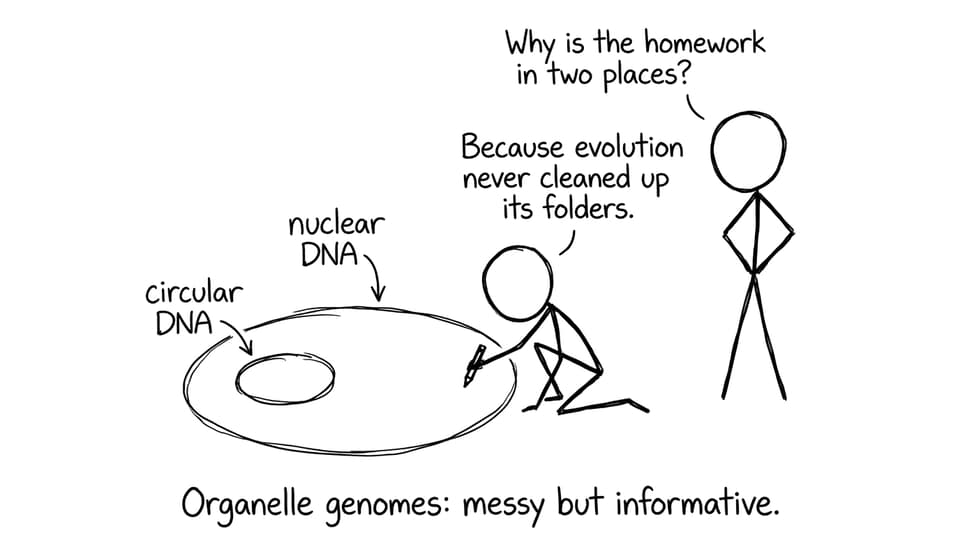
One of the cleanest pieces of IB Biology evidence is that both mitochondria and chloroplasts have their own circular DNA, separate from nuclear DNA. Circular genomes are typical of bacteria, not eukaryotic nuclei. It suggests these organelles once managed their own genetic instructions as independent organisms.
That detail also sets up a bigger idea you can mention in longer responses: over evolutionary time, some organelle genes moved into the nucleus (endosymbiotic gene transfer), which fits the story of long-term integration rather than a temporary infection.
70S ribosomes: a bacterial translation toolkit
In IB Biology, ribosomes are often tested because they’re easy to mark. Mitochondria and chloroplasts contain 70S ribosomes, like bacteria. Meanwhile, the cytoplasm of eukaryotic cells uses 80S ribosomes.
Translation machinery is not a superficial feature. If an organelle carries a bacterial-style ribosome, it implies a bacterial-style origin. It also explains why these organelles can synthesize some proteins internally rather than relying entirely on the cytoplasm.
To connect this to broader cell structure revision, see A2.2 Cell structure and the paired A2.2 notes.
Binary fission: division that looks suspiciously prokaryotic
Mitochondria and chloroplasts replicate by binary fission, the same basic division method used by bacteria. This matters for IB Biology because it shows these organelles are not built from scratch by the cell each time. They grow and split, like descendants.
If you want exam-style practice that targets these points, RevisionDojo’s B2.2 Organelles and compartmentalization questionbank is ideal for drilling “state two features” prompts.
Double membranes: a structural memory of engulfment
Both organelles have a double membrane. In endosymbiosis terms, that makes sense: the inner membrane aligns with the original bacterium’s membrane, while the outer membrane matches what you’d expect from engulfment by the host cell.
This is also a great place to show exam maturity: don’t just list “double membrane” in IB Biology answers. Add the implication: structure matches the mechanism described by the theory.
For related mitochondrion structure, Adaptations of the mitochondrion for ATP production helps you connect membranes to function.
Similarities to modern bacteria (and why that matters)
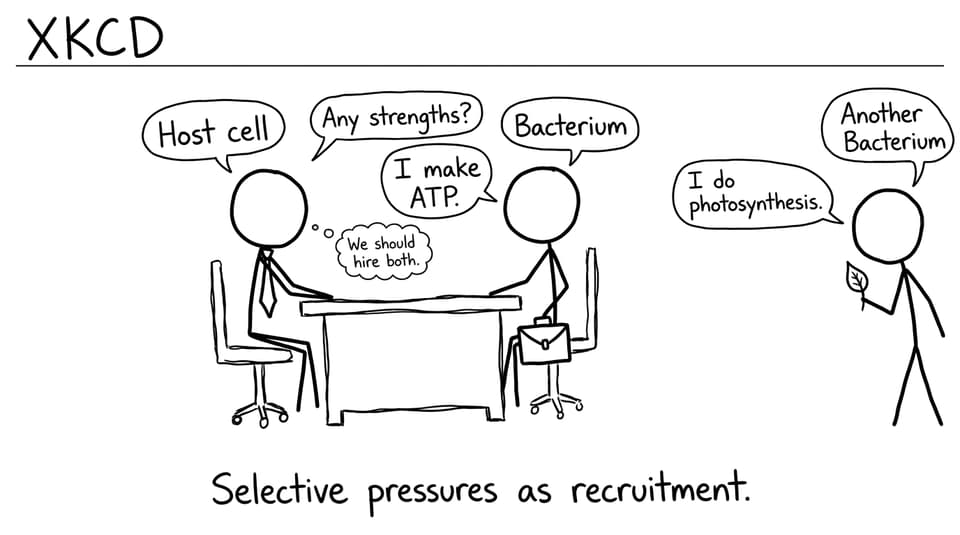
Chloroplasts share strong similarities with cyanobacteria, consistent with a photosynthetic bacterial ancestor. Mitochondria align with aerobic bacteria through key enzymes and membrane transport systems.
Zooming out, this fits a pattern you see across IB Biology: evolution leaves constraints and leftovers. Nature optimizes, but it rarely rebuilds from zero.
To tighten your terminology, use the IB Biology glossary and the wider Cell biology hub.
Bring it home with RevisionDojo
If your goal is to turn IB Biology knowledge into marks, treat endosymbiosis like a repeatable template: state the feature, compare it to bacteria, then explain the inference. On RevisionDojo, you can lock this in using the Questionbank for exam-style prompts, Study Notes for syllabus language, Flashcards for active recall, and AI Chat to check whether your explanations actually earn marks. When mocks get close, Predicted Papers, Mock Exams, and Grading tools help you practise under pressure, and the Tutors are there if you want feedback that’s specific and honest.
For IB Biology, endosymbiosis isn’t just a theory to memorize. It’s a story that left evidence behind; and your job in the exam is to point to it clearly.


