

If you have ever wondered why siblings can share the same parents but end up with wildly different traits, IB Biology quietly points to a simple moment of chaos: random orientation in metaphase I. It is not loud. It is not dramatic. Two chromosomes line up, the spindle waits, and the cell essentially flips a coin. But that tiny gamble is one of the biggest reasons sexual reproduction produces genetic variation.
What random orientation means in IB Biology
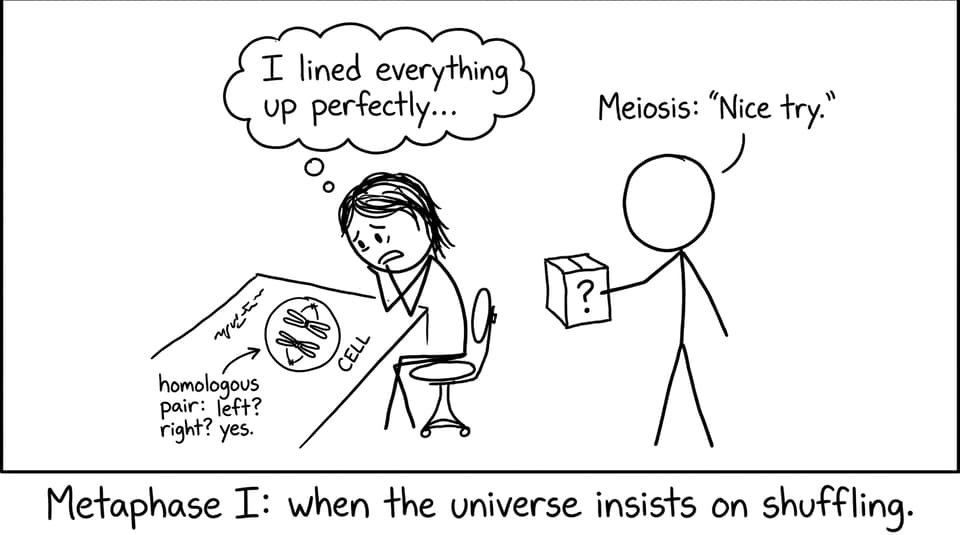
In IB Biology, meiosis is about two things at once: reducing chromosome number and generating diversity. During metaphase I, homologous chromosome pairs (bivalents) line up on the metaphase plate. Each pair has one maternal chromosome and one paternal chromosome.
Here is the key: the way each homologous pair faces the poles is random. There is no rule saying “maternal goes left” or “paternal goes right.” This is independent assortment in action.
For clear syllabus-aligned wording, pair this idea with RevisionDojo notes on Meiosis as a reduction division and Meiosis as a source of variation.
Quick checklist: how random orientation creates genetic variation
-
Homologous pairs line up at the equator in metaphase I
-
Each pair’s orientation is random (maternal vs paternal can face either pole)
-
In anaphase I, homologous chromosomes separate to opposite poles
-
Result: each gamete receives a different mix of maternal and paternal chromosomes
If you want practice that mirrors how this is tested, go straight to the 10.1 Meiosis Questionbank and the wider Cell and nuclear division Questionbank.
The math IB Biology expects you to know
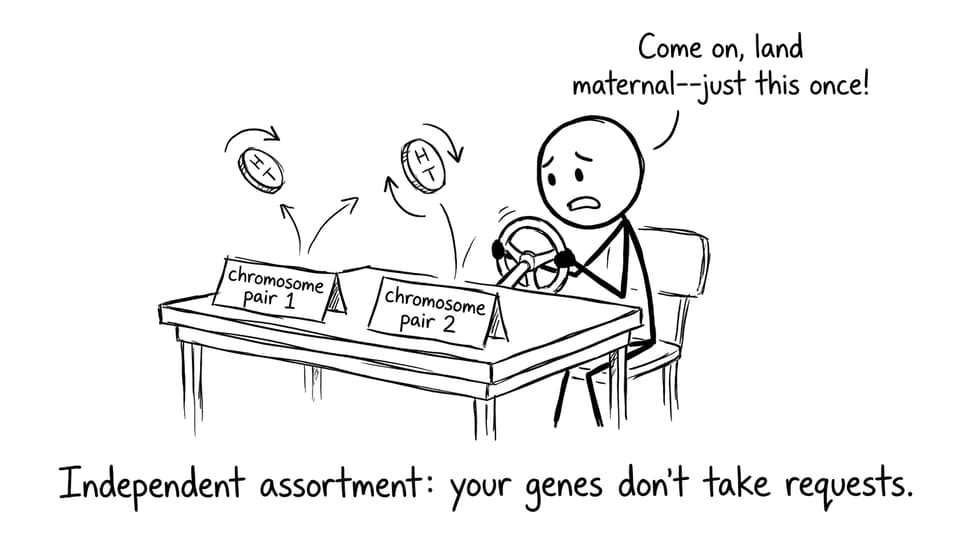
Random orientation matters because it reshuffles whole chromosomes. In humans, there are 23 homologous pairs. Each pair has two orientation options. That creates:
2^23 = 8,388,608 possible chromosome combinations in gametes.
That is before adding crossing over (which reshuffles segments within chromosomes). In IB Biology exam terms: random orientation = independent assortment, and crossing over = recombination.
To connect this to inheritance language, RevisionDojo’s post on How Mendel's Laws Explain Patterns of Inheritance is a clean bridge between meiosis behavior and genetic ratios.
Why examiners love this concept
Random orientation is easy to describe but hard to “handwave.” Examiners often want:
-
the stage named correctly (metaphase I, not metaphase II)
-
the objects named correctly (homologous pairs/bivalents, not sister chromatids)
-
the outcome linked to genetic variation and independent assortment
A strong sentence you can adapt: “In metaphase I, homologous pairs orient randomly at the equator, so maternal and paternal chromosomes segregate independently, producing genetically varied gametes.”
To sharpen accuracy around homologous pairing and segregation, use How Homologous Chromosomes Ensure Accurate Segregation During Meiosis.
Final takeaway for IB Biology revision
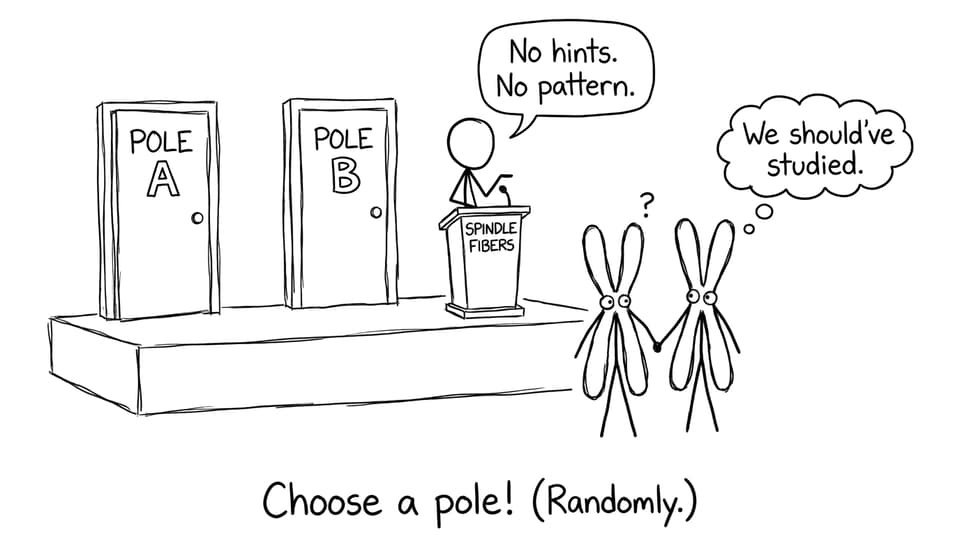
Random orientation during metaphase I is a quiet engine of genetic variation: it turns meiosis into a shuffle, not a copy. In IB Biology, that single idea shows up everywhere -- from dihybrid crosses to evolution essays -- because it explains why gametes are never the same twice.
If you want to lock it in quickly, use RevisionDojo’s IB Biology Resources hub plus the Questionbank to practice exam-style prompts with instant feedback. Then reinforce with Study Notes, Flashcards, AI Chat, and Mock Exams until “random orientation in metaphase I” becomes a sentence you can write calmly under time pressure.