
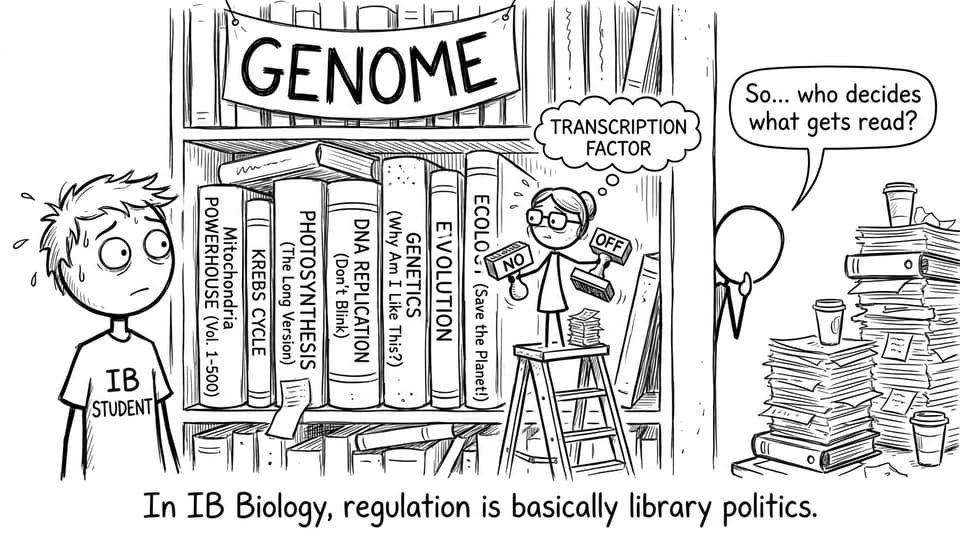
If you’ve ever wondered how two cells with the same DNA can end up as a neuron and a muscle cell, you’re already thinking like an IB Biology examiner. The trick is that DNA is not a constant “play” running on every stage at once. It’s more like a script library, and the cell is always choosing which pages to read.
Those choices begin at transcription. And the quiet decision-makers are transcription factors: proteins that bind DNA and regulate whether a gene is transcribed, and how fast.
IB Biology quick checklist: what to say in exam answers
When you see “explain how gene expression is regulated,” build your IB Biology paragraph around these points:
-
Transcription factors bind specific DNA sequences (promoters, enhancers, silencers).
-
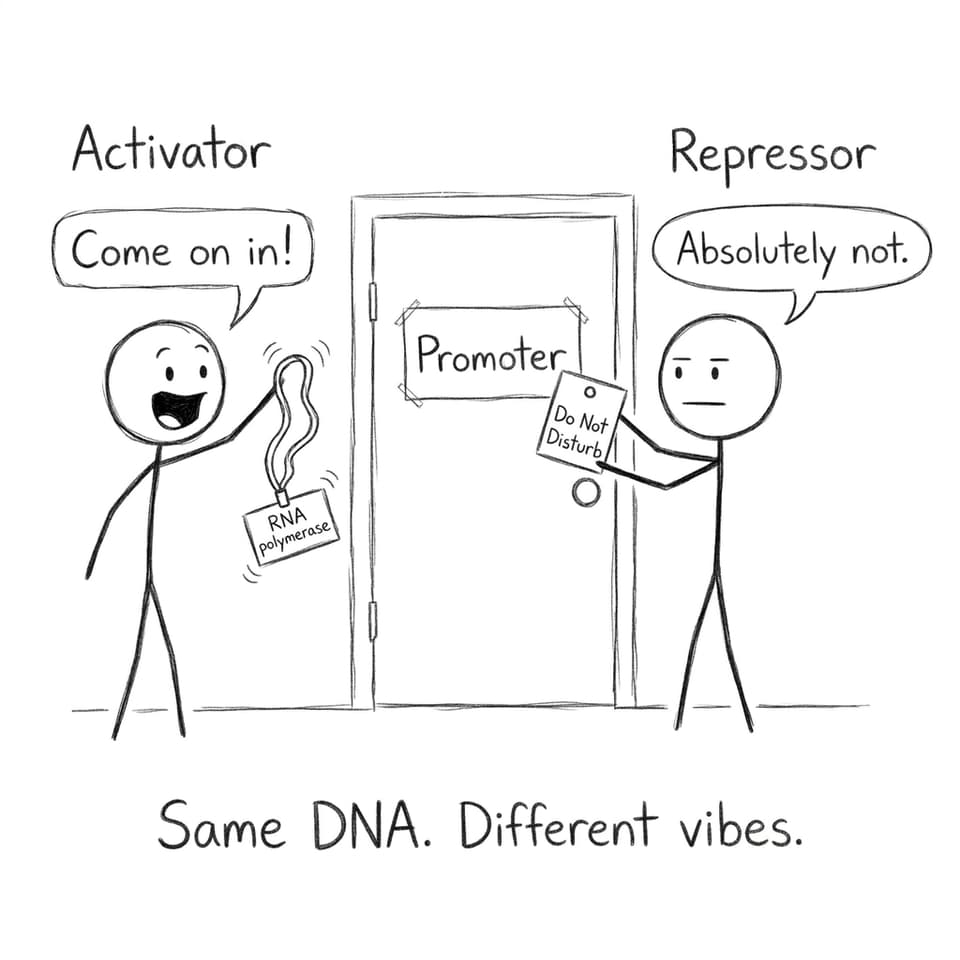
Activators increase transcription (often by recruiting RNA polymerase and opening chromatin).
-
Repressors decrease transcription (by blocking binding or tightening chromatin).
-
DNA-binding is sequence-specific (response elements/motifs).
-
Multiple transcription factors can work together (combinatorial control).
For syllabus-aligned details, anchor your revision with 7.2 Transcription and gene expression notes.
How transcription factors regulate gene expression
In IB Biology, transcription factors are defined by what they do: they bind regulatory DNA and influence transcription. The key is location.
A promoter sits near the start of a gene and is where RNA polymerase (and general transcription factors) assemble to begin transcription. Enhancers and silencers are regulatory regions that can be further away, but DNA looping brings bound proteins into contact with the transcription machinery.
If you want a deeper mechanism for how proteins “read” DNA, use How transcription factors bind DNA to connect motifs, response elements, and DNA-binding domains.
Activators: making transcription more likely
An activator transcription factor increases transcription by helping the cell build a working initiation complex. In exam language, activators may:
-
recruit RNA polymerase via mediator/co-activators
-
bend or loop DNA to bring enhancer-bound proteins toward the promoter
-
recruit chromatin-remodelling proteins to expose promoter DNA
A clean way to revise this is the focused walkthrough in How activators and repressors control genes.
Repressors: reducing or blocking transcription
Repressors lower transcription rates. Sometimes it’s direct: they block access to the promoter or compete with activators for the same binding site. Other times it’s indirect: they recruit proteins that condense chromatin so RNA polymerase cannot effectively bind.
That chromatin piece is easy to forget under pressure, so keep a separate mental note for it using How chromatin packing controls gene expression.
Specificity and cell specialization: same genome, different outcomes
A transcription factor doesn’t bind “anywhere.” It binds specific DNA motifs. That sequence specificity is why hormones, nutrients, or stress signals can switch on a particular set of genes rather than everything at once.
In multicellular organisms, different cell types maintain different transcription factor patterns. That’s the heart of differentiation in IB Biology: stable differences in regulatory proteins create stable differences in gene expression.
To connect regulation to signals, read Internal and external control of gene expression and compare hormonal vs environmental triggers.
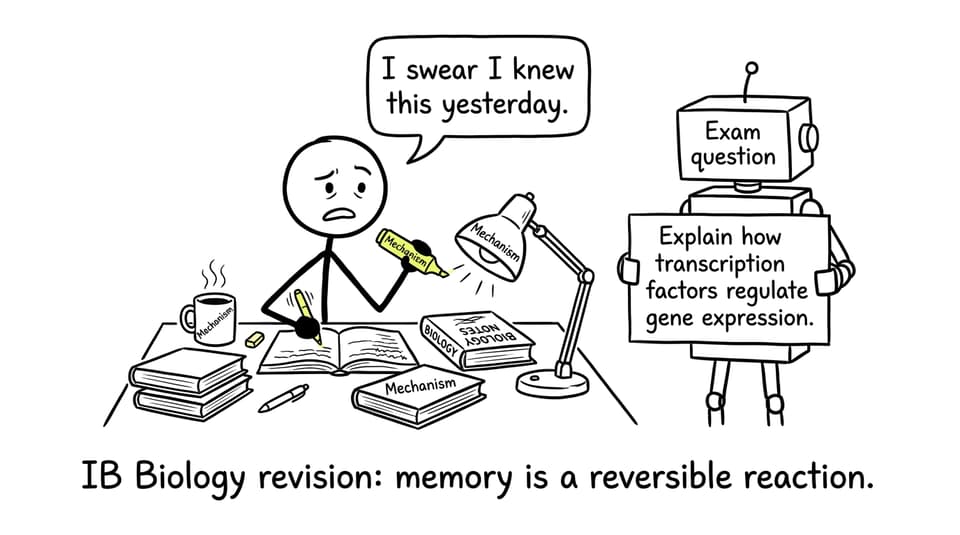
Exam practice: turn understanding into marks
Knowing the story is step one. Step two is writing it fast.
-
Use the IB Biology Gene Expression (HL) hub to keep every sub-skill in one place.
-
Nail definitions with D2.2.1 Gene expression notes.
-
For regulation-by-proteins questions, drill the exact wording in D2.2.2 Regulation of transcription by proteins notes.
-
Then pressure-test your phrasing with the Cell Biology Questionbank.
Bring it home: study gene regulation the smart way
Transcription factors regulate gene expression by binding DNA regulatory regions and nudging transcription up or down through activators, repressors, and chromatin changes. That idea shows up everywhere in IB Biology, from differentiation to signalling to epigenetics.
If you want this to feel simpler under exam time, make RevisionDojo your home base: syllabus-aligned Study Notes, Flashcards, AI Chat, Grading tools, Predicted Papers, Mock Exams, a Coursework Library, Tutors, and a Questionbank built to turn understanding into marks. Start at the IB Biology resources page and build momentum today.