



The night before a DT deadline, most students don’t panic because they forgot a definition. They panic because they’re not sure their thinking holds up. Did I justify that decision? Did I evaluate honestly? Did I iterate enough?
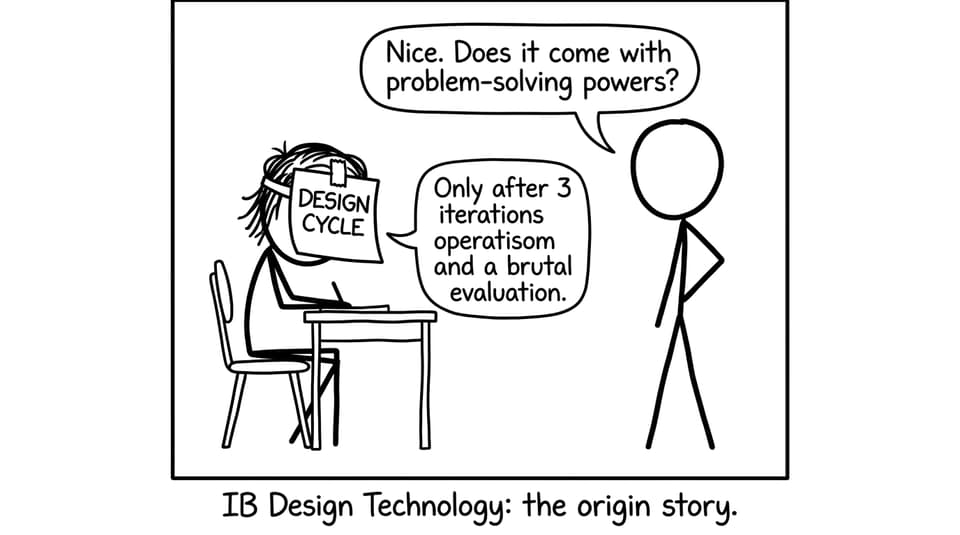
That’s the quiet truth about IB Design Technology: the single biggest advantage isn’t “being creative” or “building cool things.” The biggest advantage of IB Design Technology is that it trains you to think like a problem-solver under constraints, with evidence, and with reflection. That skill survives the exam hall. It survives university. It survives whatever you do next.
The biggest advantage of IB Design Technology
In IB Design Technology, you don’t just learn content. You learn a repeatable way to make decisions:
-
Define a real problem (not a vague topic)
-
Analyse constraints (time, materials, sustainability, users)
-
Generate options (and compare trade-offs)
-
Justify choices with evidence
-
Evaluate outcomes honestly
-
Improve through iteration
This is transferable thinking. And it’s why IB Design Technology can make you stronger in other IB subjects too: it forces clarity, structure, and judgement.
If you want a home base for the full course, keep the IB Design Technology Resources hub open while you revise.
Why this matters more than memorising content
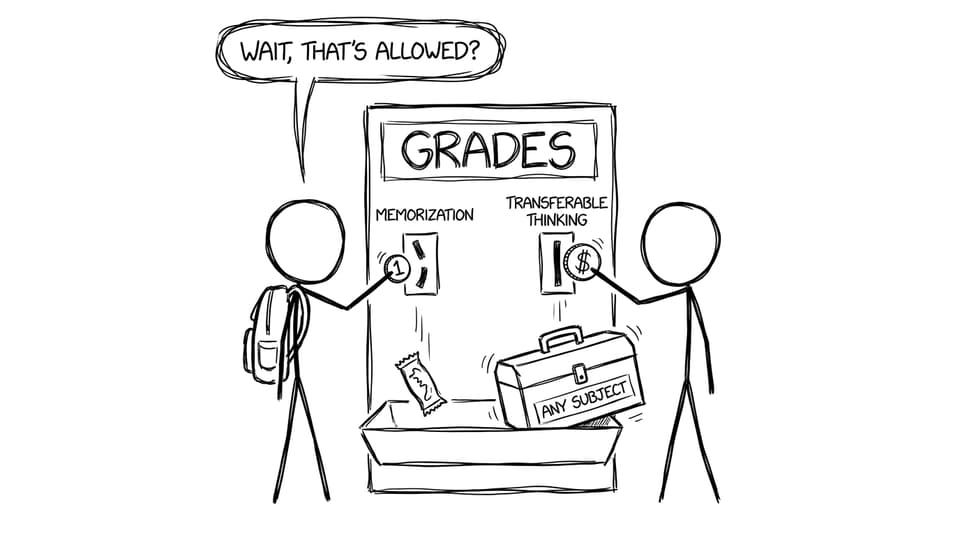
Some subjects reward how much you can hold in your head at once. IB Design Technology rewards how well you can use what you know.
That shift matters in exams because DT questions often ask you to apply concepts to unfamiliar products, users, and contexts. If your revision is only recall, your answers stay generic. If your revision is problem-solving, your answers become specific, justified, and easy to award marks to.
A practical example: learning ergonomics is useful. But learning how to use ergonomics to defend a design choice under constraints is what gets you paid in marks.
To sharpen that skill with real topic practice, RevisionDojo’s Design Technology Questionbank is built for repeated decision-making, not one-off guessing.
The Design Project (IA) is a training ground for independence
The IA is where IB Design Technology becomes personal. You learn how to run a long project without someone rescuing you every week.
You practice:
-
Breaking a messy problem into manageable steps
-
Documenting progress and setbacks
-
Responding to feedback without losing momentum
-
Adapting when prototypes fail
That independence is exactly what university courses look for, especially in engineering, product design, business, and even humanities research.
RevisionDojo supports this side of IB Design Technology too: the IB Design Technology (First Exam 2027) Exemplars help you see what strong evidence, iteration, and evaluation actually look like, and the Coursework Library reduces the uncertainty that causes procrastination.
How to turn this advantage into exam marks (fast)
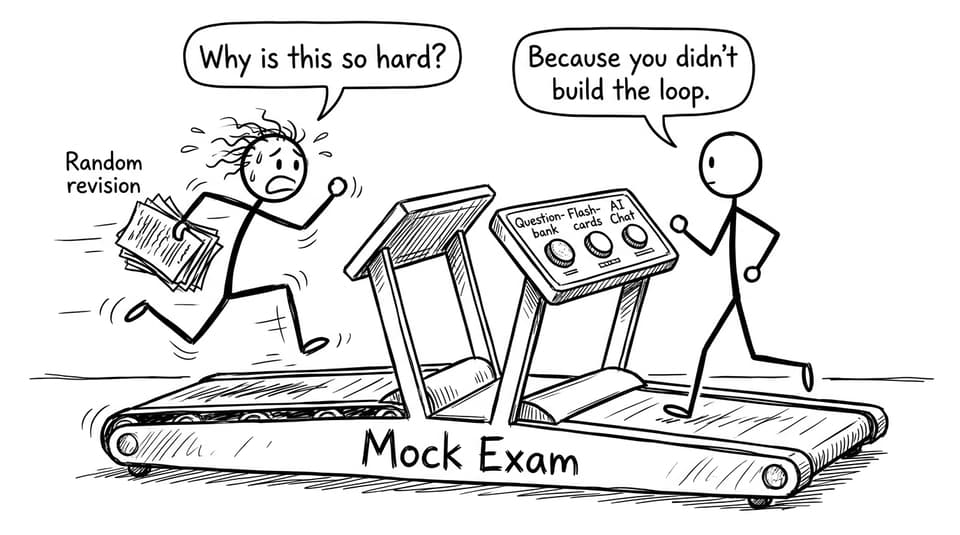
Here’s a simple checklist you can run weekly in IB Design Technology exam prep:
-
Learn one concept using Study Notes
-
Lock recall with Flashcards (daily, short sessions)
-
Apply it with targeted Questionbank sets
-
Fix weak explanations using AI Chat in markscheme-style language
-
Simulate pressure with Predicted Papers and Mock Exams
For topic-specific depth, it helps to revise using real syllabus pages like 1.1a Anthropometrics Notes or 4.1 Properties of Materials Notes, then immediately practise what those ideas do in exam questions.
If you want a DT-focused routine, use Best Study Strategies for IB Design Technology Students as a weekly template.
Closing: the advantage you keep
The biggest advantage of IB Design Technology is that it teaches you how to think when the answer isn’t obvious. Not just learning, but deciding. Not just building, but evaluating. Not just finishing, but improving.
If you want that advantage to show up as marks, make the loop simple: learn with RevisionDojo Study Notes, retain with Flashcards, apply with the Questionbank, get unstuck with AI Chat, and rehearse pressure with Predicted Papers, Mock Exams, and Grading tools. Start at the IB Design Technology Resources hub and build from there, oneone well-justified decision at a time.