



A language course can look deceptively simple from the outside. There are characters to learn, conversations to practise, and perhaps a few cultural topics to discuss. Then the timetable says “IB Mandarin B,” and a reasonable parent begins wondering how difficult the subject really is.
So, what is IB Mandarin B like in practice? It is a Group 2 language-acquisition course for students who already have some experience of Mandarin. Students develop reading, writing, listening, and speaking while exploring cultural and global issues. It is not a beginner course, nor is it simply a memory test. Success depends on communicating clearly, selecting language for different situations, and practising consistently across all four skills.
That may sound demanding. It is. But the course is also structured, predictable, and manageable when the student is placed at the right level and works steadily.
IB Mandarin B at a glance
Here is the short version for parents and students:
- Mandarin B assumes previous experience with the language.
- It is available at Standard Level (SL) and Higher Level (HL).
- Both levels develop reading, writing, listening, and speaking.
- Teaching is organized around five prescribed themes.
- Assessment includes a writing paper, listening and reading comprehension, and an individual oral.
- HL requires greater linguistic complexity and the study of two literary works originally written in the target language.
- Regular exposure is more effective than occasional, intensive revision.
Families who want the broader subject context can start with this complete introduction to IB Chinese B.
What students actually study
IB Mandarin B is less like memorizing a phrasebook and more like learning to use Mandarin as a tool for thought. Vocabulary and grammar matter, but they are applied to meaningful questions about people, communities, technology, culture, and the world.
The current course is organized around five prescribed themes:
- Identities
- Experiences
- Human ingenuity
- Social organization
- Sharing the planet
A student might discuss lifestyle choices under identities, travel under experiences, digital technology under human ingenuity, education under social organization, or environmental responsibility under sharing the planet. Schools choose specific topics and materials within this framework, so classroom examples vary.
This thematic structure is important because students do not revise isolated vocabulary lists and then forget them. They repeatedly encounter language in reading passages, audio recordings, discussions, and written tasks. RevisionDojo's guide to the five core themes of IB Chinese B shows how those categories connect to practical study.
What the lessons feel like
A well-balanced Mandarin B lesson may move between several kinds of work. Students could read an article, identify its argument, discuss the cultural context, collect useful expressions, and then produce a short response in an appropriate format.
Across a typical term, students can expect to:
- read articles, messages, blogs, interviews, reports, or literary material;
- listen for main ideas, supporting details, attitude, and purpose;
- write for different audiences and purposes;
- discuss social and cultural issues in Mandarin;
- expand theme-specific vocabulary;
- improve grammar, sentence control, and character accuracy;
- prepare spontaneous and structured oral responses.
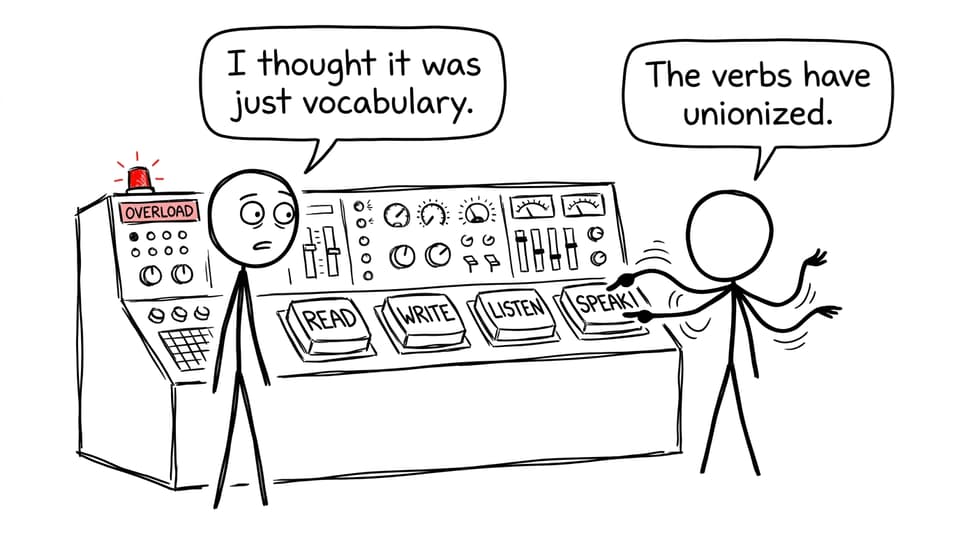
The difficulty is often uneven. A student may recognize characters quickly but struggle to speak without preparation. Another may converse confidently yet lose marks because written responses lack organization or the expected text-type conventions. That unevenness is normal. Mandarin B measures several connected abilities, so progress rarely appears everywhere at once.
The course develops more than vocabulary. It also builds the communication, interpretation, cultural awareness, and adaptability described in RevisionDojo's overview of skills developed through IB Chinese B.
How IB Mandarin B is assessed
Under the assessment model currently used for examinations before the first assessment of the revised 2029 course, the final result is divided into three components.
| Assessment component | What the student does | Weighting |
|---|---|---|
| Paper 1 | Completes one writing task from a choice of prompts | 25% |
| Paper 2 | Answers listening and reading comprehension questions | 50% |
| Individual oral | Presents and discusses a stimulus, then continues a broader conversation | 25% |
Paper 1 tests more than grammatical accuracy. Students must address the task, communicate a developed message, and choose language and conventions suited to the intended audience and text type. The IB Chinese B Paper 1 writing guide explains how those decisions shape a response.
Paper 2 combines receptive skills. Students need to understand the overall meaning of spoken and written material while also locating details, interpreting context, and following changes in viewpoint. Preparation therefore requires genuine listening and reading practice, not vocabulary recognition alone. Students can use these Paper 2 listening and reading strategies to make that practice more deliberate.
The individual oral assesses speaking and interaction. At SL, it begins from a visual stimulus connected to a course theme. At HL, it begins from an extract taken from one of the literary works studied. In both cases, memorizing a speech is not enough. The student must respond to questions, develop ideas, and sustain communication.
Students sitting examinations from 2029 onward should check the revised Language B guide with their school because the IB has published an updated course for first assessment in 2029.
Mandarin B SL versus HL
The most important distinction is not that HL covers five themes while SL covers fewer. Both levels use the same five themes and the same overall assessment weightings. The difference lies in depth, linguistic demand, teaching time, and the nature of certain tasks.
| Feature | Standard Level | Higher Level |
|---|---|---|
| Recommended teaching time | 150 hours | 240 hours |
| Language expectation | Clear, effective communication across familiar and unfamiliar contexts | Wider vocabulary, greater complexity, and more nuanced communication |
| Literary study | No required study of two literary works | Two works originally written in the target language are required |
| Oral stimulus | A visual stimulus | An extract from a studied literary work |
| Overall fit | Students seeking a substantial language course within a balanced Diploma | Students with stronger preparation, interest, and capacity for sustained language study |
HL is not simply SL with additional vocabulary. Students must handle more complex texts, develop ideas further, and engage with literature. That changes the intellectual character of the course.
For families comparing IB HL and SL subjects, the right question is not “Which level looks better?” It is “Which level matches this student's current language profile, Diploma workload, and future plans?” RevisionDojo's detailed Chinese B SL versus HL comparison can help structure that conversation.
How difficult is Mandarin B?
Mandarin B can be challenging because language skills accumulate slowly. A missed week is rarely disastrous, but months of passive study create gaps that become visible when a student must listen, write, or speak under pressure.
Difficulty also depends heavily on the student's starting point. Language B is intended for learners with previous experience, but the IB does not define one universal number of prior study years that fits every student. Educational background, home language exposure, school placement policies, and actual proficiency all matter. Parents should ask the school how it determined the student's placement rather than relying on a simple beginner, intermediate, or fluent label.
Warning signs usually concern study habits rather than intelligence. A student may be at risk of falling behind if they:
- understand class content but rarely produce Mandarin independently;
- revise vocabulary without using it in sentences;
- avoid listening because it feels uncomfortable;
- write without reviewing teacher feedback;
- postpone oral practice until the assessment approaches;
- practise only their strongest skill.
The encouraging part is that these are adjustable behaviours. A short, balanced routine can change the direction of the course long before examination season.
What effective Mandarin revision looks like
The best IB revision tips for Mandarin are not dramatic. They are repeatable.
A practical week might include brief vocabulary retrieval on several days, one focused listening activity, one reading task, a short written response, and one recorded oral answer. The student should keep an error log separating vocabulary, grammar, comprehension, task interpretation, and timing. That makes each mistake useful.
Vocabulary should also be organized by theme and used actively. A flashcard can establish recognition, but the student should then place the expression in a sentence, say it aloud, and look for it in a text. This is why flashcards and practice questions serve different revision purposes.
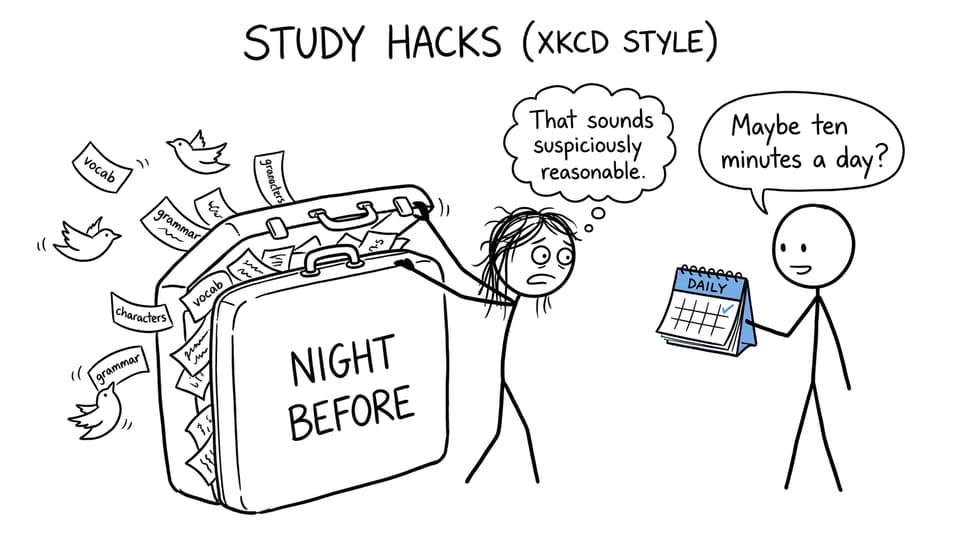
Parents do not need to speak Mandarin to support this process. Ask concrete questions: “Which skill are you practising today?” “What feedback are you applying?” “Can you explain why that answer was wrong?” These questions focus on habits rather than surveillance.
See what Mandarin B support looks like
Uncertainty feels larger when a parent cannot see the work. RevisionDojo makes the course more visible.
Families can preview the IB Chinese B resource hub, open the syllabus-aligned Mandarin B Study Notes, and inspect Paper 1 Flashcards. Topic pages such as Language and Identity bring notes, vocabulary practice, and exam-style questions together.
That preview matters. A parent can see whether support is structured around the actual course, while a student can move from explanation to recall and then application. RevisionDojo's Questionbank, Study Notes, Flashcards, AI Chat, and grading tools support everyday learning; Predicted Papers and Mock Exams help with timed preparation. The Coursework Library and Tutors provide further guidance where appropriate.
A reassuring way to view the course
IB Mandarin B is not easy, but it is understandable. Students are learning to communicate across four skills, within five themes, through three assessment components. SL asks for substantial language development; HL adds greater depth, complexity, and literary study.
For parents, the most useful response is not to manage every character learned. It is to help the student protect a steady routine, seek feedback, and practise the skills they would rather avoid. For students, the next step is equally concrete: open RevisionDojo's Mandarin B notes, try a set of flashcards, and answer a few practice questions. Once the course becomes visible, it usually becomes less intimidating too.