
You walk into the exam thinking you’re prepared. Then you see three prompts. Three text types. One clock. And suddenly your brain starts negotiating: What if I pick the “wrong” one? What if I forget the format? What if my characters look like they were written on a bus?
This is why Paper 1 feels heavier than it is. Not because it’s impossible, but because it asks you to make decisions quickly, and decision fatigue is real.
The upside is that IB Chinese B Paper 1 is one of the most trainable tasks in IB Languages. The exam is consistent: fixed timing, fixed criteria, familiar text types, and themes you already know. If you prepare like it’s a skill (not a mystery), your writing becomes calmer, cleaner, and easier to mark.
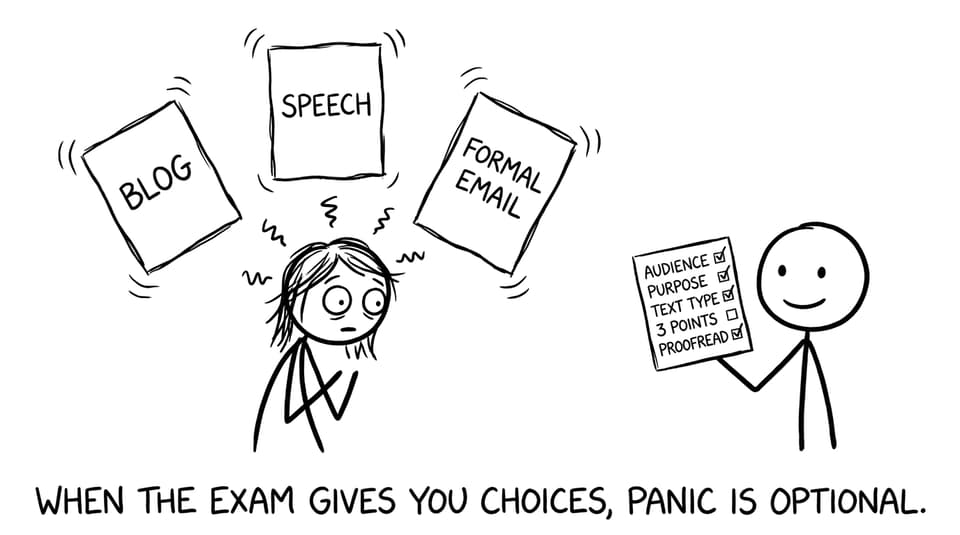
Quick checklist for IB Chinese B Paper 1
Use this as your “before I write” routine in IB Languages:
-
Confirm SL vs HL timing: SL 1h 15m, HL 1h 30m.
-
Choose one task from three prompts.
-
Identify: text type + audience + purpose + theme.
-
Plan 3 body points (each with an example).
-
Add connectors to show logic.
-
Save 7-10 minutes to proofread characters, grammar, and register.
If you want a clear overview of the broader assessment setup across the course, keep this nearby: A Comprehensive Guide to the IB Language B Paper Format.
What IB Chinese B Paper 1 actually is (and why it’s predictable)
Paper 1 is the writing task in IB Chinese B. You choose one prompt from three options and produce a full written text in Chinese, following the required text-type conventions.
Each prompt is tied to one of the five prescribed themes:
-
Identities
-
Experiences
-
Human Ingenuity
-
Social Organization
-
Sharing the Planet
If those themes still feel fuzzy, review them in one place: The Five Core Themes of IB Chinese B Explained. In IB Languages, themes are not decoration. They’re the content engine.
For targeted Chinese B support (questions, vocabulary practice, and tools), start here: IB Chinese B Resources.
The three things examiners reward (and how to write for them)
Paper 1 is marked using three criteria. If you treat them like a checklist, your writing becomes easier to control under pressure.
Language (accuracy + range)
This is where grammar, vocabulary, sentence variety, and character accuracy live. The trap in IB Languages is thinking “range” means “rare words.” It usually means:
-
correct verb and time markers
-
controlled complex sentences (because, so, although, not only, but also)
-
precise topic vocabulary
-
fewer repeated basic words
You can sharpen this quickly by building spaced review sets with Study Notes and turning recurring mistakes into Flashcards on RevisionDojo.
Message (relevance + development)
This is the quiet score booster. Examiners reward writing that stays on-task and expands ideas clearly. A strong paragraph often follows:
-
point
-
reason
-
example
-
consequence
That structure is simple, but it consistently lifts performance in IB Languages.
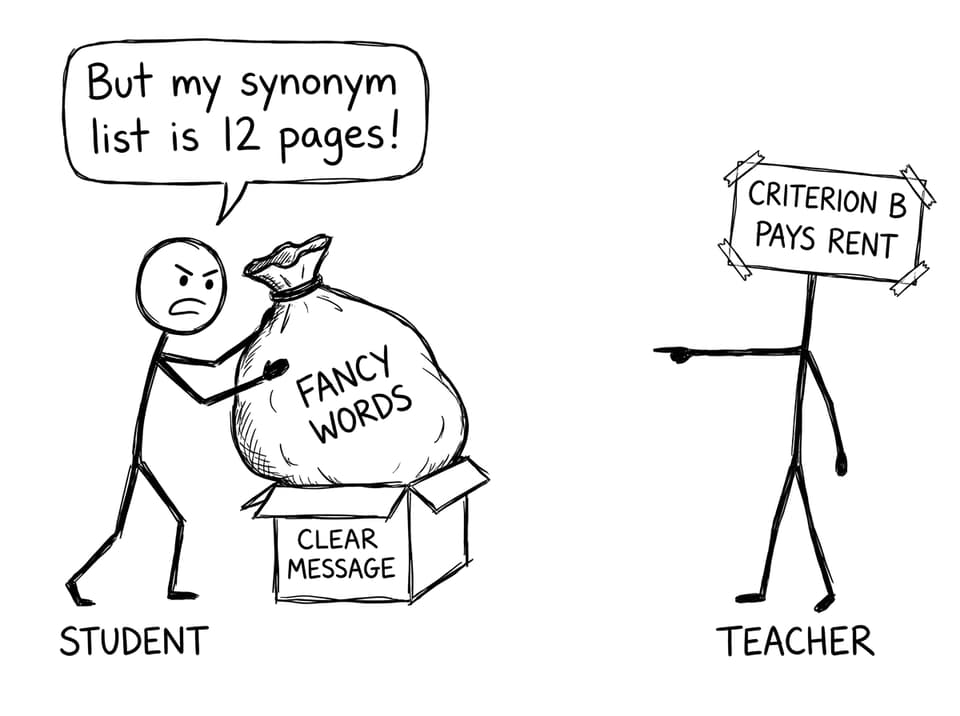
Conceptual understanding (text type + register + context)
This is where many students drop easy marks: the content might be good, but the format is wrong.
Conceptual understanding means you “sound like the real thing”:
-
A diary entry has reflection and personal voice.
-
A formal email has proper greeting, purpose, polite closing.
-
A speech addresses an audience and persuades.
For an examiner-style breakdown of criteria, bookmark: Notes for Paper 1 (writing) criteria 写作评分标准.
Master the text types without memorising templates
In IB Languages, templates can help you start, but they can also trap you into sounding generic. A better approach is to master “bones” (the required conventions) and keep your language flexible.
Diary entry
-
date at the top
-
informal register
-
feelings + reflection (“I realised…”, “I regretted…”, “What surprised me was…”)
Blog post / article
-
title
-
engaging hook
-
short sections with clear paragraph goals
-
a closing that invites action or reflection
For how blogs work as a text type, this is a useful reference even if it’s not Chinese-specific: Notes for Blogs, diaries & personal letters.
Formal letter / email
-
correct greeting and closing
-
polite phrasing
-
clear purpose early
-
structured requests or recommendations
Speech
-
greet your audience
-
persuasive structure (problem, impact, solution)
-
rhetorical questions, repetition, a call to action
If you want more guidance on avoiding the classic format errors, read: How to Avoid Common Mistakes in Language B Writing.
A simple planning method that prevents going off-topic
Most Paper 1 problems start before the first sentence.
Try this 90-second planning grid:
-
Audience: Who am I writing to?
-
Purpose: To persuade, inform, reflect, complain, invite?
-
Theme: Which theme is this really testing?
-
3 points: Three body paragraphs, each with one example.
-
6 phrases: Connectors + two topic-specific expressions you trust.
Then write.
If you want more step-by-step writing process advice, this is directly aligned to Chinese B: Writing Strategies for IB Chinese B: From Planning to Proofreading.
Timing: how to finish strong (even when it feels fast)
Time pressure is the real opponent in IB Languages writing exams. You don’t beat it by writing faster. You beat it by writing with fewer reversals.
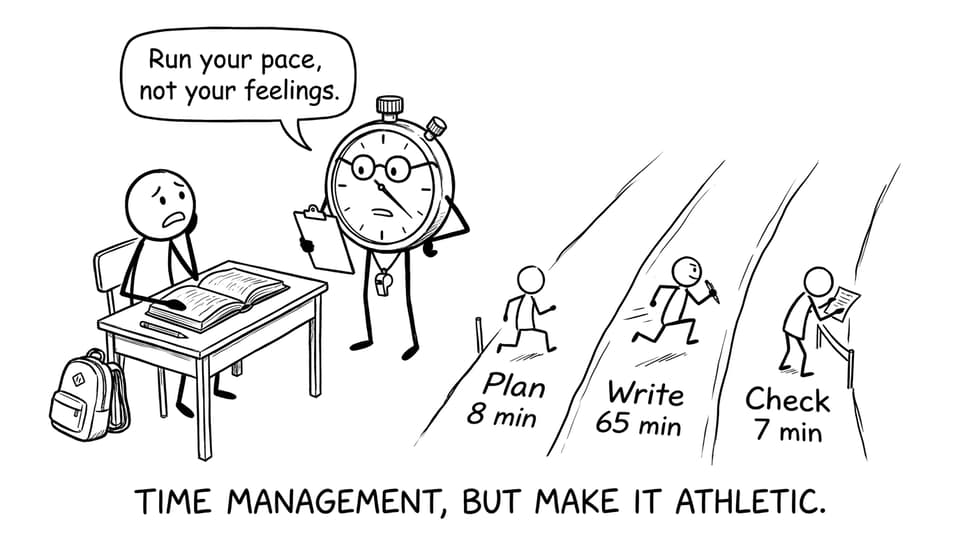
A pacing model that works:
-
Plan: 8-10 minutes
-
Write: 60-65 minutes
-
Check: 7-10 minutes
The final check is where you protect marks: fix repeated character mistakes, inconsistent time markers, missing polite forms, and awkward register shifts.
To practice this realistically, RevisionDojo’s Mock Exams and Predicted Papers help you train pacing without guessing what “exam conditions” really feel like. Pair that with the Grading tools (including the Chinese B Paper 1 rubric grader) to get criteria-aligned feedback quickly: IB Chinese B Paper 1 30 Marker Grader.
Practice the right way: build a weekly Paper 1 loop
You improve fastest in IB Languages when practice includes feedback and repetition.
A simple weekly loop:
-
Task 1 (timed): choose one prompt, write under full timing.
-
Feedback: use RevisionDojo AI Chat to ask for clearer phrasing options, and use the Grading tools for rubric-aligned diagnostics.
-
Rewrite (short): rewrite only the introduction + one body paragraph, applying the feedback.
-
Vocabulary capture: turn new phrases into RevisionDojo Flashcards.
If you’re also trying to balance Paper 2 and the oral, this broader plan helps you organise your work: How to Revise Effectively for IB Chinese B Exams.
Conclusion: make Paper 1 feel small on purpose
A good Paper 1 response is not a masterpiece. It’s a controlled performance: the right text type, a clear message, accurate language, and a finish that looks intentional.
That’s why IB Chinese B Paper 1 becomes predictable when you prepare like an athlete: you rehearse the decisions, not just the content. And in IB Languages, that calm control is often the difference between “I know Chinese” and “I can score well in Chinese B.”
If you want one place to turn practice into a repeatable system, use RevisionDojo as your hub: Questionbank for exam-style prompts, Study Notes for models and conventions, Flashcards for theme vocabulary, AI Chat for quick rewrites and register checks, Grading tools for rubric feedback, plus Predicted Papers and Mock Exams to train timing. When you want human support, the Coursework Library and Tutors help you see what strong work looks like and how to build it.
Ready to train Paper 1 the smart way? Start with IB Chinese B Resources and make your next timed write-up feel noticeably easier.