
A subject called Environmental Systems and Societies can sound reassuringly familiar and strangely vague at the same time. Parents may wonder whether it is mainly biology, geography with a new name, or a softer alternative to a traditional laboratory science.
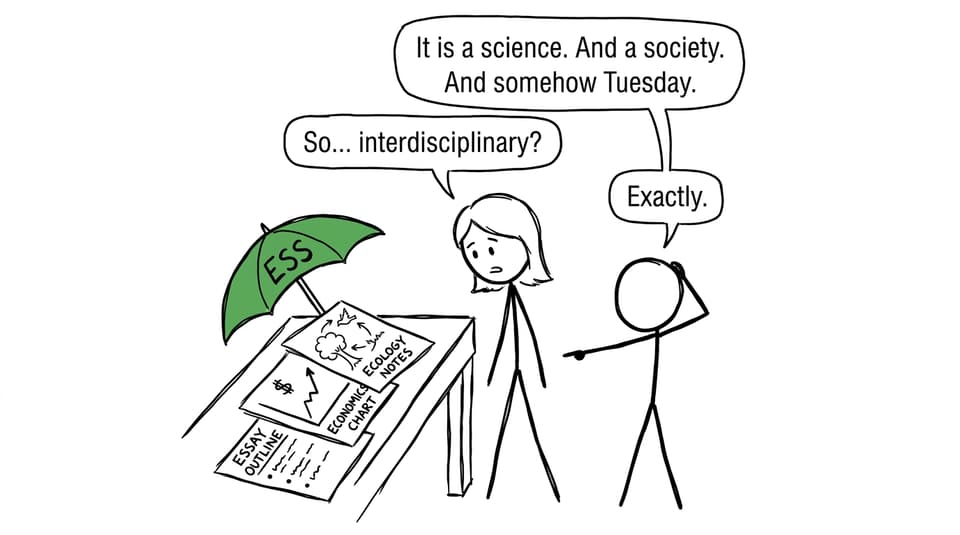
The clearest answer to what is IB Environmental Systems and Societies like is this: ESS is an interdisciplinary IB Diploma subject combining environmental science with the study of human societies. Students learn scientific concepts, interpret data, investigate environmental questions, and evaluate how economics, politics, ethics, and competing perspectives influence possible solutions.
It is not simply a course about caring for the planet. Nor is it an easy science chosen to avoid serious academic work. Success requires precise knowledge, evidence-based reasoning, practical investigation, and the ability to write balanced arguments under examination conditions.
For students following the syllabus first assessed in 2026, ESS is available at both Standard Level and Higher Level. That change matters because families can now consider it as either an SL or HL component of a coherent Diploma programme.
IB ESS at a glance
A parent trying to understand the subject can begin with this checklist:
- Interdisciplinary: ESS connects natural science with social, economic, political, and ethical perspectives.
- Concept-led: Perspectives, systems, and sustainability run through the course.
- Broad in scope: Students study ecology, biodiversity, water, land, climate, resources, and human systems.
- Practical: The course includes investigation, data collection, analysis, and a collaborative sciences project.
- Writing-intensive: Students must explain, discuss, evaluate, and justify rather than recall isolated facts.
- Available at SL and HL: HL adds greater depth, longer examinations, and three specialist lenses.
- Useful for subject planning: ESS meets the IB requirements associated with both Group 3 and Group 4, although individual subject combinations should always be checked with the school’s IB coordinator.
Families wanting the wider curriculum map can explore the complete IB ESS syllabus guide or read how ESS relates to Groups 3 and 4.
What students actually study in ESS
The current course is organized around eight topics:
- Foundation
- Ecology
- Biodiversity and conservation
- Water
- Land
- Atmosphere and climate change
- Natural resources
- Human populations and urban systems
These topics are connected rather than treated as separate boxes. A unit on water, for example, may involve the science of aquatic systems, data about access and pollution, questions of resource management, and disagreement over who should bear the cost of a solution.
This interconnected quality is the heart of ESS. Students are repeatedly asked to see an environmental problem as a system with inputs, outputs, relationships, feedback, and consequences. They also consider how different groups can examine the same evidence and reach different conclusions because their priorities or worldviews differ.
That makes the course intellectually broader than its title may suggest. A student might interpret a graph in one lesson, discuss environmental values in another, and evaluate a management strategy in the next. RevisionDojo’s ESS Topic 1 Foundation resources offer a useful preview of how perspectives, systems, and sustainability frame the rest of the subject.
What does a typical ESS lesson feel like?
There is no single standard lesson because teaching varies by school. Still, parents should expect a mixture of direct instruction, discussion, practical work, data analysis, case-based learning, and structured writing.
Students may examine energy movement through an ecosystem, interpret population data, compare conservation strategies, or investigate a local environmental issue. They might draw a systems diagram and then explain why a technically effective policy could face economic or political resistance.
The science is real, but ESS is not identical to Biology, Chemistry, or Physics. There is usually less emphasis on advanced mathematical manipulation than in some other sciences. However, students still need confidence with graphs, percentages, rates, sampling, uncertainty, data processing, and the logical interpretation of evidence.
The writing also matters. Knowing that a strategy exists is not enough. Students must explain how it works, assess its strengths and limitations, use relevant evidence, and reach a supported conclusion. A learner who enjoys environmental questions but dislikes both data and extended responses may find the course more demanding than expected.
ESS SL vs HL: what parents should know
SL and HL students share the core syllabus. HL is not simply the same material with a few more definitions. It has a larger recommended teaching commitment and asks students to apply three additional lenses: environmental law, environmental and ecological economics, and environmental ethics.
| Feature | ESS SL | ESS HL |
|---|---|---|
| Recommended teaching time | 150 hours | 240 hours |
| Core syllabus | All eight topics | All eight topics in greater depth |
| Additional lenses | None | Environmental law, environmental and ecological economics, and environmental ethics |
| Paper 1 | 1 hour, 25% | 2 hours, 30% |
| Paper 2 | 2 hours, 50% | 2 hours 30 minutes, 50% |
| Individual investigation | 25% | 20% |
These figures apply to the syllabus first assessed in 2026. Families with students in a different examination session should confirm the applicable course with their school.
HL can suit students who are genuinely interested in environmental policy, sustainability, conservation, economics, or the relationship between scientific evidence and human decision-making. It also requires room within the student’s overall HL workload. RevisionDojo’s guide to the main differences between ESS SL and HL can help families compare the two levels more closely.
How ESS is assessed
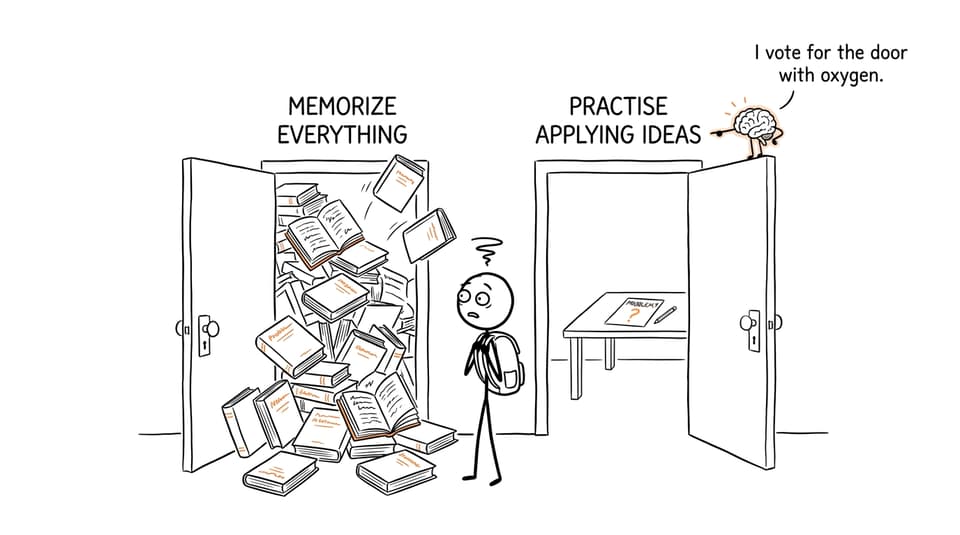
The assessment model rewards application rather than memorization alone.
Paper 1
Students receive data in different forms relating to a previously unseen case study. Every question is compulsory. The challenge is to interpret unfamiliar material accurately and connect it to course concepts.
A student therefore cannot prepare effectively by memorizing model paragraphs and hoping the same context appears. They need to practise extracting trends, reading scales, identifying relationships, assessing evidence, and applying knowledge to unfamiliar situations.
Paper 2
Paper 2 combines short-answer and data-based questions with structured essay questions. Choice is limited, so selective revision is risky. Students need reasonable coverage across the syllabus and must understand IB command terms such as explain, discuss, evaluate, and justify.
The individual investigation
The internally assessed individual investigation is an open-ended task in which the student develops a research question, gathers and analyzes data, and produces an individual written report. The official maximum is 3,000 words.
Students may be able to collaborate in small groups on aspects of methodology, provided that required variables and collected data remain appropriately distinct. The finished report is still individual. Topic choice is important because an ambitious global concern does not automatically create a workable investigation. A focused, measurable question is usually more productive, as explained in this guide to choosing an effective ESS investigation topic.
Is IB ESS an easy subject?
Calling ESS easy usually confuses familiarity with simplicity. Climate change, pollution, and biodiversity are recognizable ideas, so the opening material can feel accessible. The difficulty emerges when students must connect concepts, use precise terminology, interpret unfamiliar evidence, and evaluate tensions between solutions.
Three habits often separate secure performance from superficial understanding:
- Connecting science and society: A strong answer moves from environmental process to human cause, consequence, perspective, and response.
- Using evidence selectively: Examples should support analysis rather than become detached stories.
- Responding to the command term: An accurate explanation can still be incomplete when the question asks for evaluation.
ESS may feel especially natural to students who are curious about current environmental issues, comfortable moving between numbers and arguments, and willing to consider more than one defensible perspective. Students who rely heavily on memorization may need to change how they study.
Practical IB revision tips for ESS
The most effective revision cycle is simple: learn a concept, retrieve it without notes, apply it to a question, and examine the weakness revealed by the answer.
Start with a systems map for each topic. Show the important stores, flows, feedback relationships, human influences, and possible management responses. Then turn definitions and common confusions into flashcards. Finally, use data-based and extended-response questions to test whether knowledge can survive outside the page where it was learned.
Case examples should be organized by purpose. Instead of accumulating an enormous list, students can build a smaller, flexible bank covering contrasting locations, approaches, outcomes, and stakeholder perspectives. Each example should have enough specific detail to support an argument without overwhelming it.
Timed work should enter preparation early. Paper 1 requires efficient movement between the resource material and the questions, while Paper 2 demands concise short answers alongside planned extended writing. The ESS Paper 1 and Paper 2 revision plan provides a useful starting structure.
How parents can support without taking over
Parental support is most useful when it creates structure rather than pressure. Ask the student to explain one system aloud, compare two responses to an environmental problem, or show how feedback from a practice answer will change the next attempt.
A weekly check can focus on four questions:
- Which syllabus area did you review?
- Which question did you attempt?
- What did the feedback reveal?
- What will you do differently next week?
This shifts the conversation from hours spent to evidence of learning. It also makes workload problems visible before exam season. Families building a broader routine may find this IB Group 4 study schedule helpful, while adapting it to the student’s complete Diploma timetable.
See what ESS support looks like before committing
A subject becomes less mysterious when parents can see the actual learning process. RevisionDojo’s IB Environmental Systems and Societies resource hub brings together syllabus-aligned support for SL and HL. Parents and students can preview the ESS Study Notes organized by topic, then move into Flashcards and Questionbank practice rather than relying on passive rereading.
That progression matters. Study Notes clarify the idea. Flashcards strengthen retrieval. Questionbank work reveals whether the student can apply what they know. RevisionDojo’s AI Chat and Grading tools can then help explain mistakes and provide feedback on written responses. As examinations approach, Predicted Papers and Mock Exams support timed preparation, while the Coursework Library and Tutors offer additional guidance when a student needs examples, structure, or human support.
RevisionDojo is the ultimate IB resource because these tools form one connected learning cycle rather than a loose collection of materials.
A reassuring final perspective
IB ESS is broad, contemporary, and academically substantial. It asks students to understand environmental science while recognizing that environmental decisions are also shaped by people, institutions, values, and trade-offs.
For the right learner, that combination is the appeal. ESS turns familiar global concerns into disciplined questions: What does the evidence show? How does the system behave? Who benefits from a proposed response? What limitations remain?
The most useful next step is not to judge the course by its name. Open the RevisionDojo ESS notes, flashcards, and practice questions with your child. Seeing what students actually learn and how they are asked to use it will give your family a clearer basis for choosing the level, planning revision, and approaching the subject with confidence.