


Mathematics has a particular way of humbling confident people.
You can do a week of tidy homework, feel steady, and then meet one exam-style question that quietly asks, “Do you actually understand this?” That moment is common in IB Math. It’s also useful. Because it points to the real goal for 2025: not more effort, but better training.
Whether you’re preparing for SL or HL (AA or AI), IB Math rewards a calm loop: learn the method, practice on purpose, review honestly, and reattempt until the process becomes automatic. The students who improve fastest aren’t always the ones who “love math.” They’re the ones who build a system that keeps working when motivation fades.
To make that system easier, it helps to anchor your revision in one place. RevisionDojo is built for this exact job: Questionbank, Study Notes, Flashcards, AI Chat, Grading tools, Predicted Papers, Mock Exams, a Coursework Library, and Tutors when you want human guidance.
Quick checklist for IB Math success in 2025
Keep this simple. A checklist is not a personality test. It’s a starting line.
-
Choose your track clearly: SL vs HL and AA vs AI (don’t revise “generic math”).
-
Use the syllabus as your map, not your textbook as your boss.
-
Study in loops: Study Notes -> targeted questions -> feedback -> reattempt.
-
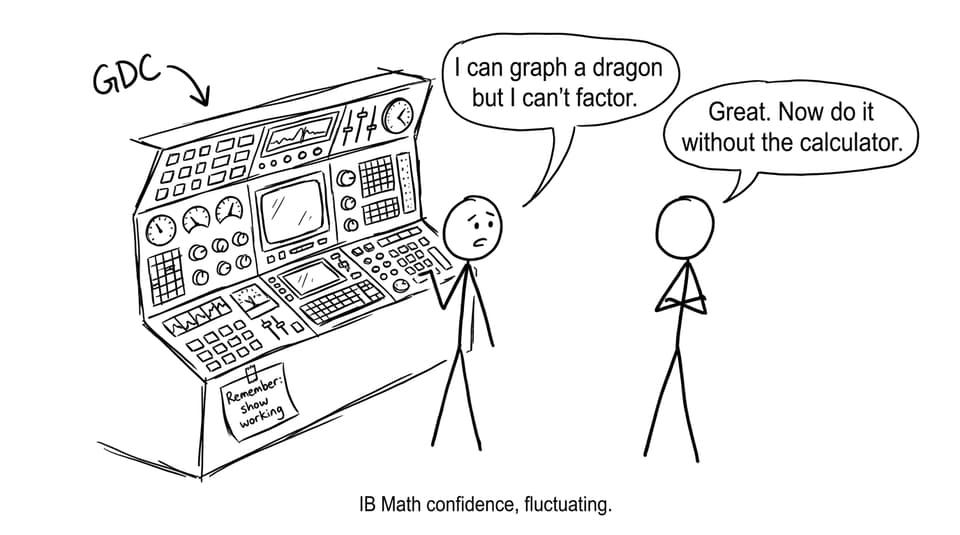
Train both papers: non-calculator fluency and calculator efficiency.
-
Keep a mistake log that records patterns, not just answers.
-
Do timed mini-sets every week, not just at the end.
Helpful hubs to bookmark:
SL vs HL: what changes in IB Math (and what doesn’t)
The biggest trap is thinking HL students need “harder” strategies and SL students need “easier” ones. In IB Math, the core habits are the same. What changes is the depth, the speed, and how quickly gaps punish you.
SL typically tests a broad, foundational command: algebra, functions, calculus basics, probability, statistics, and interpretation. HL includes all of that, then asks you to carry heavier tools (more advanced calculus, vectors, complex numbers in AA HL, deeper modeling and statistics in AI HL) while still staying precise under time pressure.
So the strategy difference is mostly workload management:
-
SL wins by consistency and clean technique.
-
HL wins by consistency, clean technique, and ruthless prioritization.
If you want a focused SL-specific approach, use Effective Study Strategies for the IB Math SL Exam. HL students aiming for top marks can also borrow the structure from How to Score 7 in IB Math AA HL.
Tip 1: Treat the syllabus like a contract
In 2025, the fastest way to waste time in IB Math is to revise what feels familiar instead of what gets assessed.
Make your syllabus list visible. Then mark each subtopic with one of three labels:
-
Green: I can do this under timed conditions.
-
Yellow: I can do it with notes, not yet under pressure.
-
Red: I avoid this topic and hope it goes away.
Now here’s the part most students skip: schedule your next week based on your reds and yellows, not your greens. You don’t get bonus marks for repeating what you already know.
RevisionDojo makes this style of targeted work easier because you can move quickly from explanation to application using Study Notes and then into exam-style practice.
Tip 2: Use targeted practice, not “random grinding”
A lot of students say they’re practicing IB Math when what they mean is: “I’m doing questions until I feel tired.” That’s effort, but it isn’t strategy.
Instead, practice like a diagnosis tool:
-
Pick one topic (for example: functions, integration, hypothesis testing).
-
Do a short set.
-
Mark it carefully.
-
Categorize every lost mark: concept gap, method gap, or communication gap.
-
Reattempt the same skill within 48 hours.
This is exactly what RevisionDojo’s Questionbank is designed for. Start with IB Math: Targeted Revision Using the Questionbank and keep that loop as your default.
If you want a structured daily rhythm around that loop, borrow from The Ultimate IB Math Study Routine for Busy Students.
Tip 3: Command terms are quiet mark traps
In IB Math, you can be correct and still lose marks because your response doesn’t match the instruction.
Train these like reflexes:
-
Show that: your working must justify the result, not merely arrive there.
-
Hence: the examiner expects you to use your previous result (and to make that connection visible).
-
Solve: give the full solution set, correct form, and appropriate exactness.
A good rule for 2025 exam prep: underline the command term before you write anything else. Then write one line of “what they want” in the margin.
RevisionDojo’s AI Chat is also useful here: paste your attempt and ask, “Am I meeting the command term, and where would marks be awarded?” It’s a fast way to correct exam-language issues before they fossilize.
Tip 4: Calculator skill is a performance skill
Calculator papers in IB Math are not “easy papers.” They’re interpretation papers.
Your calculator can help you:
-
solve equations numerically,
-
graph to find intersections,
-
run regressions,
-
compute statistics quickly,
…but your score depends on whether you can explain what the output means and show enough method to earn marks.
A practical training drill:
-
Once a week, pick 6 calculator-active questions.
-
For each, write two lines: Setup (what you typed and why) and Interpretation (what the output means in context).
For AI students especially, link your calculator practice to modeling habits. This perspective is explored well in Is IB Math AI More Practical or Theoretical?.
Tip 5: Active recall beats rereading in IB Math
Rereading notes feels safe. Exams are not.
Active recall for IB Math means you force retrieval:
-
Close your notes and reconstruct a method from memory.
-
Create mini-prompts: “When do I use integration by parts?” “How do I justify a normal approximation?”
-
Turn recurring slips into Flashcards.
RevisionDojo’s spaced-repetition IB Flashcards with Spaced Repetition (SRS) and the guide How to Use RevisionDojo Flashcards for Formula Mastery help you make recall automatic.
Tip 6: Train time like it’s part of the syllabus
Most students don’t fail IB Math because they can’t do anything. They fail because they can’t do enough, fast enough, with calm communication.
Two habits fix a lot:
-
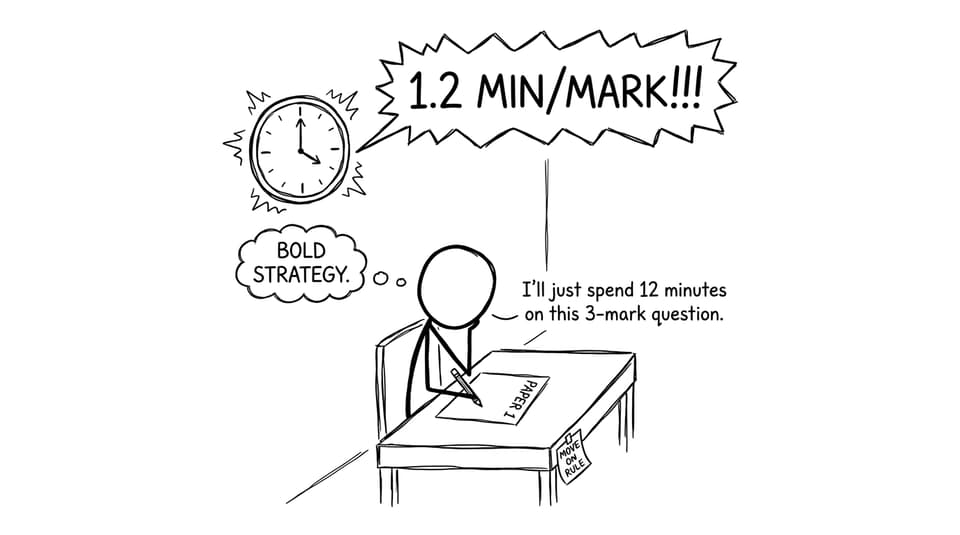
Minutes-per-mark budgeting (so one question doesn’t steal your whole paper)
-
A clear move-on rule (so you don’t negotiate with yourself mid-exam)
RevisionDojo has dedicated strategies you can train:
Tip 7: Your mistake log is your real teacher
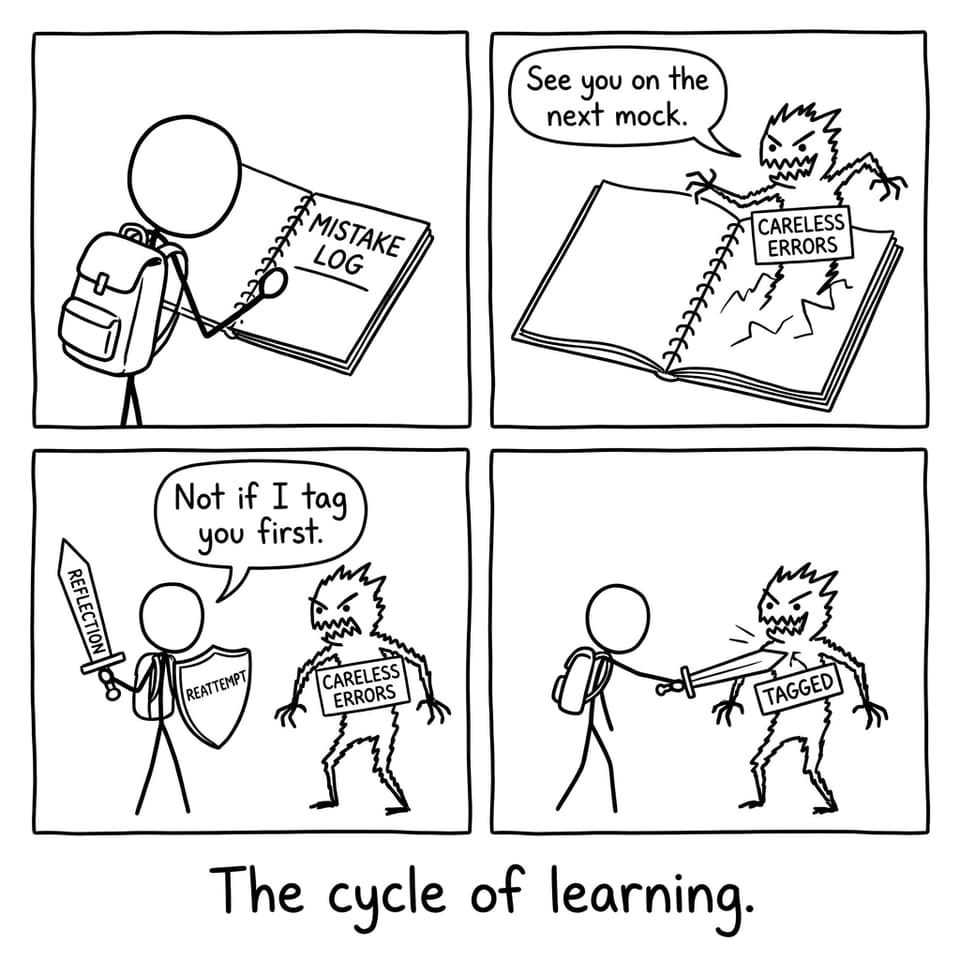
A mistake log sounds boring until it saves your grade.
Keep it short and brutal:
-
Question type: (e.g., trig equation, hypothesis test, optimization)
-
What went wrong: misread, algebra slip, wrong method, weak explanation
-
Fix: one sentence explaining the correct decision
-
Reattempt date: when you’ll retry a similar question
This is also where RevisionDojo’s ecosystem shines: use Mock Exams for realistic pressure, Grading tools to see what earns method marks, and the Questionbank to immediately drill the exact weakness.
For a structured mock-exam loop, read How to Use RevisionDojo to Prepare for IB Math Mock Exams.
Closing: the calm advantage in IB Math
In 2025, your biggest advantage in IB Math won’t be a secret trick. It will be a boring, repeatable system: targeted practice, honest review, and reattempting the exact things you’d rather avoid.
If you want that system to feel lighter, build it on RevisionDojo. Use Study Notes to learn clean methods, Flashcards to make recall automatic, the Questionbank for exam-style practice, AI Chat when you get stuck, and Mock Exams plus Predicted Papers to rehearse real performance. Add Tutors when you want a human to tighten your approach.
Your goal isn’t to “do more IB Math.” It’s to do IB Math with feedback, intention, and calm. Start your next session with one topic, one set, and one reflection. Then repeat.