

The quiet difference between a 6 and a 7 in IB Math AA HL
The students who score a 7 in IB Math AA HL rarely feel like geniuses all year.
They usually feel… consistent.
Not because they never get stuck, but because when they do, they already know what happens next: check the syllabus point, tighten the concept, drill the exact weakness, then rehearse it under time pressure. The result looks like talent on exam day. The truth is a system.
If you are preparing for IB exams and aiming for a 7, this guide gives you a practical loop you can repeat: understand deeply, practice precisely, simulate realistically, then review honestly.
You will also see how RevisionDojo becomes the “training ground” that makes that loop easier to run: Questionbank, Study Notes, Flashcards, AI Chat, Grading tools, Predicted Papers, Mock Exams, plus a Coursework Library and Tutors when you need extra structure.
Quick checklist for a 7-level IB plan
Use this as your weekly north star for IB Math AA HL:
-
Confirm the full AA HL scope using the IB Math AA hub.
-
Learn concepts first with RevisionDojo IB subject notes and the AA formula resource.
-
Do daily targeted practice in the Math AA Questionbank.
-
Build timed papers with the Mock Exam Builder guide.
-
Keep an error log and redo questions after 3--5 days.
-
Train exam pacing with IB Math time management.
If you do those six things, your IB score stops being a mystery and starts being a trend.
Understand what IB Math AA HL actually rewards
A 7 is not awarded for knowing “more math.” It is awarded for reliably doing three things that the IB markscheme can see:
Correct reasoning, not just the final number
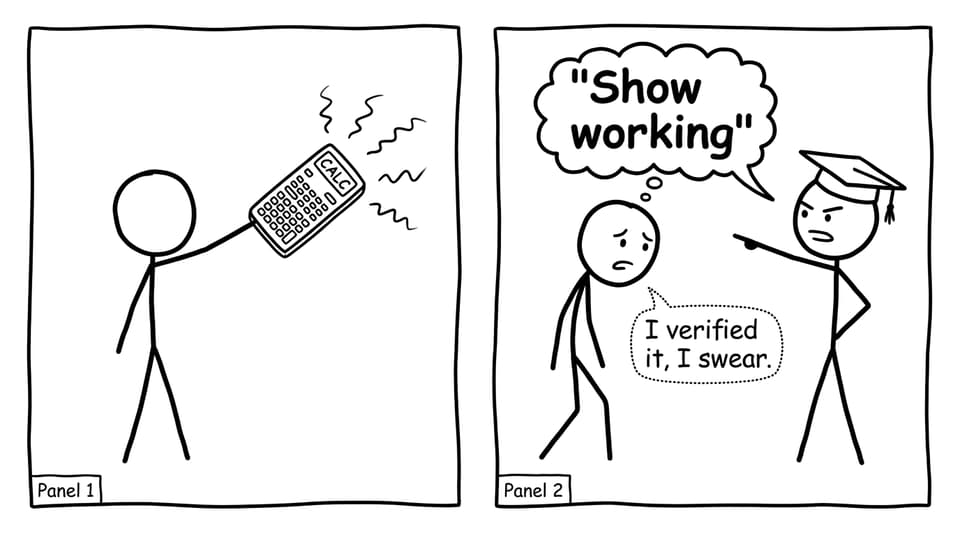
IB examiners award method marks. That means the path matters. Even when you are close, missing a line of reasoning can cost you.
To train this, study with intent:
-
Write the definition before you use it (limits, continuity, derivative, vector equation).
-
Justify transformations when they are not obvious.
-
Signal what you are doing: “Let…”, “Hence…”, “Therefore…”.
If you tend to lose marks through presentation, read common mistakes in IB Math HL exams with a pen in hand and highlight which ones you personally repeat.
Transfer: can you solve unfamiliar questions?
At HL, many questions look “new” even when they are built from familiar parts. The skill is recombining topics: algebra inside calculus, trig inside vectors, statistics inside modeling.
That is why topic mastery must evolve into mixed practice.
Timing under pressure
You can know the content and still miss a 7 because you ran out of time.
Time is not a personality trait. It is a practiced constraint.
Build a 7-level study strategy in three phases
Think of your IB preparation like learning a language: vocabulary, conversation, then real-time debate.
Foundation phase: rebuild the concepts cleanly
Your job here is to remove the fuzzy bits.
Use RevisionDojo Study Notes to simplify what you will later need to explain under exam conditions. If you are unsure where to start, the How to master IB Math AA HL topics efficiently workflow is built around exactly this sequence: learn, then apply.
Pair the notes with the IB Mathematics AA data booklet so your formula recall becomes fast and automatic.
Then convert key items into RevisionDojo Flashcards. You want instant recall for:
-
derivative and integral forms
-
transformations and inverse functions
-
common series results
-
complex number identities
-
vector equations and intersection steps
Integration phase: mix topics on purpose
Once you can solve standard questions, stop practicing in neat chapters.
Open the How to practice IB Math questions strategically approach and follow one rule: every session should include at least one question that combines topics.
This is where RevisionDojo AI Chat helps. When you miss a question, ask for:
-
a second explanation using a different method
-
the exact step where your reasoning breaks
-
a short “why the markscheme cares” summary
You are not collecting solutions. You are collecting patterns.
Exam simulation phase: train the version of you who sits the paper
This phase is not “more practice.” It is different practice.
Use RevisionDojo Mock Exams and Predicted Papers to rehearse:
-
Paper pacing
-
stress management
-
decision-making when stuck
A good rule: begin full-paper work 8--10 weeks before finals, or earlier if your confidence is low.
Use the Questionbank like a scalpel, not a bucket
Most students use practice questions like exercise bikes: lots of motion, not much direction.
A 7-level student uses the Questionbank like a scalpel.
Start with the Calculus Questionbank because calculus appears everywhere in IB Math AA HL: optimization, series approximations, differential equations, curve sketching.
Then expand outward into the areas that feed calculus success:
-
algebra manipulation and proof
-
functions and transformations
-
trig identities and equations
-
vectors and geometry
-
probability and statistics
If you want a clean routine, follow How to use the Questionbank for targeted math revision and stick to one topic per block. Not because mixing is bad, but because diagnosis requires focus.
Prioritize the topics that most often decide a 7
Aiming for “perfect coverage” is comforting. It is also slow.
In IB Math AA HL, a 7 is more likely when you become unreasonably competent at the big engines:
Calculus
-
differentiation techniques and applications
-
integration techniques and interpretation
-
differential equations and Euler method
-
Maclaurin series behavior and approximation
Functions and graphs
-
domain/range restrictions
-
inverse functions and composition
-
asymptotes, turning points, end behavior
-
transformations and modeling
Algebra and proof
-
complex numbers and De Moivre
-
sequences and series structure
-
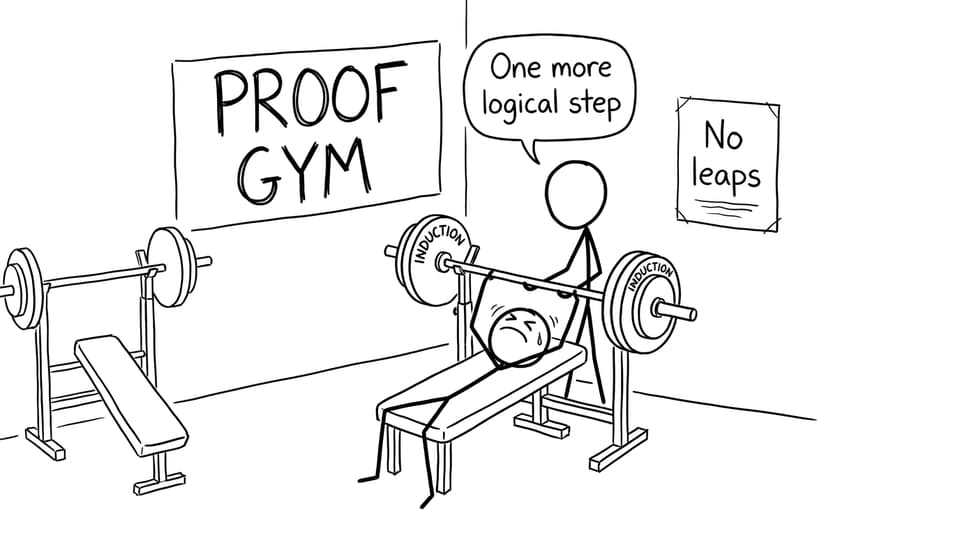
induction and contradiction style reasoning
Statistics and probability
-
distributions, regression, interpretation
-
correct calculator use with justification
Vectors
-
lines and planes
-
intersections and angle relationships
-
vector products and geometry
Pick two of these to become your “score anchors” and practice them more than feels fair.
Practice full papers the way the IB markscheme sees them
The key shift: stop treating papers as a test of memory. Treat them as a test of communication.
Train method marks deliberately
When you solve, leave a visible trail:
-
define variables
-
state restrictions (domain, parameter constraints)
-
write intermediate expressions cleanly
-
box final answers with context
Use pacing as a math skill
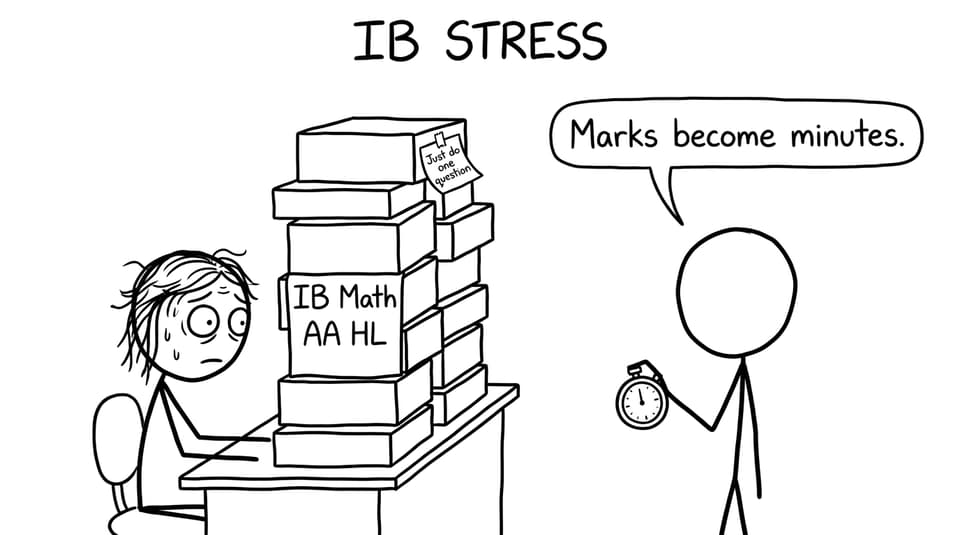
Follow a marks-to-minutes budget. Then practice skipping intelligently.
RevisionDojo’s paper workflows make this easier because you can generate timed sets, then review with Grading tools to see where marks are lost, not just where answers are wrong.
If exam day logistics add stress, read IB Math exam day essentials and remove surprises early.
The mistake loop: how top students use errors to climb
A 7 is built out of mistakes that were handled correctly.
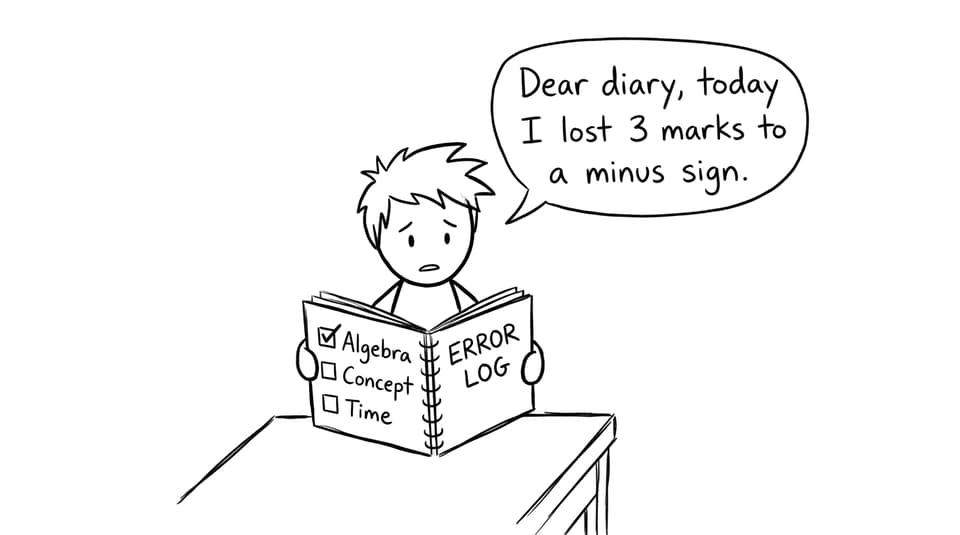
After every IB session, do this:
-
Write the mistake in one sentence.
-
Label it: algebra, concept, or time.
-
Write the “repair rule” (what you will do next time).
-
Redo a similar question after a few days.
RevisionDojo’s analytics help because your Questionbank performance becomes a map: you can see which topics decay, which are improving, and which never really solidify.
If you need outside accountability, this is the moment to use RevisionDojo Tutors: not for re-teaching everything, but for tightening the few weak links that keep repeating.
Closing: make your 7 predictable
Scoring a 7 in IB Math AA HL is less about discovering a secret trick and more about building a repeatable system you trust when you are tired, busy, and a little stressed.
Use RevisionDojo to run that system end-to-end: learn with Study Notes, lock in recall with Flashcards, sharpen precision with the Questionbank, rehearse reality with Mock Exams and Predicted Papers, then close the loop with Grading tools and AI Chat. If you need extra structure, pull in the Coursework Library and Tutors so nothing stays vague for long.
Your next step: open the IB Math AA hub, choose one weak topic, and do a 30-minute targeted session today. In IB math, momentum is often the difference between knowing the work and earning the marks.