
If you have ever walked out of an IB Math mock thinking, “I knew this at home,” you have already learned the real lesson: mocks don’t just test math. They test performance.
That gap between knowledge and execution is exactly where most IB students lose marks. Not because they are lazy or “bad at math,” but because their revision is often missing a system. A system turns stress into data, and data into action.
This is where RevisionDojo shines. Used well, it helps you rehearse under pressure, diagnose what actually went wrong, and rebuild your next attempt with intention. In other words: it helps your IB mock exams become a training loop, not a one-off event.
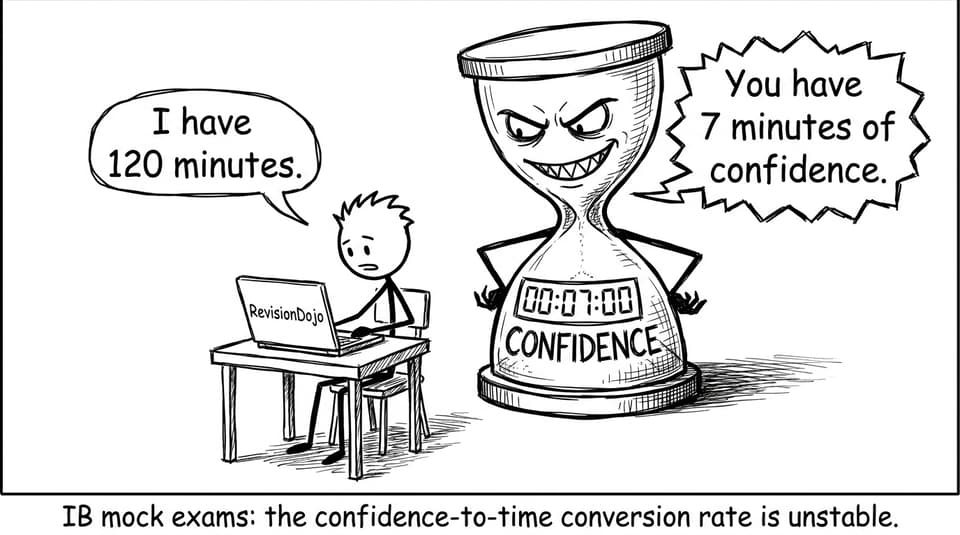
The IB Mock Exam Loop (Quick Checklist)
Use this short loop for every IB Math mock cycle:
-
Simulate: sit a timed IB-style paper using RevisionDojo’s mock workflow.
-
Score + review: check solutions and markscheme logic, not just your total.
-
Diagnose: find your top 3 weaknesses by topic and by mistake type.
-
Target: use the Questionbank for focused drills.
-
Rebuild memory: convert recurring slips into Flashcards.
-
Get unstuck fast: use AI Chat for the 10-minute holes that can waste an hour.
-
Repeat: re-sit a similar mock to prove improvement.
To anchor your setup, start from the relevant subject hub: IB Mathematics Analysis and Approaches Resources or IB Mathematics Applications & Interpretation Resources.
Treat IB Math Mocks Like the Real Exam
An IB mock exam only predicts your final outcome if it resembles your final conditions.
That means:
-
correct timing for your level and paper
-
correct calculator rules
-
no “quick peeks” at notes mid-question
-
a clean environment where you can feel the same friction you’ll feel in May
RevisionDojo makes this easier because your practice can be structured around real paper types (AA vs AI, SL vs HL), and your resources sit in one place: Mock Exams, Questionbank, and Study Notes.
If you want a calm starting point before you add pressure, build a daily routine first, then scale into weekly timed papers: The Ultimate IB Math Study Routine for Busy Students.
Build a Full IB Mock Strategy (3-4 Weeks Out)
Cramming for an IB mock often feels productive because you are “doing something.” But it usually trains recognition, not recall, and confidence, not pacing.
A better approach is a 3-4 week runway:
Weeks 1-2: Patch understanding fast
Use Study Notes to fix foundations. Keep it surgical: definitions, core methods, common traps.
When you need formulas in a hurry, keep the booklet open as a reference point: IB Mathematics Analysis and Approaches Data Booklet.
Then lock memory with Flashcards. The IB rewards fluency. Flashcards create fluency without requiring long study sessions.
Week 3: Add exam friction
Now shift into exam-style questions using targeted practice. This is where the Questionbank changes the game: it lets you practice by topic, difficulty, and paper style so your time goes into weaknesses, not randomness.
Use this guide to keep practice focused: How to Use the Questionbank for Targeted Math Revision.
Week 4: Full mock simulations
Sit full papers under time pressure. Aim for at least two full IB mock sittings before the real mock week, so the first time you feel nerves isn’t the day your teacher is watching.
If you need extra full-paper practice, explore: IB Math Mock Exams (Free Download).
Use RevisionDojo to Create IB-Style Mock Exams You Can Actually Learn From
The problem with most mock revision isn’t a lack of effort. It’s a lack of feedback structure.
RevisionDojo is built around connected tools:
-
Questionbank for volume and precision
-
Mock Exams and Predicted Papers for realism
-
Grading tools to see how marks are awarded (and lost)
-
AI Chat for quick explanations when you’re stuck
-
Study Notes and Flashcards to rebuild understanding and recall
-
Tutors when you need a human to diagnose a persistent block
-
Coursework Library to lower background stress from IAs while you focus on IB exam prep
If you want a broader overview of how the pieces fit together for IB revision, this is helpful: RevisionDojo App: The Smarter Way to Prep for IB Exams.
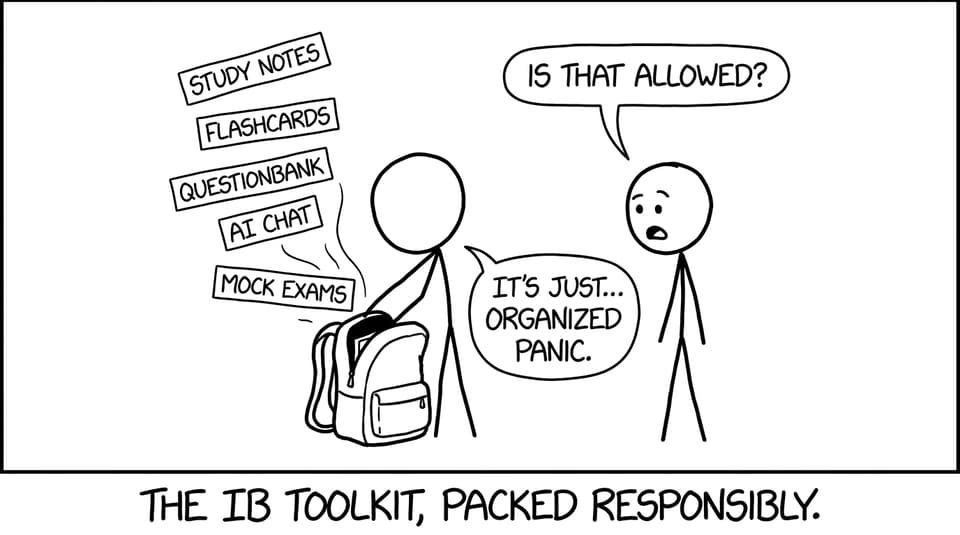
The Skill Most IB Students Undertrain: Timing
In an IB Math mock, marks disappear quietly. Not from one giant mistake, but from spending 14 minutes chasing a stubborn 6-mark question.
A simple rule helps:
-
If you’re stuck, buy yourself time by moving on.
-
Come back with whatever partial method marks you can still earn.
Run timed sets regularly so pacing becomes instinct. If you want a mindset guide for making timed practice sustainable (instead of punishing), read: How to Study for IB Mocks (Without Burning Out).
Review Like an Examiner, Not Like a Student
After an IB mock exam, most students do one of two things:
-
celebrate the score and move on, or
-
feel awful and avoid looking at it
Neither produces improvement.
Instead, do a slow review. Ask:
-
Where did the markscheme reward method, even when the final answer was wrong?
-
Where did I lose “easy” marks from notation, rounding, or missing a stated domain?
-
Which topics caused repeated slips?
This is where RevisionDojo’s Grading tools and feedback style matter: you learn what the IB is actually paying for.
Turn Your Mistakes Into a Repeatable IB Improvement System
The most effective IB students don’t have fewer mistakes. They have a faster mistake-repair cycle.
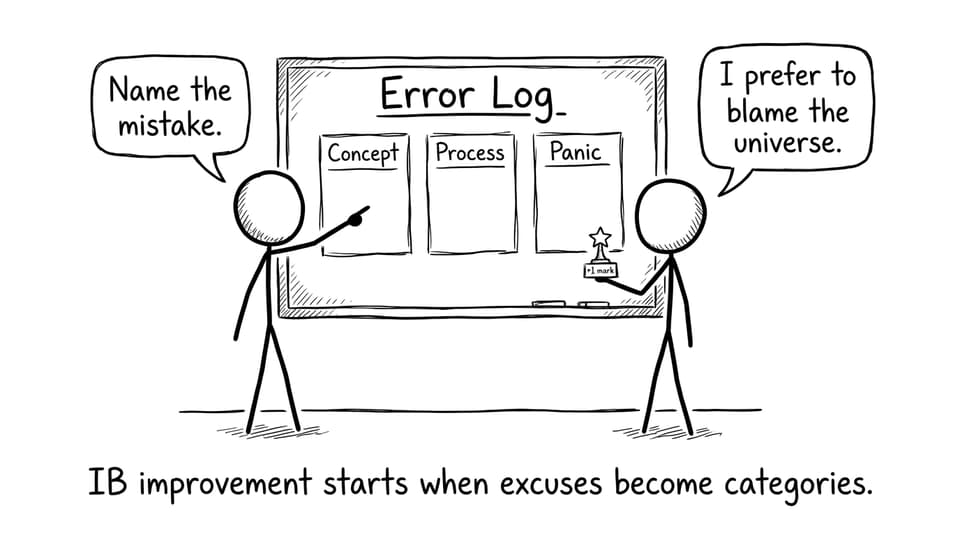
After every mock, build a short “mistake log” with three columns:
-
Concept error (I didn’t know it)
-
Process error (I knew it, but executed poorly)
-
Pressure error (I rushed, froze, or panicked)
Then assign one fix:
-
Concept error -> 15 minutes Study Notes + 5 Flashcards
-
Process error -> 10 targeted Questionbank questions
-
Pressure error -> one short timed set + a re-sit
Conclusion: Make Your Next IB Mock a Data Point, Not a Verdict
An IB Math mock exam is not a label. It is a measurement.
When you use RevisionDojo as a loop: Mock Exams for realism, Questionbank for targeted drilling, Study Notes and Flashcards for fast rebuilds, plus AI Chat, Grading tools, Predicted Papers, and Tutors when needed; your mocks stop being scary surprises and start becoming predictable training.
Pick your course hub, schedule your first timed sitting this week, and let your next IB mock be the beginning of momentum: IB Mathematics Analysis and Approaches Resources or IB Mathematics Applications & Interpretation Resources.