


The moment most IB students start doubting their math choice is oddly specific: you’re staring at a question about rainfall data, a half-readable table, and a calculator screen that looks like a tiny spaceship dashboard. You’re not thinking about “beauty of proof.” You’re thinking, What does the slope actually mean in this context?
That’s the heart of the question: is IB Math AI more practical or theoretical? In the IB world, Math AI leans practical first. But “practical” doesn’t mean easy. It means the marks often live in interpretation, modeling, and decisions, not just algebraic elegance.
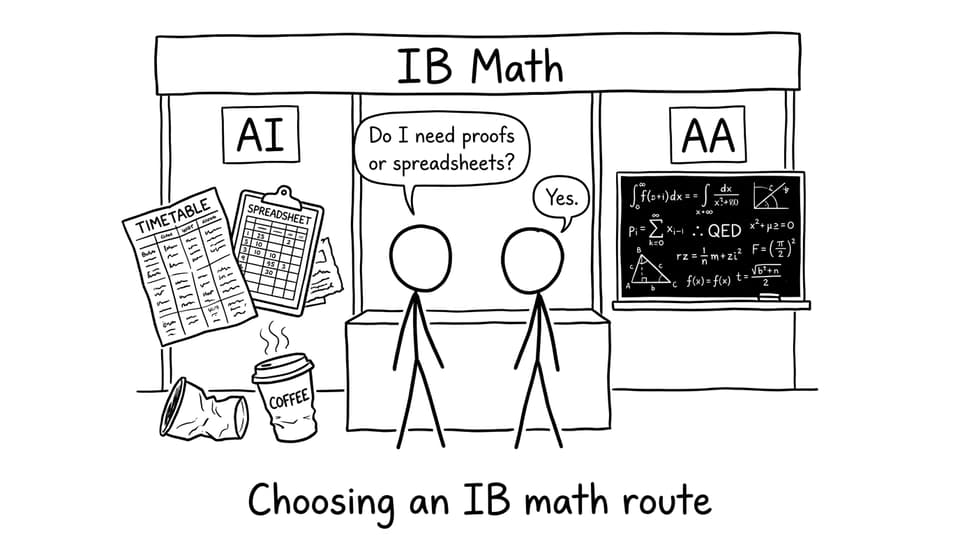
The practical vs theoretical split in IB math (in plain terms)
In IB Mathematics, the two pathways reward different instincts:
-
Math AI (Applications and Interpretation): you use math to describe the world (data, models, technology, interpretation).
-
Math AA (Analysis and Approaches): you use math to build the world (algebraic structure, calculus technique, formal reasoning).
If you’re taking AI, you’ll still learn real mathematics. But the course is designed around what happens when numbers meet messy reality.
For a clean overview of the AI course structure, start with IB Mathematics Applications and Interpretation resources.
What makes IB Math AI feel “more practical”
Math AI is widely considered the more practical IB route for three big reasons.
Technology is part of the method, not a backup plan
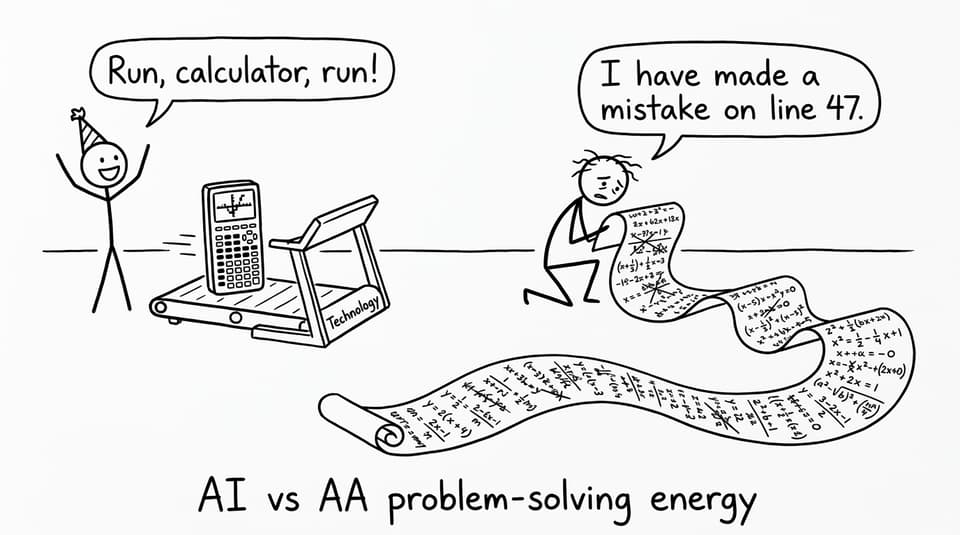
In IB Math AI, the calculator isn’t just allowed; it’s expected. You’re assessed on how you use technology to explore patterns, run regressions, and solve models efficiently.
A good way to build calculator confidence is to practice topic-by-topic with immediate feedback using RevisionDojo’s Questionbank and AI Chat inside the AI hub: IB Math AI course page.
Modeling beats proving
Math AA students often spend time learning techniques that lead toward more abstract reasoning. Math AI students spend more time building a model, testing if it fits, and explaining limitations.
That means your explanation matters. In IB, you don’t just “get an answer,” you justify why it makes sense.
If Paper 2 is where this gets real for you, use Ace IB Math Applications and Interpretation Paper 2 as a focused guide.
Data shows up like a main character
Stats and probability aren’t side quests in IB Math AI. They’re recurring themes. You’ll interpret correlation, choose models, read parameters, and communicate conclusions carefully.
A fast, practical support tool is the IB Math AI Data Booklet so you’re never scrambling for the right formula mid-revision.
SL vs HL: what changes in “practicality”
Both levels in IB Math AI are practical, but the intensity changes.
-
AI SL: practical foundations. You’ll model, interpret, and use technology often, but the math stays more accessible.
-
AI HL: still practical, but deeper. More sophisticated modeling, more demanding interpretation, and a bigger expectation that you can connect techniques across topics.
If you’re still deciding between pathways, compare with Should I Take IB Math AA or AI? A Realistic Breakdown.
A quick checklist: should you treat IB Math AI as “practical”?
Use this before you commit to a revision plan:
-
Do I like learning through context (business, psychology, environment, sports data)?
-
Am I willing to write full-sentence interpretations, not just calculations?
-
Can I practice calculator workflows until they’re automatic?
-
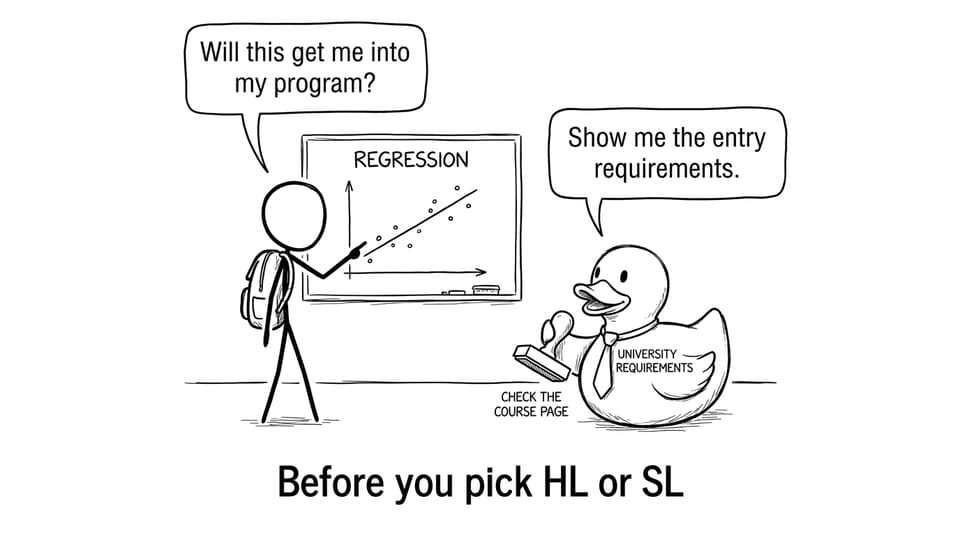
Have I checked my university requirements for IB math?
If you answered “yes” to most of these, AI’s practicality will likely feel like a strength.
To get organized fast, pair RevisionDojo’s Study Notes and Flashcards with your practice loop: IB Notes hub and the targeted AI notes guide How to use RevisionDojo Notes to simplify IB Math AI concepts.
Conclusion: IB Math AI is practical, but it still demands precision
So, is IB Math AI more practical or theoretical? Practical, by design. It trains you to model messy situations, use technology intelligently, and explain what the math means when it touches real life.
If you want that practicality to translate into points, build a simple system: learn with RevisionDojo Study Notes, drill with the Questionbank, sanity-check your reasoning with AI Chat, and sharpen exam performance with Predicted Papers, Mock Exams, and grading tools. Start here: IB Math AI resources, and make your next IB math session feel a little more controlled.