


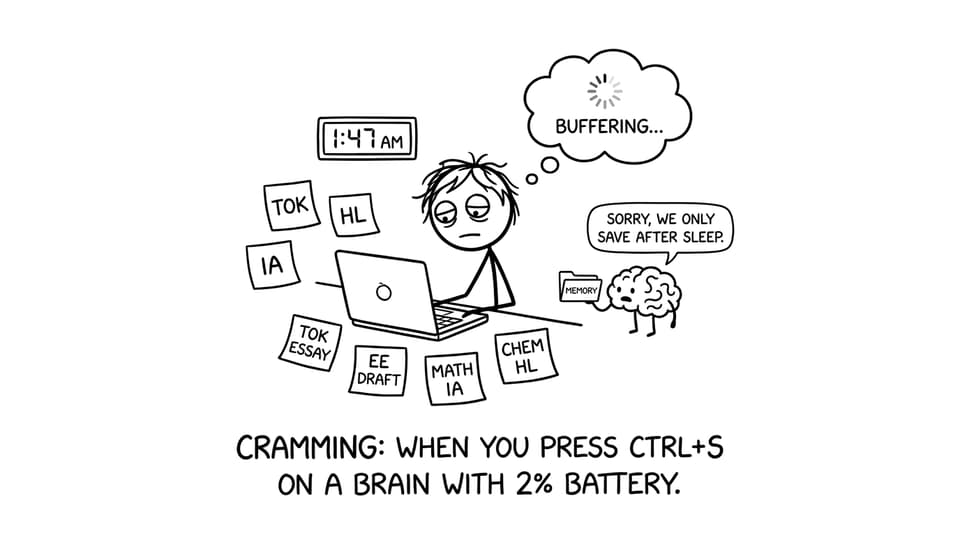
Somewhere around 1:00 a.m., an IB student makes a deal that never works: “I’ll trade sleep for one more topic.” It feels responsible. It feels disciplined. And then the next day you read the same paragraph three times, forget the definition you knew yesterday, and wonder why your brain has turned into a slow-loading webpage.
Sleep is not the opposite of studying. In the IB, sleep is the part where your brain files what you learned into a place you can actually reach under exam pressure.
Quick checklist: the IB sleep plan that actually fits revision
-
Aim for 7-9 hours most nights during IB prep
-
Keep a consistent wake-up time (even weekends, or keep the shift small)
-
Stop heavy IB revision 60-90 minutes before bed
-
Use evenings for light recall (Flashcards), not new learning
-
Use naps 20-30 minutes only when needed
If you want a deeper routine built for exam season, bookmark Best Sleep Routine for IB Students (That Actually Works).
Why sleep changes IB grades more than another late-night hour
The IB doesn’t just test what you “covered.” It tests what you can retrieve quickly, apply cleanly, and explain under time pressure.
That’s where sleep earns marks:
-
Memory consolidation: sleep helps stabilize what you studied so it’s easier to pull out tomorrow.
-
Attention and accuracy: fatigue makes “easy marks” disappear through careless errors.
-
Emotional control: sleep-deprived brains react more strongly to stress, which matters in timed papers.
A useful rule for IB exam weeks: if you study longer but remember less, you didn’t study more. You just stayed awake.
The hidden cost of all-nighters in IB revision
All-nighters feel heroic because they are visible. Sleep is quiet, so it feels optional. But in the IB, the cost shows up fast:
-
You read but don’t absorb.
-
You practice questions but don’t learn from mistakes.
-
You panic sooner, even when you know the content.
If you’re tempted to cram, read Is It Worth Sacrificing Sleep to Study for IB Exams? and decide with a calm head, not a midnight one.
A practical IB-friendly night routine (RevisionDojo style)
This is built for the student who wants results without living at their desk.
Do the hard work earlier, then shut it down
Earlier evening is for high-intensity IB progress:
-
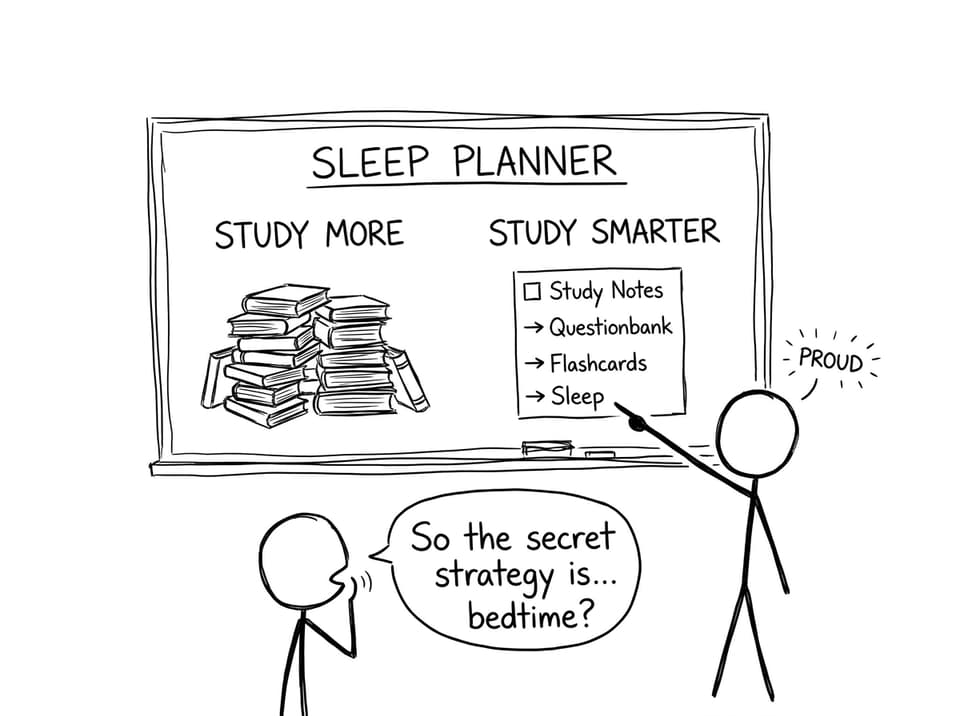
Learn quickly with Study Notes
-
Prove it with targeted practice in the Questionbank
-
Fix confusion fast using AI Chat, instead of spiraling for an hour
Late evening is for light, brain-friendly recall:
-
10-20 minutes on IB Flashcards with spaced repetition
-
One small confidence loop (a few questions you can do cleanly)
-
Pack your bag, list tomorrow’s top 3 tasks, then stop
If you want an exact script for the final hours before an exam, use What to Do the Night Before IB Exams.
Use naps strategically (without wrecking your bedtime)
A 20-30 minute nap can restore focus and reduce sloppy mistakes during IB revision. Longer naps often create grogginess and push your bedtime later, which snowballs into another tired day.
Common IB sleep mistakes (and the tiny fixes)
-
Mistake: “I’ll learn new content at night.”
Fix: Night is for Flashcards and light review only. -
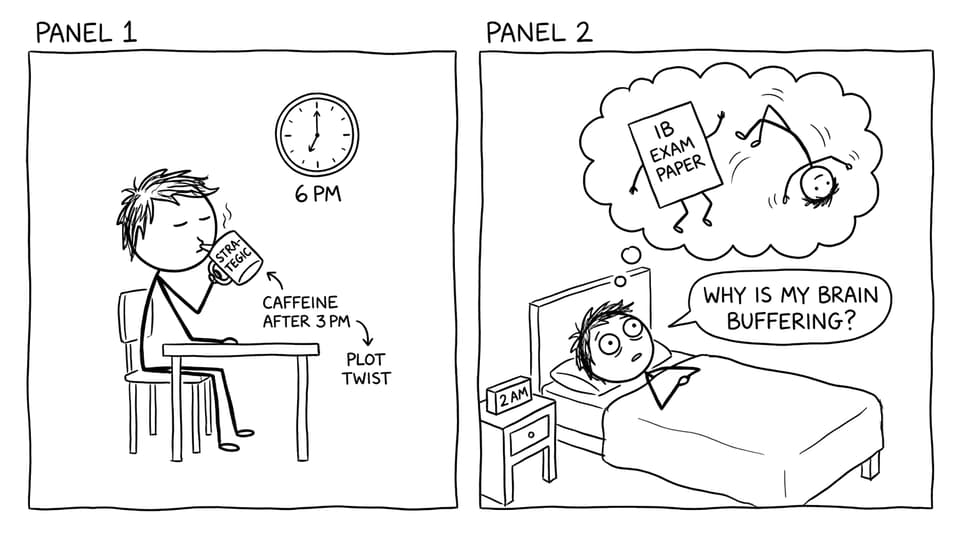
Mistake: Caffeine late afternoon.
Fix: Keep it earlier, then protect your wind-down. -
Mistake: Random revision with no stopping point.
Fix: Use a structured loop: notes -> questions -> fix -> sleep.
For more context on how sleep interacts with your whole revision system, see The Role of Sleep and Nutrition in Effective IB Revision.
Conclusion: in IB, sleep is a study skill
If you want a real edge in the IB, stop thinking of sleep as a reward you earn after work. Think of it as the step that makes your work count.
Build a routine where your hardest IB revision happens earlier, your evenings are light and repeatable, and your brain gets the hours it needs to consolidate memory and stay calm under pressure. Then use RevisionDojo as your control panel: Study Notes for clarity, Questionbank for focused practice, Flashcards for daily recall, AI Chat for fast fixes, Grading tools to reduce uncertainty, and Predicted Papers and Mock Exams for realistic exam training.
Tonight’s best revision move might be the simplest one: pick a stopping time, do one clean recall block, and go to sleep like it’s part of the syllabus.